ASTROLOGY
Tulsi Vivah 2026 Date: Know Puja Muhurat, Rituals, Required Items and Religious Significance
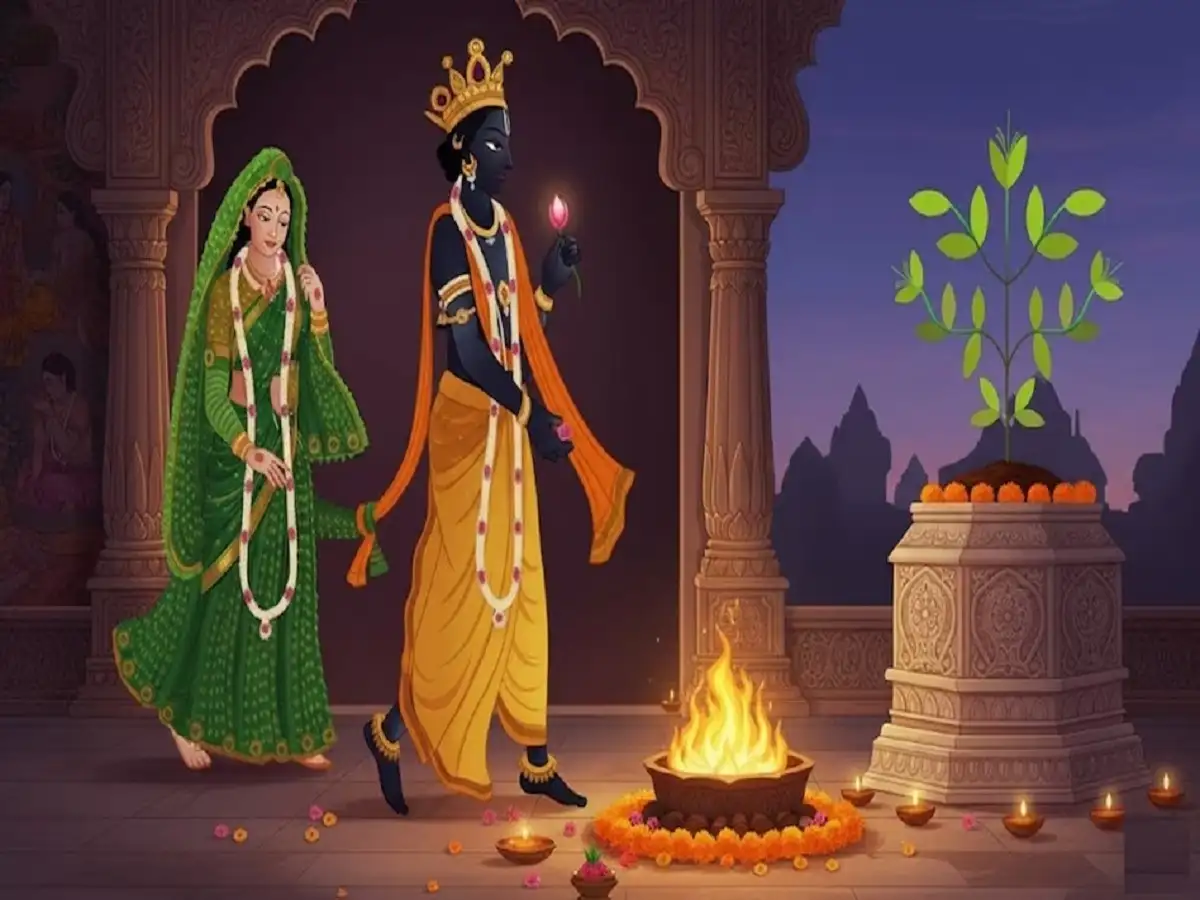
Tulsi Vivah 2026: Tulsi Vivah is one of the important religious celebrations observed by Hindu devotees during the sacred month of Kartik. The festival marks the ceremonial marriage of Goddess Tulsi and Lord Shaligram, who is worshipped as a manifestation of Lord Vishnu.
Celebrated after Diwali, Tulsi Vivah holds special significance in Hindu traditions. Devotees perform the marriage ceremony with prayers, decorations, devotional songs and traditional rituals.
According to the Panchang details provided in the source report, Tulsi Vivah will be celebrated on Saturday, November 21, 2026. Many families observe the festival on Kartik Shukla Dwadashi, while others follow their regional customs and perform the ceremony on Dev Uthani Ekadashi.
Here is everything you need to know about Tulsi Vivah 2026, including the reported auspicious timings, puja materials, worship procedure and spiritual importance.
Tulsi Vivah 2026: Date and Tithi Timings
Tulsi Vivah is traditionally associated with the period following Dev Uthani Ekadashi, which marks the symbolic awakening of Lord Vishnu after the four-month Chaturmas period.
The festival is commonly celebrated on the Dwadashi Tithi of Shukla Paksha in the month of Kartik.
According to the calendar information cited in the report, the important dates and timings are as follows:
| Occasion | Date and Time |
|---|---|
| Dev Uthani Ekadashi | November 20, 2026 |
| Tulsi Vivah | Saturday, November 21, 2026 |
| Dwadashi Tithi begins | November 21 at 6:31 AM |
| Dwadashi Tithi ends | November 22 at 4:57 AM |
| Jaipur Pradosh Kaal | 5:34 PM to 8:14 PM on November 21 |
These timings are based on the supplied Panchang report. Devotees should confirm the date and local muhurat through a reliable regional Panchang before performing the ceremony.
Tulsi Vivah 2026 Shubh Muhurat in Jaipur
According to the source report, the auspicious Pradosh Kaal for performing Tulsi Vivah in Jaipur on November 21, 2026, is between 5:34 PM and 8:14 PM.
Pradosh Kaal refers to the evening period around sunset and is traditionally considered suitable for several religious ceremonies.
Many devotees prefer to perform the symbolic marriage of Tulsi and Lord Shaligram during this period.
However, the appropriate muhurat may vary depending on geographical location, local sunset time and the Panchang followed by the family.
People living outside Jaipur should check the auspicious timings applicable to their own city.
What Is Tulsi Vivah and Why Is It Celebrated?
Tulsi Vivah is a traditional Hindu ceremony in which the sacred Tulsi plant is symbolically married to Lord Shaligram.
Tulsi is widely revered in Hindu households and is closely associated with devotion to Lord Vishnu.
Many families maintain a Tulsi plant in their courtyards or homes and offer prayers to it regularly.
During Tulsi Vivah, the plant is decorated like a bride, while Lord Shaligram is worshipped as the groom.
The ceremony is performed with traditional wedding rituals, including the decoration of a mandap, offering of flowers, recitation of prayers and distribution of prasad.
The festival is considered a celebration of faith, purity, devotion and divine blessings.
Tulsi Vivah 2026: Complete Puja Samagri List
Devotees planning to perform Tulsi Vivah at home can arrange the required worship materials in advance.
The commonly used puja items include:
- A healthy Tulsi plant in a clean, decorated pot.
- Lord Shaligram or an idol of Lord Vishnu.
- A red chunri or traditional bridal cloth for Goddess Tulsi.
- Yellow garments for Lord Shaligram.
- Fresh flowers and decorative garlands.
- Roli, turmeric and akshat (unbroken rice).
- A diya, incense sticks and camphor.
- Fruits, sweets and other offerings.
- Panchamrit prepared according to family tradition.
- Sugarcane stalks for decorating the wedding mandap.
- Kalava or sacred thread.
- Sindoor and traditional bridal ornaments.
- A clean puja plate and water vessel.
- Other items required under local or family customs.
The materials used in the ceremony may differ between regions. Families can follow the traditions practised in their households.
Tulsi Vivah Puja Vidhi: Step-by-Step Worship Procedure
Tulsi Vivah can be performed at home with devotion and traditional rituals.
Step 1: Clean the Worship Area
Begin by cleaning the house and the area surrounding the Tulsi plant.
Choose a suitable place for the ceremony and arrange the necessary puja materials.
Step 2: Decorate the Tulsi Plant
Decorate the Tulsi pot with flowers, colourful cloth and traditional ornaments.
Many families also prepare a small wedding mandap using sugarcane stalks.
The decorations represent the festive nature of the ceremonial marriage.
Step 3: Prepare Goddess Tulsi as the Bride
Place a red chunri or bridal cloth around the Tulsi plant.
Depending on family customs, ornaments and other traditional bridal decorations may also be used.
Step 4: Place Lord Shaligram Near Tulsi
Position Lord Shaligram or an idol of Lord Vishnu near the decorated Tulsi plant.
Yellow garments and flower garlands are traditionally offered to Lord Shaligram.
Step 5: Offer Puja Materials
Light a diya and offer flowers, roli, turmeric, akshat, fruits and sweets.
Devotees may also recite prayers dedicated to Lord Vishnu and Goddess Tulsi.
Step 6: Perform the Symbolic Marriage Ceremony
Conduct the marriage rituals according to the family's religious customs.
Traditional wedding songs and devotional hymns may be sung during the ceremony.
Step 7: Perform Parikrama
Devotees perform circumambulation around the Tulsi plant and Lord Shaligram as prescribed by their family tradition.
This forms an important part of the ceremonial worship in many households.
Step 8: Conclude With Aarti and Prasad
Complete the ceremony by performing aarti.
Offer prayers for the well-being of family members and distribute prasad among those present.
Religious Significance of Tulsi Vivah
Tulsi Vivah is deeply connected with Hindu religious beliefs and the worship of Lord Vishnu.
According to traditional narratives, Goddess Tulsi is associated with Vrinda, a devoted worshipper of Lord Vishnu.
Different versions of the story appear in Hindu religious traditions, but the central theme highlights devotion and the sacred relationship between Tulsi and Vishnu.
Lord Shaligram represents Lord Vishnu during the ceremonial marriage.
Devotees believe that performing Tulsi Vivah with sincerity brings spiritual merit and divine blessings.
The occasion is also associated with prayers for marital happiness, family harmony and prosperity.
In some traditions, the religious merit of performing Tulsi Vivah is compared with the virtue of Kanyadaan, the ceremonial giving away of a daughter in marriage.
These benefits form part of religious belief and traditional practice.
Why Is Tulsi Vivah Celebrated After Diwali?
Tulsi Vivah takes place during the Kartik month, following the Diwali festivities.
The occasion is closely connected with Dev Uthani Ekadashi, which marks the traditional conclusion of Lord Vishnu's symbolic period of rest during Chaturmas.
In several Hindu communities, the period following Dev Uthani Ekadashi is regarded as favourable for the resumption of auspicious ceremonies, including weddings.
Tulsi Vivah therefore holds an important place in the seasonal religious calendar.
The festival also brings family members together through prayers, decorations and shared celebrations.
Can Tulsi Vivah Be Performed at Home?
Yes, Tulsi Vivah is commonly performed at home.
Families do not necessarily need elaborate arrangements to observe the festival.
A clean worship area, a Tulsi plant, an image or representation of Lord Vishnu, basic puja materials and sincere devotion are central to the ceremony.
Some households invite relatives and neighbours to participate in the celebrations.
Others prefer a simple family gathering with prayers, aarti and prasad distribution.
The precise rituals may vary according to regional traditions and the guidance of family priests.
Tulsi Vivah 2026: Important Things to Remember
Tulsi Vivah is traditionally observed with devotion, cleanliness and respect for established religious customs.
Devotees should confirm the correct Panchang date and auspicious time for their location.
The ceremony may be performed on different dates in some communities depending on whether they follow Ekadashi or Dwadashi traditions.
Families should also arrange puja materials in advance to avoid unnecessary interruptions during the worship.
Above all, Tulsi Vivah is regarded as an occasion to celebrate faith, devotion and the spiritual significance of the relationship between Goddess Tulsi and Lord Vishnu.