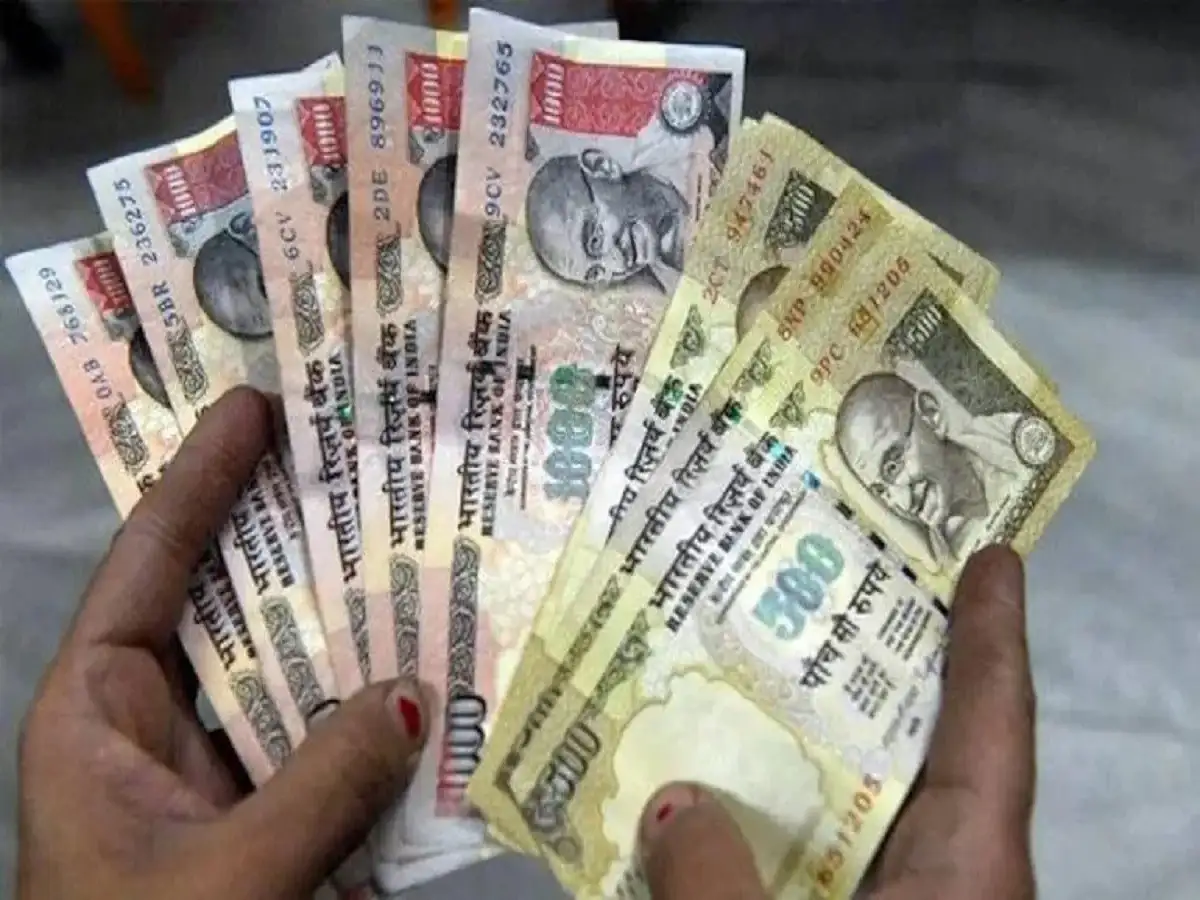
Finding a Rs 500 currency note torn into two pieces can be worrying, but physical damage does not necessarily mean that the entire value of the note has been lost. The Reserve Bank of India (RBI) has rules for dealing with soiled, mutilated and damaged banknotes, allowing eligible notes to be exchanged or their value paid according to prescribed conditions.
How much money you receive for a damaged Rs 500 note depends primarily on the condition of the note and the size of the largest undivided portion available for examination. Therefore, a torn note should not automatically be thrown away.
If your Rs 500 note has been damaged, here is what you need to know before taking it to a bank.
Can a Torn Rs 500 Note Be Exchanged?
A damaged or mutilated Rs 500 note may qualify for payment under the applicable RBI note-refund rules.
The fact that a note has been torn does not, by itself, make it worthless. The note needs to be examined to determine whether it meets the conditions prescribed for full, partial or no payment.
If your Rs 500 note has separated into two or more pieces, it is sensible to preserve all available pieces and take them to the bank for examination rather than discarding any portion.
The final decision will depend on the condition and dimensions of the note under the applicable rules.
When Can You Get the Full Rs 500 Value?
For higher-denomination notes covered by the applicable RBI rules, the amount payable depends on how much of the note remains as the relevant undivided piece.
For a Rs 500 note, if the qualifying portion is 80% or more of the note's total area, the note may be eligible for its full face value of Rs 500, subject to verification and the applicable conditions.
This means that substantial damage around the edges does not necessarily result in the loss of the entire value if enough of the original note remains intact.
When Can You Receive Rs 250?
A damaged Rs 500 note may qualify for half of its face value when the relevant remaining portion falls within the prescribed range.
If the qualifying undivided portion is 40% or more but less than 80% of the note's total area, the amount payable may be Rs 250, subject to the bank's assessment under RBI rules.
Therefore, the difference between receiving Rs 500 and Rs 250 can depend on the actual area of the qualifying portion of the damaged banknote.
What If Less Than 40% of the Note Remains?
If the relevant remaining portion is less than 40% of the total area, the note may not qualify for payment under the prescribed rules.
This is why customers should avoid making their own assumptions simply by looking at the damaged note.
Take the note to an eligible bank branch so that it can be examined according to the prescribed process.
What If the Rs 500 Note Has Torn Into Two Pieces?
If your note has split into two pieces, keep both pieces safely.
The bank can examine the submitted portions and determine whether the note qualifies for payment under the applicable rules.
Do not unnecessarily trim, cut or further damage the pieces. Keeping the note in the condition in which it was damaged can make examination easier.
The presence of identifiable features can assist examination, but simply having the serial number visible should not be interpreted as an automatic guarantee of receiving full value. The applicable RBI rules and the physical condition of the note remain important.
Do You Need an Account With the Bank?
Customers generally do not need to be account holders of a particular bank merely to access eligible note-exchange services.
Damaged notes can be taken to bank branches providing the prescribed exchange facility for examination.
However, the exact handling procedure can vary depending on the type and quantity of notes submitted. Customers presenting a large number of damaged notes may be subject to different operational procedures than someone exchanging one or a few notes.
Is There a Fee for Exchanging a Damaged Note?
Eligible note exchange is governed by RBI's currency-management rules, and customers should not assume that an unofficial payment to a bank employee or intermediary is necessary to get an ordinary damaged note examined.
If someone demands an unexplained payment for processing a straightforward exchange, ask the bank for the applicable official rule or fee schedule.
It is also useful to distinguish between the exchange of a small number of notes and situations involving bulk quantities, for which separate provisions may apply.
Does a Visible Serial Number Guarantee Exchange?
Not necessarily.
Serial numbers and other identifiable security features can help with examination, but they are not the only factors used to determine the amount payable for a mutilated note.
For a damaged Rs 500 note, the bank considers the note under the prescribed RBI framework, including the size and condition of the qualifying portion.
Therefore, customers should not rely on the common assumption that a clearly visible serial number automatically guarantees full reimbursement.
What Should You Do With a Damaged Rs 500 Note?
If a Rs 500 note is accidentally torn or damaged, avoid throwing it away. Preserve every available piece and take the note to a bank branch that handles note exchange.
For a Rs 500 denomination, the broad area-based thresholds described in the applicable refund framework mean that a sufficiently large qualifying portion can receive full value, a smaller qualifying portion can receive half value, while a portion below the prescribed minimum may receive no payment.
The key points to remember are:
- Preserve all pieces of the damaged banknote.
- Do not deliberately cut or further alter the note.
- Take it to an eligible bank branch for examination.
- Do not assume that a visible serial number alone guarantees payment.
- The amount payable depends on the applicable RBI rules and the size and condition of the qualifying portion.
- Ask the bank for the official procedure if there is any disagreement about the note's eligibility.
So, if your Rs 500 note tears into two pieces, there is no reason to immediately consider the money lost. Keep the pieces safely and have the note assessed through the proper banking channel to determine whether it qualifies for full, partial or no payment under the RBI's note-refund framework.