NEWS
This State Tightens Aadhaar Issuance for Adults, Introduces New Rural Jobs Program Worth ₹2,000 Crore
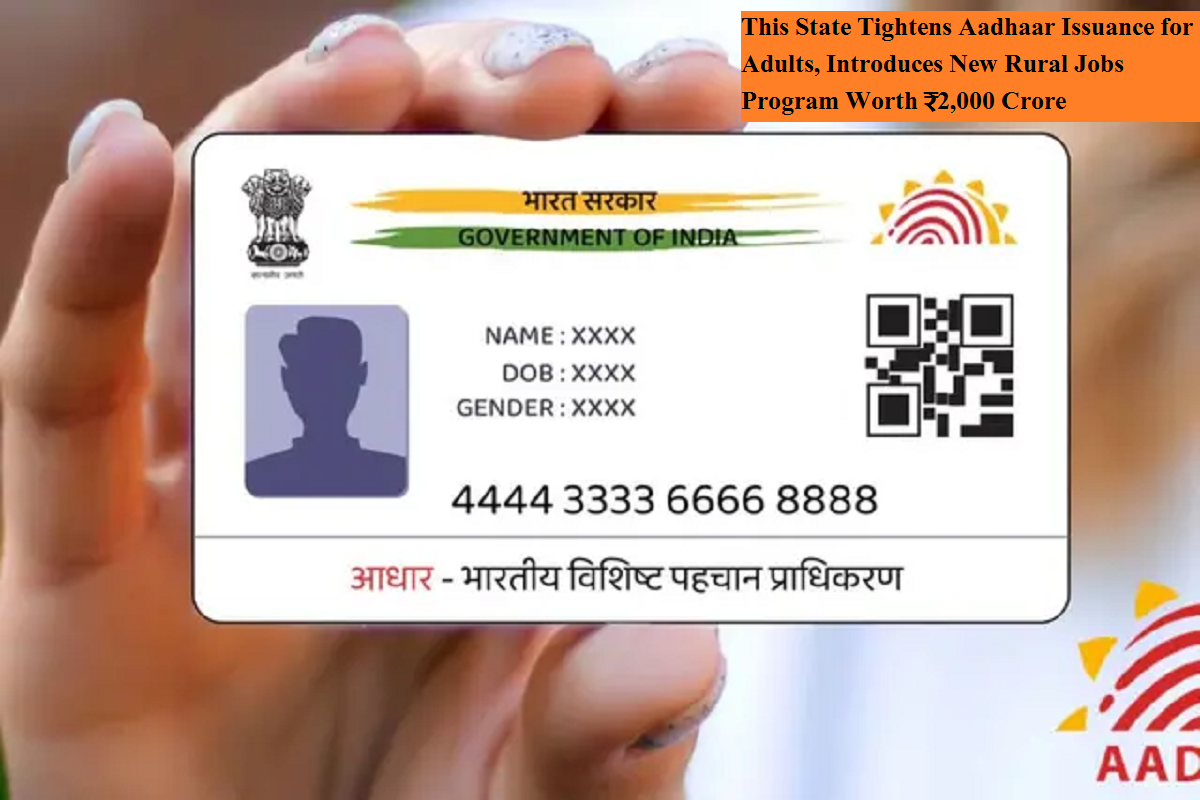
The Assam government has announced a major change in the way Aadhaar cards will be issued to adults, introducing stricter verification measures aimed at preventing unauthorized individuals from obtaining Indian identity documents. Alongside this decision, the state has also approved a large-scale rural employment initiative backed by a budget allocation of ₹2,000 crore.
The announcements were made after a recent state cabinet meeting chaired by Chief Minister Himanta Biswa Sarma. According to the government, the new measures are intended to strengthen identity verification systems and address concerns related to illegal immigration.
Stricter Aadhaar Rules for Adults in Assam
Under the revised policy, individuals aged 18 years and above will no longer be able to obtain an Aadhaar card through the regular enrollment process in Assam. The state government has decided to introduce an additional layer of scrutiny before any new Aadhaar document is issued to an adult applicant.
Officials say the move is part of a broader effort to ensure that identity documents are granted only to eligible residents. The government has expressed concerns that in certain districts, the number of Aadhaar card holders has reportedly exceeded the recorded population figures, raising questions about the authenticity of some registrations.
The administration believes that a stricter approval process will help identify irregularities and prevent misuse of identity documentation systems.
Special Approval Required for Adult Applicants
The new framework requires adult applicants seeking an Aadhaar card under exceptional circumstances to go through a special approval process.
In such cases, the District Commissioner will be required to submit a detailed recommendation to the state government. Aadhaar issuance will be considered only after the proposal receives approval from the appropriate authorities.
The government has emphasized that this process is designed to ensure thorough verification before identity documents are granted to adult applicants.
Certain Communities Exempt for the Time Being
While the restrictions apply broadly to adults, the Assam government has provided temporary exemptions for specific sections of society.
Members of tea garden communities, Scheduled Tribes (STs), Scheduled Castes (SCs), and persons with disabilities will continue to have access to Aadhaar enrollment under the existing framework. Officials noted that a significant number of people belonging to these groups still do not possess Aadhaar cards, making special consideration necessary.
Additionally, children below the age of 18 will continue to receive Aadhaar cards through the standard enrollment process without any change.
However, the state government has clarified that these exemptions will not remain in place indefinitely.
Exemptions to End in 2027
According to the cabinet's decision, the temporary relaxation granted to exempted communities will remain effective until April 1, 2027.
After that date, adult applicants from these categories will also be subject to the same restrictions and verification procedures applicable to all other residents. The government says this phased approach will allow sufficient time for eligible individuals who currently lack Aadhaar cards to complete their enrollment.
Assam Launches New Rural Employment Initiative
Apart from the Aadhaar-related reforms, the Assam cabinet has also approved a new employment-focused program aimed at boosting economic opportunities in rural areas.
The initiative, known as the VB-G RAM G Act framework, is scheduled to come into effect from July 1. The state government has earmarked ₹2,000 crore for the program, making it one of the significant rural development efforts announced this year.
Under the scheme, eligible rural residents will be provided with up to 125 days of wage-based employment opportunities. The objective is not only to create jobs but also to improve local infrastructure and public assets across villages.
Focus on Long-Term Rural Development
Chief Minister Himanta Biswa Sarma stated that the employment program is designed to generate productive work rather than temporary job opportunities alone. Projects undertaken under the scheme will contribute to the creation of durable community assets, including infrastructure that can support long-term economic growth.
The government believes that combining employment generation with asset creation will strengthen rural economies, improve living conditions, and provide sustainable benefits to local communities.
With the introduction of stricter Aadhaar issuance norms and a large rural employment package, Assam has taken significant administrative and development-focused steps that are expected to have a lasting impact across the state in the coming years.