NEWS
Third-Party vs Comprehensive Car Insurance: Know the Difference Before Buying Motor Insurance in 2026
Motor Insurance Tips 2026: Owning a car or two-wheeler comes with several responsibilities, and purchasing the right motor insurance policy is one of the most important. While insurance helps protect vehicle owners against financial losses, not every motor insurance policy provides the same level of coverage.
In India, third-party motor insurance is legally mandatory for vehicles used in public places. However, many vehicle owners remain confused about the difference between third-party insurance and comprehensive motor insurance.
Choosing a policy without understanding its benefits and limitations could lead to substantial out-of-pocket expenses after an accident.
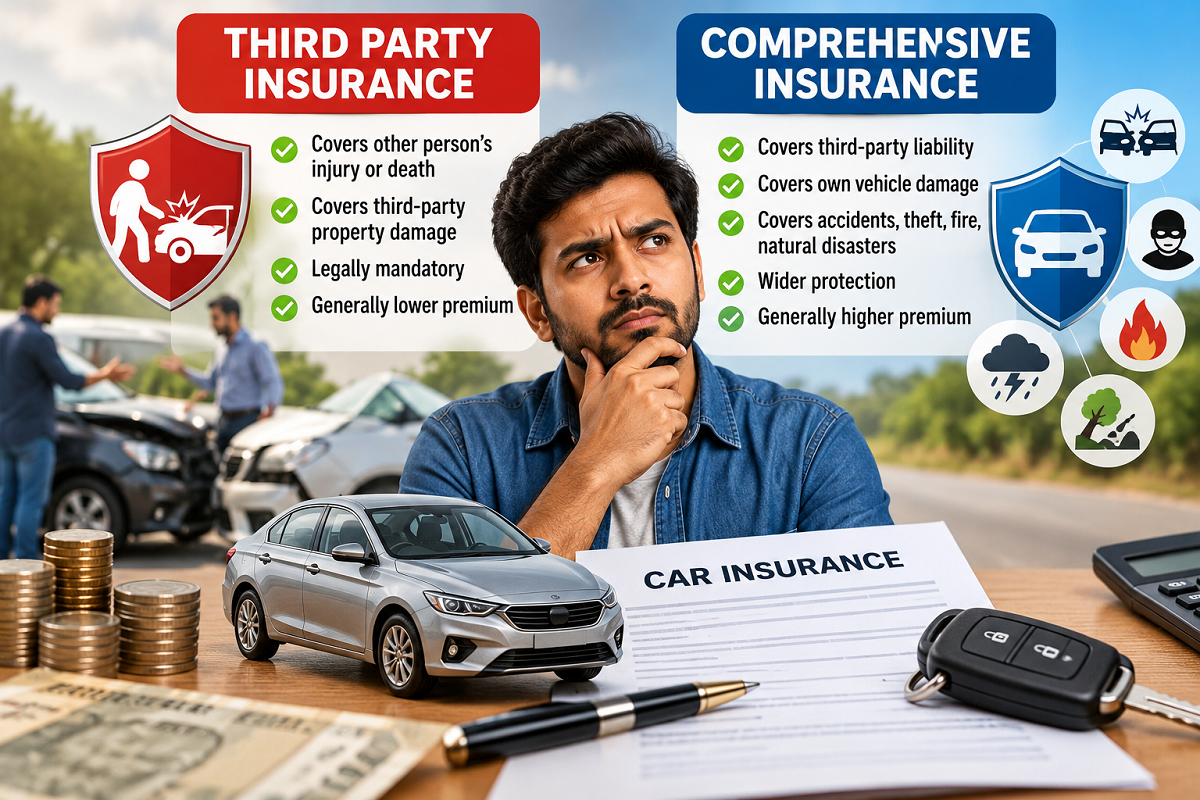
Third-party insurance primarily covers legal liabilities arising from injury, death or property damage suffered by another person. Comprehensive insurance generally offers broader protection by combining third-party liability coverage with insurance for damage to your own vehicle.
Understanding these differences can help you choose suitable protection for your car or bike.
What Is Third-Party Motor Insurance?
Third-party insurance is the basic motor insurance coverage required under Indian law.
Under the Motor Vehicles Act, vehicles used in public places must have the prescribed third-party liability insurance.
This policy is designed to protect the insured vehicle owner against certain legal and financial liabilities arising from accidents involving other people.
For example, if your car causes an accident that damages another person's vehicle or results in bodily injury, the applicable third-party insurance coverage may help meet the resulting legal liability.
However, third-party insurance does not normally cover damage to your own vehicle.
Main Features of Third-Party Insurance
- Legally mandatory: Third-party liability insurance is required for vehicles used in public places in India.
- Injury and death liability: It provides coverage for eligible legal liabilities arising from third-party bodily injury or death.
- Property damage: It covers third-party property damage subject to applicable limits and policy conditions.
- No own-vehicle damage coverage: Repairs to your own car or bike are generally excluded.
- Lower premium: Third-party-only policies usually cost less than comprehensive insurance because they offer narrower protection.
The premium for the mandatory third-party component is regulated under the applicable framework.
What Is Comprehensive Motor Insurance?
Comprehensive motor insurance offers broader protection than a standalone third-party policy.
It generally combines mandatory third-party liability insurance with own-damage coverage for the insured vehicle.
This means that, in addition to covering eligible liabilities involving other people, the policy may also help pay for damage to your own car or bike.
Depending on the terms and exclusions, comprehensive insurance can provide protection against several risks.
What Does Comprehensive Insurance Cover?
1. Road Accidents
If your vehicle is damaged in a covered road accident, the insurer may pay eligible repair expenses after applying the relevant deductibles and other policy conditions.
2. Vehicle Theft
If your insured vehicle is stolen and the claim meets the policy requirements, the insurer may provide compensation based on the applicable insured declared value and settlement terms.
3. Fire Damage
Comprehensive insurance generally covers eligible losses caused by fire, subject to policy conditions.
4. Natural Disasters
Damage caused by covered natural events, such as floods, storms and earthquakes, may be included.
5. Certain External Events
Depending on the policy, damage caused by specified external incidents, including certain acts of vandalism or other insured events, may also be covered.
However, comprehensive insurance does not mean that every possible type of damage or loss is automatically insured.
Policy exclusions, deductibles and claim conditions still apply.
Third-Party vs Comprehensive Insurance: Key Differences
The biggest difference between these two insurance options is the extent of financial protection.
| Feature | Third-Party Insurance | Comprehensive Insurance |
|---|---|---|
| Legally Mandatory | Yes | No, but includes mandatory third-party cover |
| Third-Party Injury or Death Liability | Covered as per law and policy | Covered as per law and policy |
| Third-Party Property Damage | Covered subject to applicable limits | Covered subject to applicable limits |
| Damage to Your Own Vehicle | Not covered | Generally covered for insured events |
| Vehicle Theft | Not covered | Generally covered |
| Fire Damage to Own Vehicle | Not covered | Generally covered |
| Natural Disaster Damage to Own Vehicle | Not covered | Generally covered for insured events |
| Premium | Usually lower | Usually higher |
| Overall Protection | Basic liability protection | Broader vehicle and liability protection |
For vehicle owners, the choice largely depends on their financial circumstances, the value of the vehicle and their willingness to bear repair costs themselves.
Which Motor Insurance Policy Has a Higher Premium?
Third-party insurance generally costs less because its protection is primarily limited to liabilities involving other people.
Comprehensive insurance usually carries a higher premium because it also provides own-damage coverage.
However, the price of comprehensive insurance is not the same for every vehicle.
Insurers consider several factors while calculating premiums.
1. Vehicle Make and Model
The type of vehicle, its specifications and repair costs can influence insurance pricing.
Expensive vehicles may attract higher own-damage premiums because repairing or replacing their components can be costly.
2. Age of the Vehicle
The age of a car or bike can affect its insured declared value, commonly known as IDV.
IDV is an important factor in determining the own-damage premium and the maximum settlement basis for certain total-loss or theft claims.
3. Location and Usage
The location where the vehicle is registered and the risk factors associated with its use may influence the premium.
4. Claim History
A policyholder's previous claims can affect eligibility for a No Claim Bonus (NCB) on the own-damage component.
Customers who complete a policy period without making an eligible own-damage claim may receive an NCB discount at renewal.
5. Additional Insurance Covers
Optional add-ons can increase the premium but may provide useful additional protection.
Common examples include zero-depreciation cover, roadside assistance, engine protection and return-to-invoice cover.
Availability and conditions vary by insurer.
What Happens If You Have Only Third-Party Insurance?
Suppose your car is involved in an accident and the repair bill for your own vehicle comes to ₹60,000.
If you have only third-party insurance, the policy would generally not pay for repairs to your own car.
You would usually have to bear that expense yourself.
However, if the accident also results in eligible damage or injury to another person, the third-party insurance may respond to the resulting legal liability in accordance with applicable rules.
Now consider the same accident under a comprehensive policy.
If the damage to your own car is covered, the insurer may contribute towards the ₹60,000 repair bill after applying deductibles, depreciation where applicable and other policy conditions.
This example illustrates why comprehensive insurance may be valuable for vehicle owners who want protection against unexpected repair expenses.
Is Comprehensive Insurance Mandatory in India?
No. Purchasing comprehensive motor insurance is generally optional.
The legal requirement is to maintain the prescribed third-party liability insurance.
A vehicle owner can therefore choose a standalone third-party policy to meet the basic insurance requirement.
However, opting for third-party-only coverage means accepting the financial risk of damage to the insured vehicle.
For a relatively new or expensive car, that risk could be substantial.
Vehicle owners should also check any insurance-related requirements under their vehicle financing or loan agreements.
What Is Own-Damage Insurance?
Own-damage insurance protects the insured vehicle against specified losses or damage.
It is the component that distinguishes comprehensive coverage from third-party-only insurance.
Some insurers also offer standalone own-damage policies to eligible customers who already have valid third-party liability insurance.
This arrangement allows vehicle owners to maintain separate third-party and own-damage policies, subject to applicable rules.
It is important to ensure that both policies remain valid and that their coverage periods are understood.
Which Insurance Is Better for an Old Car?
The most suitable insurance policy depends on the vehicle's current value and the owner's financial priorities.
For an older vehicle with a relatively low market value, some owners may prefer third-party-only insurance to reduce premium costs.
However, the decision should not be based solely on the age of the vehicle.
If repairing or replacing the car would place a significant financial burden on the owner, maintaining own-damage protection may still be worthwhile.
Comparing the premium with the vehicle's IDV, repair costs, deductibles and available coverage can help make the decision.
Important Things to Check Before Buying Motor Insurance
Before purchasing or renewing a policy, vehicle owners should carefully review the following:
- Coverage benefits and exclusions
- Insured Declared Value (IDV)
- Compulsory and voluntary deductibles
- Cashless garage network
- No Claim Bonus eligibility
- Available add-on covers
- Claim reporting and settlement procedures
- Policy validity and renewal date
It is also important to provide accurate information about the vehicle and its usage.
Incorrect or incomplete details can create complications during claim processing.
What Happens If You Drive Without Third-Party Insurance?
Driving or using a motor vehicle in a public place without the required insurance can result in legal penalties.
Under Section 196 of the Motor Vehicles Act, the prescribed punishment can include a fine of ₹2,000 for a first offence, or imprisonment of up to three months, or both.
For a subsequent offence, the fine can increase to ₹4,000, with imprisonment of up to three months or both also provided under the law.
Vehicle owners should therefore ensure that their mandatory insurance remains valid and is renewed before expiry.
Final Takeaway
Both third-party and comprehensive motor insurance serve important purposes, but they offer different levels of protection.
Third-party insurance is legally mandatory and primarily protects against eligible liabilities involving other people. Comprehensive insurance provides broader protection by generally covering damage to your own vehicle as well.
Although comprehensive policies usually cost more, they can help reduce the financial impact of accidents, theft, fire and other covered incidents.
Before choosing a policy, compare the coverage, premium, exclusions, deductibles and claim conditions rather than selecting insurance based only on price.
Disclaimer: This article provides general information about motor insurance in India. Actual coverage, premiums, exclusions and claim settlements depend on the insurer, policy wording and applicable regulations. Review the official policy documents before purchasing insurance.