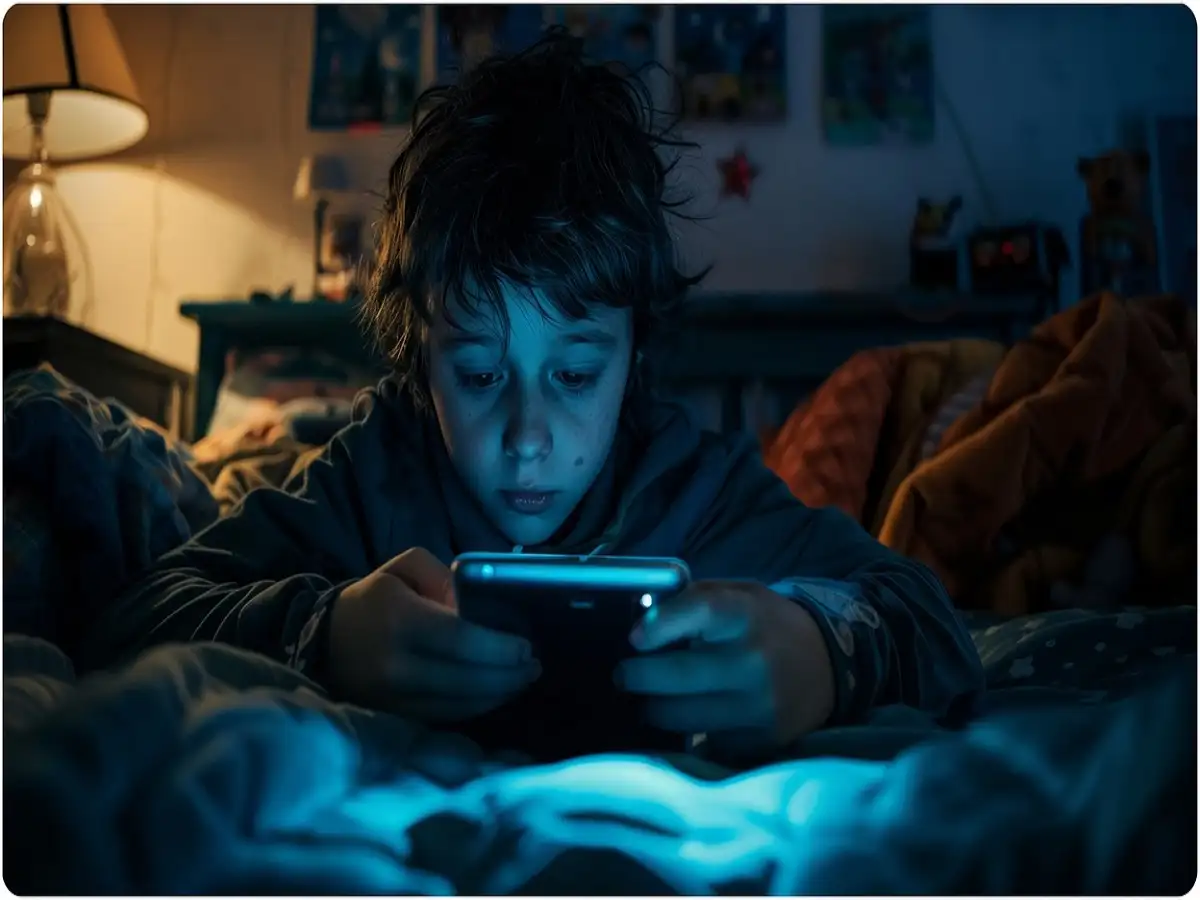
Health Tips for Better Sleep: Smartphones have become a constant part of everyday life. Many people check messages soon after waking up and continue using their phones until the final minutes before sleep. Reels, short videos, news alerts, social media updates and late-night chats can easily stretch bedtime far beyond what was planned.
Using a phone at night does not automatically cause a sleep disorder, but several factors linked with bedtime screen use can interfere with healthy sleep habits. Bright light, stimulating content and constant notifications may make it harder for the brain to settle down.
Reducing phone use before bedtime can therefore be a simple lifestyle change worth trying. Even putting the phone away 30 to 60 minutes before sleeping may help some people create a calmer nighttime routine.
1. Your Body Gets a Clearer Signal That It Is Time to Sleep
The body's sleep-wake cycle is influenced by its internal clock, commonly known as the circadian rhythm.
This system responds strongly to light and darkness. As evening progresses and light levels fall, the body naturally begins preparing for sleep.
Keeping a bright screen close to the face late at night can interfere with these nighttime signals, particularly when the device is used for a long period.
By putting the phone away before bed and reducing exposure to bright screens, you create a darker and calmer environment that is more consistent with the body's natural sleep routine.
This does not mean a smartphone is the only factor affecting sleep. Caffeine, stress, irregular schedules, room temperature and many other habits also matter.
2. Melatonin Production May Be Less Disrupted
Melatonin is a hormone involved in regulating the timing of sleep.
Its production normally increases during the evening as the environment becomes darker. Exposure to light at night, including light from electronic screens, can influence this process.
Research has shown that short-wavelength or blue-enriched light can affect melatonin and circadian timing. However, the impact depends on factors such as brightness, duration of exposure and how close the screen is to the eyes.
This is why reducing screen exposure before sleep may be more useful than simply relying on a phone's night-mode setting.
Night mode can make the screen more comfortable to look at, but it does not remove the other problem: you may still remain mentally engaged with videos, messages or social media instead of winding down.
3. Your Mind Gets Time to Slow Down
The content you consume may be just as important as the screen itself.
Social media feeds are designed to keep presenting new information. One video leads to another, messages invite replies, and breaking-news alerts can keep the brain engaged at a time when it should be moving toward rest.
Some content may also trigger excitement, frustration, anxiety or curiosity.
Putting the phone aside creates a transition period between daytime activity and sleep.
Instead of processing new notifications every few seconds, the mind gets an opportunity to settle.
Activities such as reading a printed book, light stretching, listening to calm music or simply preparing for the next day may create a more relaxing bedtime routine.
4. You May Stop Accidentally Delaying Bedtime
One of the most practical benefits of avoiding the phone at night has nothing to do with hormones.
It simply removes a major source of distraction.
Many people pick up their phone intending to spend five minutes checking messages, only to realise 30 or 60 minutes later that they are still scrolling.
This behaviour is sometimes described as bedtime procrastination because entertainment or online activity delays the time when a person actually goes to sleep.
Putting the device out of reach can make it easier to stick to a planned bedtime.
That extra half-hour of sleep can become significant when repeated every night.
For example, losing just 30 minutes of sleep per night adds up to three and a half hours over one week.
5. You May Feel More Refreshed the Next Morning
If reducing phone use helps you fall asleep earlier or get more continuous sleep, you may notice a difference the following day.
Adequate sleep plays an important role in attention, memory, mood and physical recovery.
People who routinely stay up late scrolling may experience daytime sleepiness simply because their total sleep duration is too short.
When bedtime becomes more consistent, morning tiredness may improve.
However, avoiding a phone before bed is not a guaranteed cure for fatigue. Persistent tiredness can have many causes, including poor sleep quality, irregular schedules, stress, medications and medical conditions.
How Long Before Bed Should You Stop Using Your Phone?
There is no single rule that works for everyone.
A practical starting point is to create a 30- to 60-minute screen-free period before bedtime.
If one hour feels unrealistic, start with 15 or 20 minutes and gradually increase it.
The important part is consistency.
You can also make the habit easier by charging your phone away from the bed, turning off unnecessary notifications and using a separate alarm clock if checking the phone first thing in the morning is also becoming a problem.
Is Blue Light the Only Problem?
No.
Blue light receives a lot of attention in discussions about smartphones and sleep, but bedtime phone use involves several other factors.
Mental stimulation, emotional content, notifications and simply losing track of time can all interfere with sleep.
This means switching on a blue-light filter while continuing to watch videos for two hours may not solve the underlying problem.
A healthier strategy is to reduce both light exposure and stimulating screen activity before bedtime.
What Can You Do Instead of Scrolling?
Replacing a habit is often easier than simply trying to stop it.
You might spend the final part of the evening reading, stretching, journaling, preparing clothes for the next day or having a quiet conversation with family.
Keeping bedroom lighting relatively dim can also help create a stronger distinction between daytime and bedtime.
Try to keep roughly the same sleep and wake times on most days, as regularity is an important part of healthy sleep habits.
When Poor Sleep Needs More Attention
Occasional difficulty sleeping is common. But if you regularly struggle to fall asleep, wake repeatedly during the night, experience loud snoring or breathing interruptions, or feel excessively sleepy during the daytime, reducing phone use may not be enough.
Persistent sleep problems should be discussed with a healthcare professional.
Other issues, including insomnia and sleep-related breathing disorders, may require proper evaluation.
The Bottom Line
Keeping your smartphone away before bedtime is a small change that can have several practical benefits.
It may reduce late-night stimulation, make it easier to follow a regular bedtime and limit light exposure when the body is naturally preparing to sleep. Most importantly, it can stop a planned five-minute scroll from turning into an hour of lost sleep.
You do not necessarily need to give up your phone for the entire evening. Start by creating a short screen-free window before bed and see whether your sleep quality, morning energy and daytime concentration improve.
Disclaimer: This article is for general health information only and is not a substitute for medical advice. Persistent sleep problems or excessive daytime fatigue should be evaluated by a qualified healthcare professional.