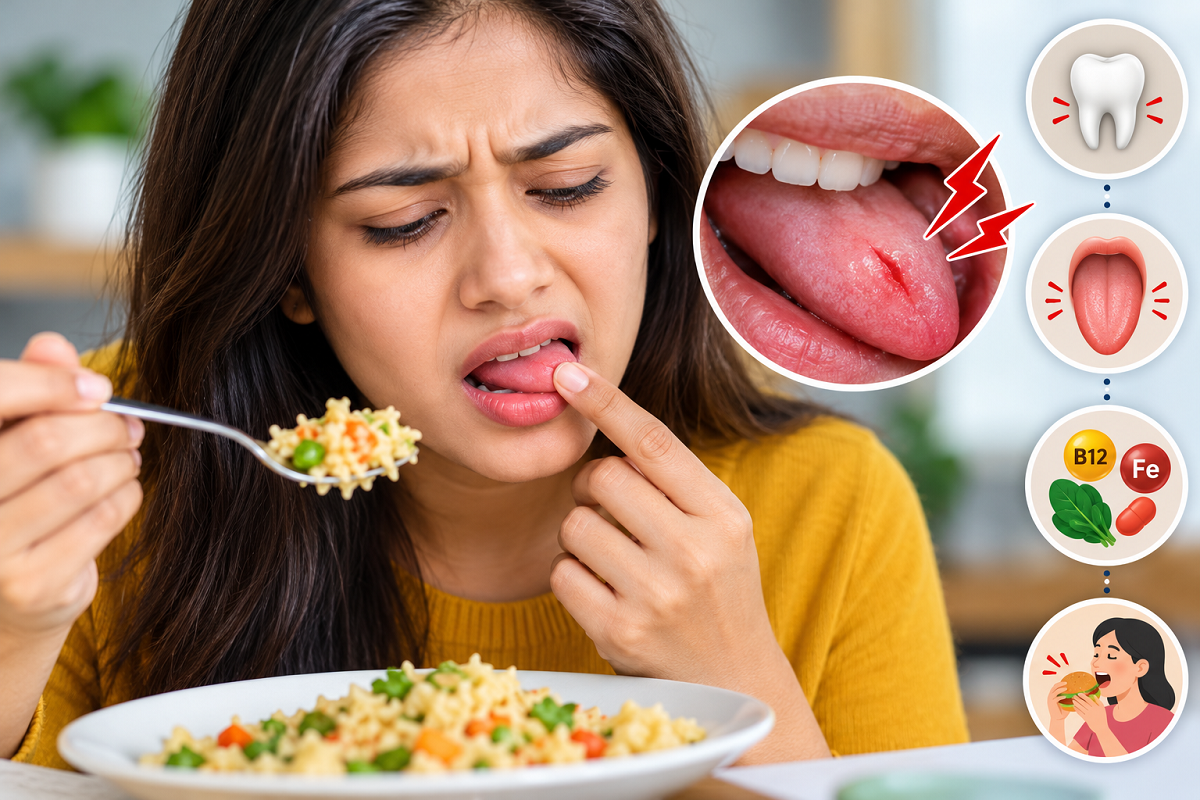
Health Tips: Accidentally biting your tongue while eating can be painful and uncomfortable. Most people experience this occasionally, especially when eating quickly or talking while chewing. However, if you frequently bite your tongue during meals, it may be worth paying attention to your dental health and eating habits.
Repeated tongue injuries can sometimes be associated with sharp teeth, dental problems, tongue swelling or difficulty coordinating chewing movements.
Although an occasional tongue bite is usually harmless, repeated injuries may cause discomfort, swelling and small wounds that interfere with eating.
Understanding the possible causes can help you take appropriate precautions and recognise when professional medical advice is necessary.
Why Do People Accidentally Bite Their Tongue?
The tongue is an important muscular organ that helps with chewing, swallowing, speaking and tasting food.
During chewing, it continuously moves food between the teeth while avoiding the biting surfaces.
These movements usually happen automatically.
However, when the tongue moves into the path of the teeth at the wrong moment, an accidental bite can occur.
Sometimes, the reason is as simple as eating too quickly.
In other cases, dental irregularities, inflammation or other health problems may contribute.
Here are five important things to know about repeated tongue biting.
1. Sharp or Uneven Teeth May Injure Your Tongue
One possible reason for repeated tongue injuries is the shape or condition of your teeth.
Broken teeth, chipped edges, uneven tooth alignment or damaged dental fillings may create surfaces that irritate or injure the tongue.
If a tooth has a sharp edge, it may repeatedly come into contact with the same part of the tongue while chewing.
Poorly fitting dental appliances or restorations may also contribute to irritation.
What should you do?
Pay attention to whether the injury repeatedly occurs in the same location.
If you suspect that a particular tooth is responsible, schedule an appointment with a dentist.
A dental examination can help identify sharp edges, damaged fillings or bite-related problems.
Do not attempt to file, reshape or smooth a tooth yourself.
Doing so may damage the tooth and make the problem worse.
2. Tongue Swelling Can Increase the Risk of Accidental Biting
A swollen tongue may occupy more space inside the mouth than usual.
This can make it easier for the tongue to come between the teeth during chewing.
Tongue swelling can develop for several reasons, including accidental injury, irritation, infection, allergic reactions or certain medical conditions.
In some cases, repeated biting may worsen an existing injury by causing additional inflammation.
This can create a cycle in which swelling makes further biting more likely.
What should you do?
If your tongue remains swollen, painful or unusually sensitive, consult a healthcare professional.
A dentist or doctor can examine the area and determine whether treatment is needed.
Sudden swelling of the tongue or throat requires particular attention.
Seek emergency medical care immediately if swelling is accompanied by difficulty breathing, swallowing or speaking.
These symptoms may indicate a serious allergic reaction or another urgent medical condition.
3. Vitamin B12, Folate or Iron Deficiency May Affect Tongue Health
Certain nutritional deficiencies can affect the appearance and condition of the tongue.
For example, low levels of vitamin B12, folate or iron may be associated with tongue soreness, inflammation or a burning sensation.
Some people may also notice changes in the tongue's colour or surface.
However, it is important to understand that nutritional deficiencies are not a proven direct explanation for every case of repeated tongue biting.
Frequent accidental biting alone does not establish that someone has a vitamin deficiency.
If tongue discomfort occurs alongside symptoms such as persistent fatigue, weakness or mouth soreness, a medical evaluation may be appropriate.
A doctor may recommend blood tests depending on the symptoms and medical history.
What should you do?
Maintain a balanced diet containing appropriate sources of vitamins and minerals.
Avoid taking high-dose iron or vitamin supplements without medical advice.
If a deficiency is suspected, proper testing can help determine whether treatment is necessary.
4. Eating Too Quickly or Talking While Chewing
One of the most common everyday situations associated with accidental tongue biting is eating in a hurry.
When people chew quickly, they may not give their tongue enough time to move food safely between the teeth.
Talking while chewing can also interfere with the normal coordination of mouth movements.
Distractions such as watching videos, using a smartphone or rushing through meals may increase the likelihood of an accidental bite.
Although these habits do not always cause injuries, slowing down can help reduce the risk.
Simple habits that may help:
- Take smaller bites instead of putting large amounts of food into your mouth.
- Chew slowly and thoroughly.
- Avoid talking with food in your mouth.
- Stay attentive while eating.
- Allow enough time to finish meals comfortably.
If tongue biting continues despite these precautions, consider a dental examination.
Repeated injuries should not automatically be blamed on eating habits.
5. What Should You Do If You Accidentally Bite Your Tongue?
Minor tongue injuries often heal on their own because the mouth has a good blood supply.
However, even a small bite can cause noticeable pain or bleeding.
Taking a few basic first-aid steps may help protect the injured area.
Rinse Your Mouth Gently
Rinse your mouth with clean water to remove food particles and help keep the area clean.
Avoid aggressive rinsing if the wound is actively bleeding.
Apply Gentle Pressure to Stop Bleeding
If the injured area is accessible, use clean gauze or a clean cloth to apply steady pressure.
Maintain pressure for several minutes without repeatedly removing the gauze to check the wound.
If bleeding is heavy or does not stop with sustained pressure, seek urgent medical attention.
Use a Cold Compress
A cold compress applied to the outside of the mouth may help reduce discomfort and swelling.
Some people may find relief from a small piece of ice allowed to melt slowly in the mouth, provided they can do so safely.
Avoid chewing hard ice, as it may damage the teeth or aggravate the injury.
Avoid Foods That Irritate the Wound
While the tongue is healing, avoid foods and drinks that cause additional discomfort.
These may include very hot beverages, spicy dishes, acidic foods and hard or crunchy snacks.
Softer foods may be easier to eat until the injury improves.
Watch for Signs of Complications
Most minor tongue bites improve within a few days.
However, a deep wound, increasing swelling, worsening pain or signs of infection may require professional evaluation.
Seek medical or dental advice if the injury is not healing as expected.
When Should You See a Dentist or Doctor?
Occasional tongue biting is usually not a reason for concern.
However, repeated injuries should be assessed if they occur frequently or affect the same area.
You should consider professional advice if:
- You repeatedly bite the same part of your tongue.
- A tooth or dental filling feels sharp or damaged.
- Tongue swelling or soreness persists.
- You experience difficulty chewing or swallowing.
- A mouth sore does not heal within two weeks.
- Tongue biting begins suddenly without an obvious explanation.
A dentist can assess whether tooth alignment, dental restorations or other oral problems are contributing.
If dental causes are not identified, a doctor may consider other possible explanations.
Involuntary jaw movements, unusual muscle activity or certain neurological conditions can occasionally be associated with repeated oral injuries.
These possibilities require individual medical assessment rather than self-diagnosis.
Can Repeated Tongue Biting Be Prevented?
The best preventive approach depends on the underlying cause.
For many people, eating more slowly and avoiding distractions may reduce accidental injuries.
Regular dental examinations can also help identify damaged teeth, sharp fillings and other oral health concerns.
Good oral hygiene is important for maintaining healthy teeth and gums.
If you wear dentures, braces or other dental appliances, ensure they fit properly and follow your dentist's recommendations.
Persistent tongue biting should not be ignored simply because each individual injury appears minor.
Repeated trauma can cause ongoing irritation and discomfort.
Final Word
Accidentally biting your tongue during meals is a common experience.
However, frequent tongue injuries may be linked to sharp teeth, dental alignment problems, swelling or eating habits.
Nutritional deficiencies can affect tongue health, although repeated biting alone is not enough to diagnose one.
Simple measures such as chewing slowly, taking smaller bites and maintaining regular dental checkups may help reduce the problem.
If tongue biting continues, causes persistent pain or repeatedly injures the same area, consult a dentist or healthcare professional.
Important: Sudden tongue or throat swelling, breathing difficulties or an inability to swallow saliva requires immediate emergency medical attention.
Disclaimer: This article is intended for general health awareness and does not replace professional medical advice, diagnosis or treatment. Consult a qualified healthcare professional for persistent symptoms or concerns.