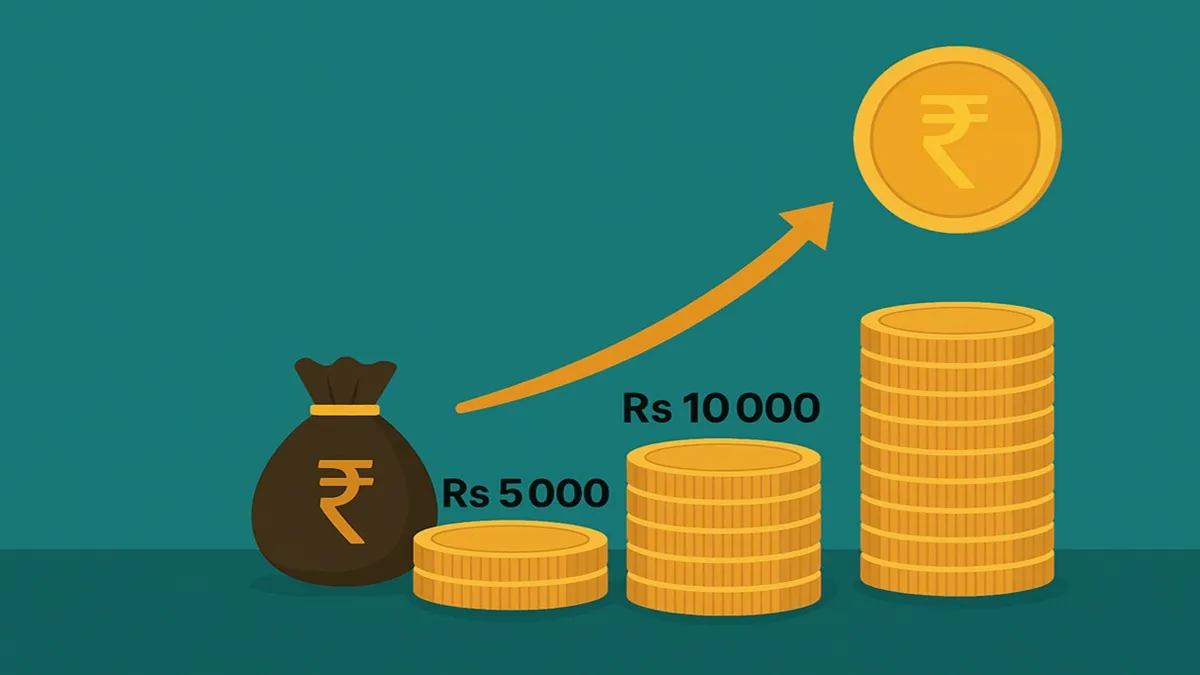
Once you've amassed a corpus of ₹1 crore through SIP, the biggest question is whether you should continue investing or not. Find out what you should do next.
Stop SIP and your money will still grow.
Nowadays, people are saving for their future in various ways, investing in various forms ranging from fixed deposits (FDs) to SIPs (System Investment Plans), so that these savings can meet their essential expenses after retirement. If you also invest in SIPs and have built a corpus of up to ₹1 crore by the age of 40, many people may wonder whether it's still better to continue investing, or if the SIP is stopped, will the money stop growing? If you have this question, find out.
The answer is no. Stopping your SIP doesn't mean your money will stop growing. If you've already invested crores of rupees, you can earn returns on that amount even if you don't start a new SIP.
Money will increase even after closing.
The key point is that returns earned over time are also added to the same fund, and returns can be earned on that increased amount, a process known as compounding. This means that even if you don't invest, your ₹1 crore fund will still grow.
How will a fund of Rs 1 crore become Rs 3 crore in 10 years?
If it is explained simply, like...
- Starting amount – 1 crore
- Investment period – 10 years
- Age – 40 to 50 years
- Estimated annual return – 12 percent
- Estimated returns in 10 years – Above ₹2 crore
- Estimated corpus at the age of 50 – Above Rs 3 crore
That means, an amount of Rs 1 crore can increase to more than Rs 3 crore in 10 years on the basis of 12 percent annual return.
Will everyone get the fund of Rs 3 crore?
Now the biggest question is whether all investors will receive funds of more than ₹3 crore. In reality, this is not the case at all. There are many reasons behind this, such as...
- The returns received on investment actually keep changing according to the market.
- The amount of increased money you will get depends on where you have invested your money.
- Apart from this, many other things also have to be taken into consideration, hence it is wrong to assume that everyone will get the same returns.
- Returns may vary from person to person.
Plan according to age
The most important thing is that needs can change as you age. For example, you may have some needs at age 40, while you may have different needs by age 50. Therefore, investment planning should focus on future needs over time. Don't just focus on increasing your funds; consider how much money you may need for your children's education, illness, and other needs in the future.