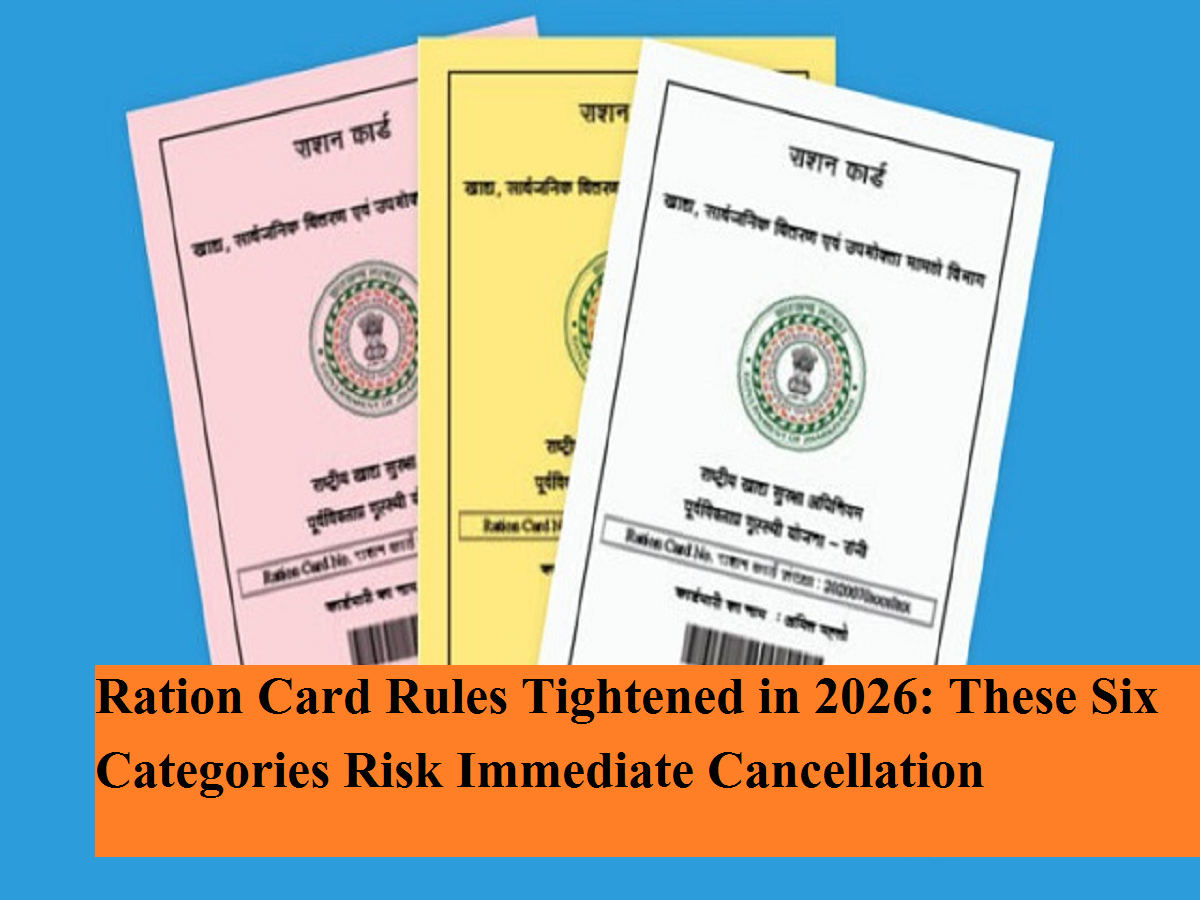
Ration cards in India are far more than routine government documents — they are a lifeline for millions of families who depend on subsidized food grains for basic nutrition. To ensure that benefits reach only the genuinely needy, the government periodically revises eligibility norms. In 2026, authorities have further tightened the rules, and many households could lose their ration card if they no longer meet the criteria.
The latest changes aim to eliminate ineligible beneficiaries and strengthen transparency in the public distribution system.
New Eligibility Checks: Who May Lose the Ration Card?
Officials have begun identifying economically well-off households that are still availing subsidized ration benefits. If your family falls into any of the categories below, your ration card may be cancelled or your application for a new card could be rejected.
1. Annual Income Above the Limit
Households with a total annual income exceeding ₹1.2 lakh may now be treated as financially capable. Such families could be removed from the subsidized ration category, depending on state-specific guidelines.
2. Ownership of Four-Wheeler Vehicles
If any member of the family owns a car, tractor, or other four-wheeler, the household may be declared ineligible. However, some states may provide limited relaxation where vehicles are used strictly for commercial purposes.
3. Ownership of Pucca House or High-Value Property
Families owning a permanent house or flat in premium urban localities may be excluded from the scheme. Similarly, households possessing agricultural land beyond the prescribed ceiling risk losing eligibility.
4. Income Tax Payers
If any member of the household files income tax returns, the family is likely to be disqualified. The government’s view is that taxpayers generally have sufficient financial capacity to manage their food expenses without subsidy.
5. Government or PSU Employees
Individuals working in permanent positions under the central or state government, public sector undertakings, or government-aided institutions fall outside the beneficiary group.
6. High Electricity Connection Load
In several states, households with electricity connections above 2 kilowatts are being screened out from BPL or other subsidized ration categories, as this is considered an indicator of better economic status.
Mandatory e-KYC and Aadhaar Linking
Authorities have also made e-KYC verification compulsory for all ration card holders. Every family member must complete biometric authentication — typically through fingerprint verification — at the nearest fair price shop.
The government has set February 28, 2026 as an important deadline. Beneficiaries who fail to complete e-KYC by this date may see their names removed from the ration list.
This step is primarily intended to eliminate “ghost beneficiaries,” including duplicate or deceased entries that continue to draw subsidized food grains.
What to Do If You Are No Longer Eligible
Officials have advised that households aware of their ineligibility should voluntarily surrender their ration card. Authorities have warned that if financially capable individuals are found intentionally availing benefits meant for the poor, recovery of the subsidized food cost at market rates may be initiated. Legal action could also follow in serious cases.
Why the Government Is Tightening Rules
The objective behind the stricter norms is to ensure that welfare resources are directed toward the most vulnerable sections of society. By removing ineligible beneficiaries and enforcing biometric verification, the government aims to reduce leakages, curb misuse, and improve overall transparency in the public distribution system.
For genuine beneficiaries, the message is clear: complete your e-KYC on time and ensure your details are accurate. For others, the new rules signal a decisive shift toward stricter enforcement and targeted delivery of food subsidies in 2026.