NEWS
Presidential Reference: 'Court cannot bind Governor and President with time limit', said SC on Presidential Reference
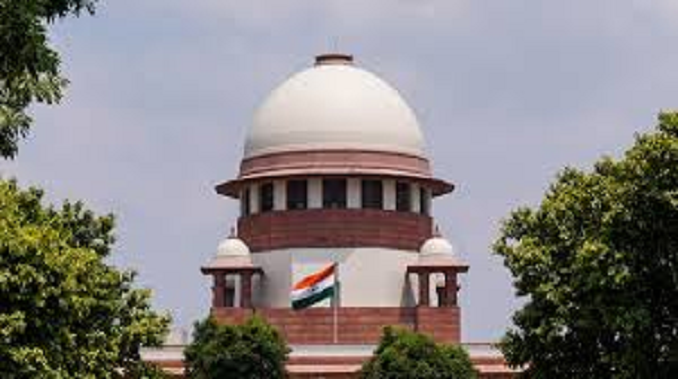
The Supreme Court said that Article 142 of the Constitution does not give it the power to declare the bill as approved by it without the approval of the Governor.

The Supreme Court gave its opinion on the Presidential Reference
In response to a Presidential Reference sent by President Draupadi Murmu under Article 143 of the Constitution, the Supreme Court stated that the court cannot set a deadline for the President and Governor to decide on bills. It also stated that the Supreme Court cannot grant its own assent to a bill based on a delay in decision-making by the Governor.
The court, while delivering its opinion on the Presidential Reference on Thursday (November 20, 2025), stated that under Articles 200 and 201 of the Constitution, the court cannot set a deadline for the Governor and the President to decide on the bill. It added that imposing a time limit on them would be contrary to the spirit of the Constitution.
A bench comprising Chief Justice Bhushan Ramakrishna Gavai, Justice Surya Kant, Justice Vikram Nath, Justice P.S. Narasimha, and Justice A.S. Chandurkar said that Article 200 provides that the Governor may assent to a bill, send it back to the Assembly, or refer it to the President. If the Assembly returns a bill, the Governor must assent to it. The bench reserved its opinion on September 11 after hearing the case for 10 days.
The Supreme Court stated that under Article 200, the court cannot interfere with the Governor's decision, but that if he keeps a bill pending indefinitely, it could be grounds for limited court intervention. The court also stated that a bill pending before the Governor or the President cannot be considered by the court. The court can only consider a law after it has been enacted.
The court stated that it could issue limited directions to the Governor after assessing the reasons for the delay in deciding on a bill. Article 361 prohibits judicial action against the Governor. It stated that decisions by the Governor and the President on bills are not subject to judicial review. The bench stated that Article 142 does not empower the Supreme Court to declare a bill as approved without the Governor's approval.
The Supreme Court said, "The Governor is not bound to accept the advice of the Cabinet in deciding on a bill. He may, at his discretion, resend the bill to the Assembly or refer it to the President for consideration. However, this does not mean that the Constitution grants the Governor unlimited power. He must also take into account the advice of the Cabinet."