Business
PM Jan Dhan Yojana 2026: Can Your Zero-Balance Account Go Negative? Know RBI Rules and Bank Charges
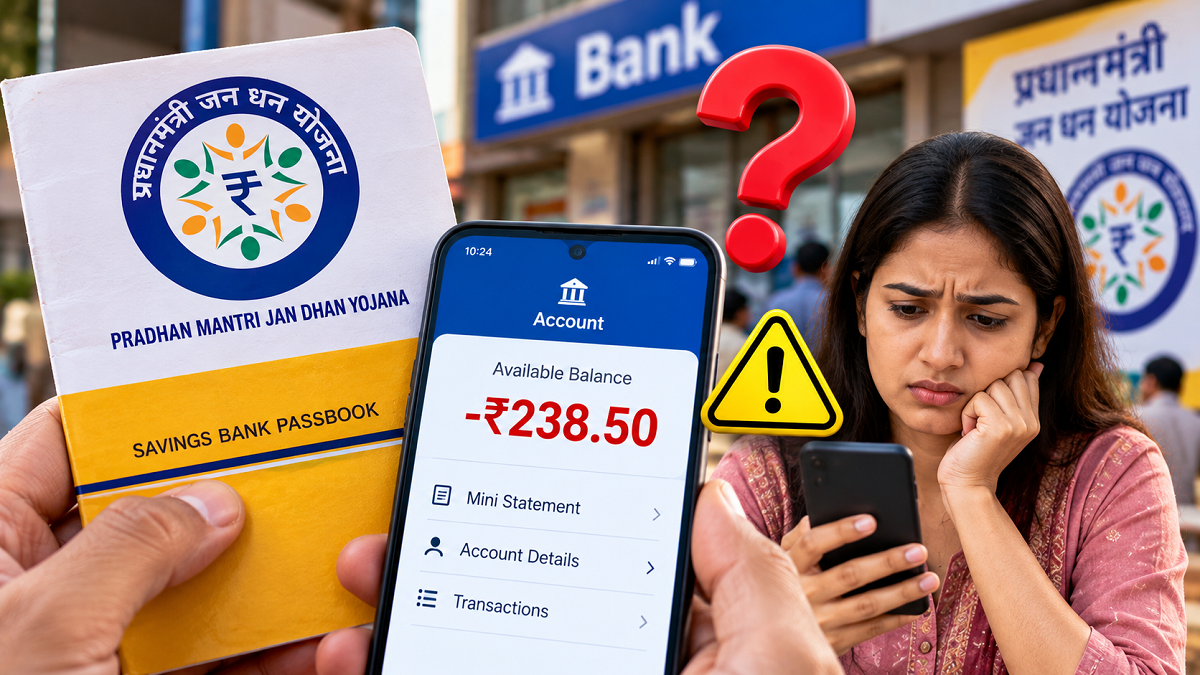
PMJDY Account Rules 2026: Millions of Indians use bank accounts to receive salaries, government benefits, pensions and other payments. However, many account holders worry about what happens when their bank balance reaches zero. Can a bank deduct charges and push the account into a negative balance? Does the same rule apply to accounts opened under the Pradhan Mantri Jan Dhan Yojana (PMJDY)?
The answer depends on the type of bank account and the reason for the deduction.
PMJDY accounts are designed to provide basic banking facilities without requiring customers to maintain a minimum balance. Unlike certain regular savings accounts, eligible Jan Dhan accounts do not attract penalties simply because the balance falls below a prescribed minimum.
However, confusion may arise when customers notice unexpected deductions or a negative balance in their accounts. Understanding the Reserve Bank of India's (RBI) guidelines and the charges associated with banking services can help account holders protect their money.
Here is what PMJDY customers should know about zero-balance accounts, negative balances and their rights.
What Is a PM Jan Dhan Yojana Account?
Pradhan Mantri Jan Dhan Yojana is a financial inclusion initiative launched by the Government of India to expand access to banking services.
The scheme primarily aims to provide basic banking facilities to people who previously had limited or no access to formal banking.
Eligible customers can open a basic savings account without maintaining a compulsory minimum balance.
These accounts can also facilitate direct benefit transfers, allowing eligible beneficiaries to receive government payments directly into their bank accounts.
Depending on the applicable scheme conditions and bank facilities, customers may also receive a RuPay debit card and access to other banking services.
One of the most important features of PMJDY is that account holders are not required to maintain a minimum balance.
Can a Jan Dhan Account Have a Negative Balance?
A PMJDY account operating as a Basic Savings Bank Deposit (BSBD) account is not subject to minimum-balance maintenance requirements.
This means banks cannot impose minimum-balance penalties on such accounts merely because the customer has little or no money deposited.
For example, if your Jan Dhan account contains ₹0, the bank cannot charge a minimum-balance penalty simply for failing to maintain a specified amount.
However, it is important to distinguish between minimum-balance penalties and other transactions or charges.
A negative balance may sometimes appear because of an account adjustment, disputed deduction, overdraft arrangement or other transaction.
Whether a particular deduction is permitted depends on the account category, applicable banking regulations and the terms of the service involved.
Therefore, customers should not assume that every negative balance is automatically lawful or that every type of banking charge is prohibited.
Why Does a Zero-Balance Account Sometimes Show a Negative Amount?
Customers may occasionally notice unexpected deductions in their accounts.
Several types of banking services can involve charges, although basic services included in a BSBD account must be provided according to applicable RBI requirements.
1. Debit Card-Related Charges
Some bank accounts or optional debit card services may carry annual maintenance or replacement charges.
However, the charges applicable to a particular card depend on the account type and the bank's published terms.
Customers should verify whether their PMJDY account and associated card are eligible for free services before accepting a deduction.
2. SMS Alert Charges
Banks may charge for certain notification services where permitted.
However, charges for SMS alerts depend on applicable regulations, the nature of the alerts and the customer's account arrangement.
Account holders should ask their bank to explain any SMS-related deduction.
3. Cheque Book and Additional Banking Services
Basic savings accounts provide specified essential banking facilities.
Some additional services outside the mandatory free facilities may involve charges, depending on the bank's rules.
Customers should confirm whether a particular service was requested and whether the associated fee was properly disclosed.
4. Other Account Adjustments
A negative balance may also result from an overdraft, reversal, correction or disputed transaction.
PMJDY accounts may offer an overdraft facility to eligible customers, subject to scheme and bank conditions. An authorised overdraft is different from a negative balance caused by an improper penalty.
For this reason, identifying the exact transaction is essential before deciding whether a deduction should be challenged.
RBI Rules: Can Banks Make Savings Accounts Negative?
The RBI has established consumer protection requirements concerning minimum-balance charges.
Under its instructions for savings bank accounts, banks must ensure that the balance does not become negative solely because of charges imposed for failing to maintain the required minimum balance.
For BSBD accounts, minimum-balance maintenance requirements do not apply in the first place.
This provides important protection for customers who cannot maintain a regular deposit amount.
However, these rules should not be interpreted as a blanket prohibition on every possible charge or debit.
If a customer notices an unexpected negative balance, the bank should be asked to identify the transaction, explain the applicable charge and clarify the account terms.
Where a deduction appears incorrect, the customer can request a review and correction.
What Should You Do If Your PMJDY Account Shows a Negative Balance?
If your Jan Dhan or other zero-balance account unexpectedly displays a negative amount, avoid ignoring the issue.
Take the following steps to understand and resolve the problem.
Step 1: Check Your Bank Statement
Start by reviewing your recent transactions through your passbook, mobile banking application, internet banking or bank branch.
Identify the date and description of the transaction responsible for the negative balance.
Check whether the deduction relates to a service charge, transaction reversal or another adjustment.
Step 2: Contact Your Bank
Visit your branch or contact the bank's official customer support team.
Ask why the amount was deducted and whether the charge is applicable to your account.
You can also request details of the relevant service-charge schedule.
Step 3: Submit a Written Complaint
If the bank cannot satisfactorily explain the deduction or you believe it violates the applicable rules, submit a written complaint.
Include your account details, the disputed transaction date and the amount involved.
Keep the complaint acknowledgement or reference number for future communication.
Step 4: Approach the RBI Ombudsman if Necessary
If the bank does not resolve your complaint within 30 days, or if you are dissatisfied with its response, you may be eligible to approach the RBI Ombudsman under the Reserve Bank–Integrated Ombudsman Scheme.
The scheme provides a mechanism for addressing eligible complaints against regulated financial institutions.
Customers should follow the official RBI complaint procedure and retain relevant documents.
How Can Jan Dhan Account Holders Avoid Unexpected Bank Charges?
Customers can take several precautions to prevent confusion about account deductions.
- Review your bank's official schedule of charges and confirm which services are free under your account category.
- Check your passbook or account statement regularly for unfamiliar transactions.
- Ask whether optional services, additional debit cards or other facilities involve charges.
- Keep your registered mobile number updated so you can receive important banking notifications.
- Avoid sharing your banking PIN, OTP or password with anyone claiming to help resolve account charges.
- If you no longer require an account, contact your bank to understand the official closure procedure.
These simple measures can help customers identify unusual transactions early and raise concerns before they become more complicated.
PMJDY vs Regular Savings Account: What Is the Difference?
| Feature | PMJDY / Eligible BSBD Account | Regular Savings Account |
|---|---|---|
| Minimum balance requirement | No minimum balance required | Depends on the account and bank |
| Minimum-balance penalty | Not applicable | May apply, subject to RBI rules |
| Basic banking services | Specified basic services provided free | Depends on the account terms |
| Debit card facilities | As applicable under scheme and bank rules | Depends on account type |
| Additional service charges | May apply to eligible optional services | Depends on bank charges |
| Negative balance due solely to minimum-balance penalties | Not permitted | Not permitted |
Can a Bank Recover Minimum-Balance Penalties From a Jan Dhan Account?
A bank should not impose a minimum-balance maintenance penalty on an eligible PMJDY account that operates under the BSBD framework.
If such a deduction appears in the account statement, the customer should request clarification and, where appropriate, reversal of the charge.
The bank may need to examine whether the account has been correctly classified and whether the deduction relates to a permitted service or an incorrect penalty.
Customers should also check whether their account has been converted into another category or whether any additional banking facility has been activated.
Final Thoughts
Pradhan Mantri Jan Dhan Yojana accounts are intended to make basic banking accessible without the burden of maintaining a compulsory minimum balance.
A genuine PMJDY zero-balance account should not attract penalties merely because it contains no money. RBI rules also prevent savings accounts from becoming negative solely due to minimum-balance penalties.
However, account holders may still encounter other transactions, adjustments or applicable service charges that require closer examination.
If your Jan Dhan account unexpectedly shows a negative balance, review the statement, ask your bank for an explanation and file a complaint if the deduction appears incorrect.
Understanding your banking rights and regularly monitoring your account can help you avoid unnecessary charges and protect your savings.