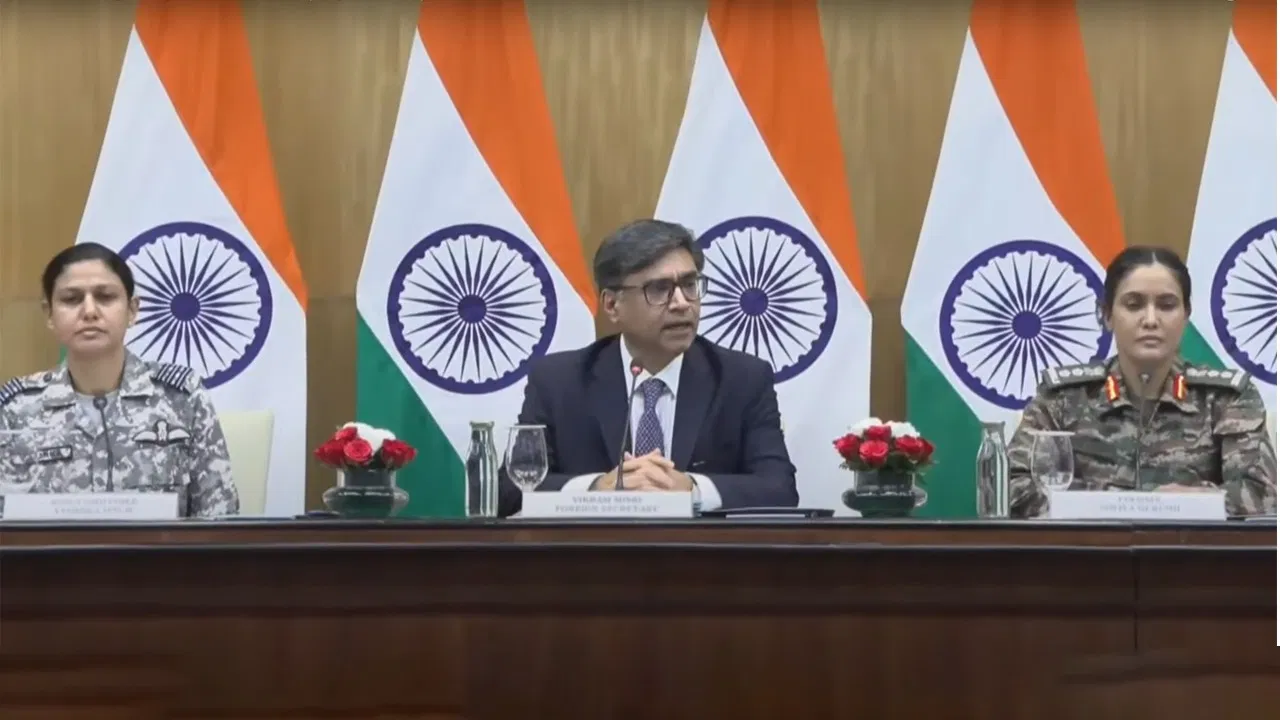
In a strong rebuttal to Pakistan's attempted drone incursion, India on Friday revealed that Pakistan used Turkish-origin drones to target military installations across the border. The Ministry of External Affairs (MEA) confirmed that the Indian armed forces successfully neutralized the threat, which included drone activity at 36 different locations along the international border.
300+ Drone Infiltration Attempts Foiled by Indian Forces
Addressing a press briefing, Colonel Sofia Qureshi stated that Pakistan launched between 300 and 400 drone infiltration attempts on the night of May 7, intending to gather intelligence and potentially strike military infrastructure. She confirmed that Indian forces intercepted and shot down these drones, and that debris from the crash sites indicated they were Turkish-made UAVs.
“Pakistan targeted military infrastructure in a blatant violation of norms,” Qureshi said. “Our teams are examining the drone debris, and it's confirmed they are Turkish-origin drones.”
Pakistan Used Civilian Aircraft as Shields, Says India
Colonel Qureshi raised serious concerns about Pakistan’s use of civilian aircraft as a shield during the hostile act. She highlighted that civilian flights were deliberately routed through Karachi and Lahore corridors, despite knowing they were flying near active conflict zones.
“It is unsafe for unidentified civilian aircraft, including international flights, flying near the Indo-Pak border,” she said. “Unlike India, which suspended civilian air traffic in high-risk areas, Pakistan kept its airspace open, endangering lives.”
Data from FlightRadar24, shared during the briefing, showed no civilian traffic in Indian airspace over Punjab, while flights continued on the Pakistani side—raising alarms over Pakistan's deliberate risk to civilian aviation.
Indian Response Caused Heavy Damage to Pakistan’s Air Defences
Wing Commander Vyomika Singh added that India’s retaliatory strikes were precise and effective, targeting four Pakistani air defence (AD) sites. One of the Indian drones successfully destroyed a Pakistani AD radar, she confirmed.
“In response to unprovoked Pakistani aggression, our forces used armed drones to target and disable enemy installations,” Singh said. “Pakistan also used armed drones and heavy-calibre guns along the Line of Control (LoC), leading to some casualties on the Indian side—but their losses were significantly higher.”
Pakistan’s Aggression Draws Global Scrutiny
India has been widely praised for its measured and responsible response, even as tensions remain high. Foreign Secretary Vikram Misri emphasized that India retaliated only after Pakistan attempted to strike both military and civilian targets, maintaining a strong but restrained posture.
“Pakistan’s use of Turkish drones and civilian air routes for shielding is unacceptable and escalatory,” Misri said. “India’s response was calculated, lawful, and focused on neutralizing threats without endangering innocent lives.”
Context: Aftermath of Operation Sindoor
This development follows India's precision strikes under ‘Operation Sindoor’ on May 7, which targeted terror infrastructure in Pakistan and Pakistan-occupied Kashmir (PoK). In apparent retaliation, Pakistan launched over 50 drones and missiles, most of which were intercepted by India’s advanced S-400 air defence system.