NEWS
NPS Partial Withdrawal Rules 2026: Can You Withdraw Money Before Retirement? Here’s What the Latest Guidelines Say
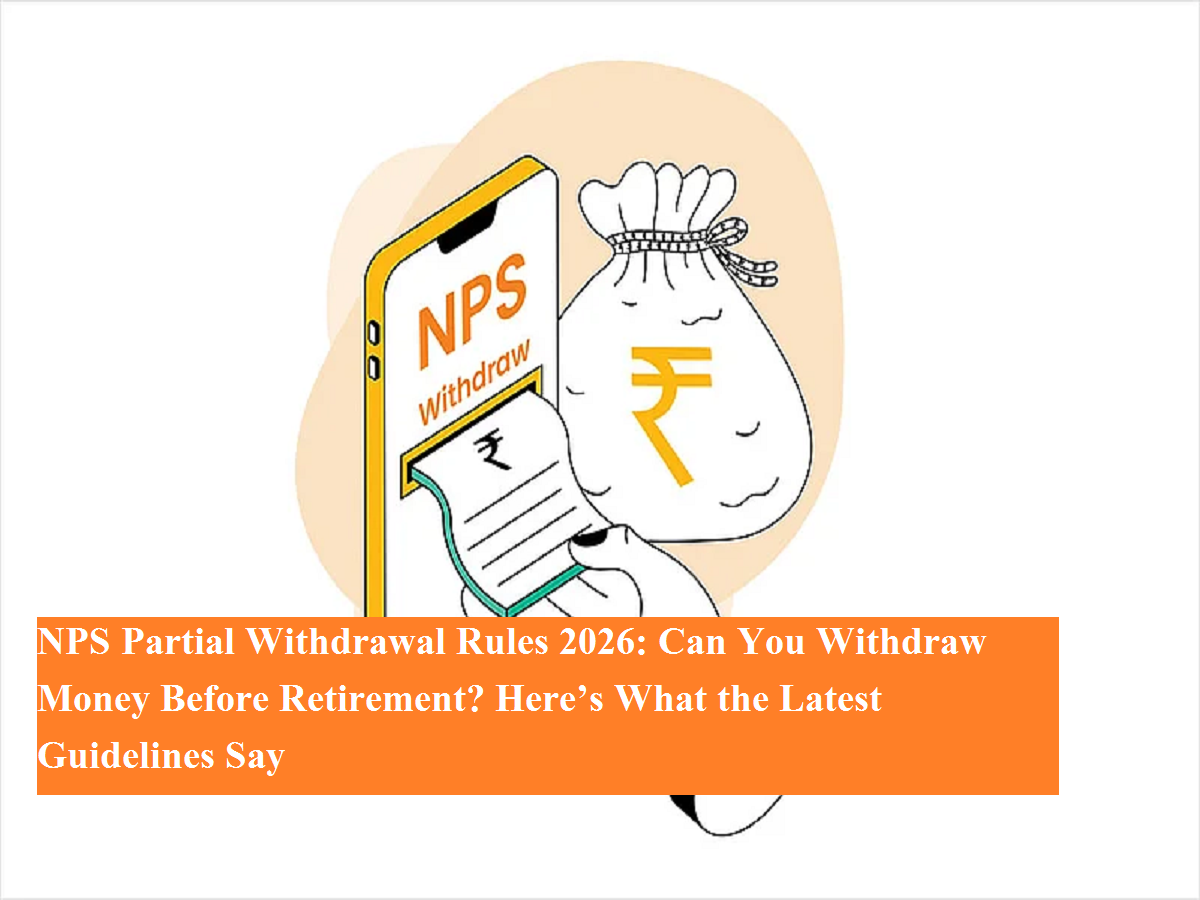
Many investors consider the National Pension System (NPS) a long-term retirement tool that can only be accessed after turning 60. While it is primarily designed to secure financial stability in old age, the system also recognizes that life can present unexpected financial emergencies. Under the updated 2026 guidelines, subscribers can withdraw a portion of their funds before retirement—subject to certain conditions.
The partial withdrawal facility has been structured by the Pension Fund Regulatory and Development Authority (PFRDA), which regulates the National Pension System, to provide flexibility during genuine financial needs. Here’s a detailed look at when, how, and how much you can withdraw from your NPS account.
Minimum Eligibility: The Three-Year Rule
The first and most important condition for partial withdrawal from NPS is the account tenure. According to the current rules, subscribers can apply for partial withdrawal only after completing at least three years from the date of account opening.
Additionally, the subscriber must have been making regular contributions to the account. If the NPS account has not completed three years, withdrawal is not permitted—even in urgent situations.
Valid Reasons for Partial Withdrawal
The government has defined specific, humanitarian grounds under which partial withdrawal is allowed. These include:
1. Treatment of Critical Illness
Funds can be withdrawn if the subscriber, their spouse, children, or dependent parents require treatment for a serious medical condition.
2. Higher Education of Children
Subscribers may use NPS funds to cover major expenses related to their children’s college education.
3. Marriage of Children
Expenses related to the marriage of a son or daughter are also eligible grounds.
4. Purchase or Construction of First Home
If the subscriber intends to buy or build their first residential property, partial withdrawal is permitted.
5. Skill Development or Self-Improvement
Funds can be used for professional courses or training programs aimed at improving employability or career prospects.
These clearly defined conditions ensure that the facility is used for genuine financial needs rather than discretionary spending.
How Much Can You Withdraw?
To safeguard long-term retirement savings, NPS rules place a cap on the withdrawal amount.
Subscribers can withdraw up to 25% of their own total contributions. Importantly, this limit applies only to the subscriber’s personal contributions and does not include the employer’s contribution.
This structure ensures that the retirement corpus remains largely intact even after partial withdrawal.
Is the Withdrawal Taxable?
One of the most attractive aspects of NPS partial withdrawal is its tax treatment. The withdrawn amount—if approved under eligible conditions—is completely tax-free.
Once the request is approved, the funds are directly credited to the subscriber’s registered bank account.
How to Apply for Partial Withdrawal
Subscribers can initiate the withdrawal request through:
- Their designated Point of Presence (POP)
- The concerned Nodal Office
- The official NPS online portal
Applicants must submit supporting documents relevant to the reason for withdrawal. For example:
- Hospital bills or medical certificates for health-related claims
- Admission letters or fee receipts for education expenses
- Marriage-related documentation
- Property purchase agreements for home buying
Proper verification of documents is mandatory before the withdrawal is processed. Incomplete or incorrect paperwork may delay approval.
Expert Advice: Use Only as a Last Resort
Financial experts recommend using the partial withdrawal facility cautiously. While it provides important flexibility during emergencies, withdrawing funds reduces the overall retirement corpus.
Since NPS is designed as a long-term wealth-building instrument, early withdrawals—though limited—can impact compounding growth over time.
Advisors suggest:
- Exploring other savings or emergency funds first
- Using NPS withdrawal only for serious and unavoidable needs
- Maintaining consistent contributions to rebuild the retirement corpus if a withdrawal is made
Final Takeaway
The updated NPS partial withdrawal rules offer a balanced approach—providing liquidity during emergencies while protecting retirement savings. By allowing up to 25% of personal contributions to be withdrawn after three years, the system offers both flexibility and discipline.
However, subscribers should carefully assess their financial situation before opting for withdrawal. Preserving retirement savings today can ensure greater financial security tomorrow.
For the latest updates on pension reforms and investment rules, stay informed and plan your retirement wisely.