Business
NHAI Highway Rules 2026: Potholes May Need Repair Within 3 Days, AI Cameras to Monitor Road Conditions
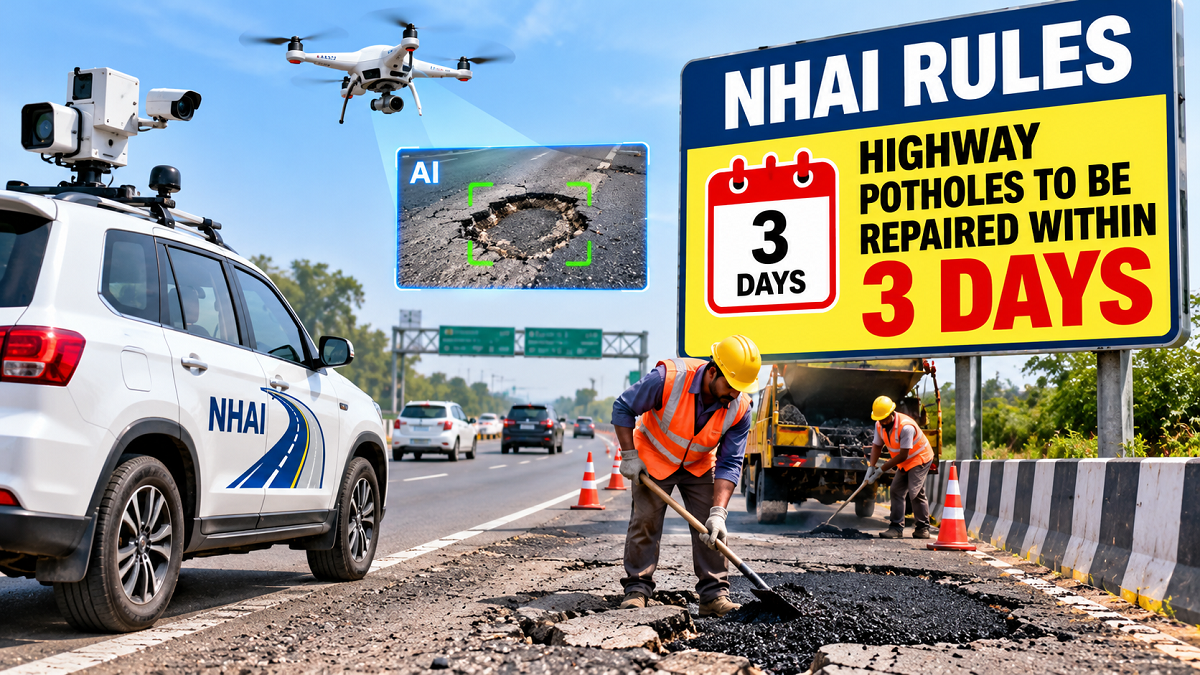
NHAI Highway Maintenance Update 2026: Travelling on national highways could become safer as the National Highways Authority of India (NHAI) moves towards stricter monitoring of road maintenance and faster repairs of damaged stretches.
The authority is reportedly preparing to strengthen accountability among contractors, developers and maintenance agencies responsible for keeping national highways in good condition.
A major part of the proposed approach involves using artificial intelligence, surveillance cameras, drones and digital monitoring systems to identify potholes, damaged road surfaces and other safety hazards.
According to the reported guidelines, certain serious road defects may require immediate attention, while specified maintenance problems could have to be resolved within three days.
The initiative aims to improve road safety, reduce delays and ensure that highway maintenance agencies respond more quickly to complaints.
NHAI Plans AI Cameras and Drones to Detect Highway Damage
One of the key features of the proposed monitoring system is the use of AI-enabled cameras installed in highway patrol vehicles.
These cameras would help identify problems such as potholes, uneven road surfaces, deep wheel-track depressions and damaged stretches of pavement.
Instead of depending entirely on manual inspections or complaints from motorists, officials could receive digital information about road conditions.
Drones and webcams may also be used to monitor selected highway sections and identify areas requiring urgent maintenance.
The collected information is expected to be integrated into a centralised digital monitoring platform.
This could allow officials to review road conditions, identify the agencies responsible for particular stretches and track the progress of repair work.
Will Highway Potholes Be Repaired Within Three Days?
The reported NHAI maintenance framework includes a proposed three-day deadline for addressing certain identified road defects.
Under this approach, maintenance agencies would be expected to respond within the specified timeframe after a problem is detected and assigned for repair.
However, the three-day requirement should not be interpreted as a universal guarantee that every pothole on every national highway will be permanently repaired within 72 hours.
Repair deadlines may depend on the nature of the damage, the applicable contract, safety requirements and the final instructions issued by the authority.
Some serious hazards could require immediate safety measures, while larger repairs may involve additional technical work.
The objective is to prevent minor road defects from remaining unattended until they become dangerous for motorists.
Highway Developers Reportedly Given Three Months to Address Existing Defects
Alongside faster response requirements, NHAI has reportedly directed agencies responsible for highway construction and maintenance to address existing road deficiencies within a three-month period.
The proposed improvement drive focuses on stretches affected by repeated heavy-vehicle movement, poor drainage and surface deterioration.
Potholes and deep ruts are particularly important because they can affect vehicle stability and create hazards for two-wheelers, cars and commercial vehicles.
Maintenance agencies may also be required to improve damaged pavement and other infrastructure that affects highway safety.
The reported three-month timeframe relates to broader corrective work, while shorter deadlines are intended for specified defects requiring quicker intervention.
What Improvements Are Planned for National Highways?
The maintenance initiative reportedly covers more than pothole repairs.
Several infrastructure improvements are being considered to make national highways safer and more reliable.
| Highway Improvement | Expected Purpose |
|---|---|
| Pothole repairs | Reduce accident risks and vehicle damage |
| Road resurfacing | Improve driving comfort and vehicle stability |
| Crash barriers | Strengthen protection at vulnerable locations |
| Drainage upgrades | Prevent waterlogging and road deterioration |
| Drip irrigation on dividers | Improve maintenance of roadside greenery |
| Pedestrian skywalks | Support safer crossings near busy urban areas |
| AI-based inspections | Identify defects and monitor repair progress |
These measures are intended to improve both highway infrastructure and the effectiveness of maintenance operations.
Why Are Crash Barriers Important for Highway Safety?
Crash barriers play an important role in reducing the severity of certain road accidents.
They are particularly useful near steep slopes, sharp curves, elevated roads and other vulnerable locations.
Damaged or missing barriers can increase the risks associated with vehicles leaving the carriageway.
Under the reported improvement programme, maintenance agencies may be asked to install additional barriers wherever road safety assessments identify a need.
Existing barriers may also require repairs or replacement.
However, the location and design of such safety installations must follow relevant engineering standards.
NHAI Focuses on Better Drainage During the Monsoon
Poor drainage is one of the major causes of road deterioration, particularly during periods of heavy rainfall.
When water remains on a road surface, it can enter cracks and weaken the underlying pavement.
Repeated movement of heavy vehicles may then worsen the damage, eventually creating potholes and uneven stretches.
Improving drainage channels, clearing blocked outlets and preventing water accumulation can help reduce such problems.
The reported NHAI initiative therefore includes attention to drainage infrastructure, especially on stretches vulnerable to monsoon-related damage.
Effective drainage maintenance could also reduce traffic disruptions caused by waterlogging.
Digital Dashboards Could Improve Contractor Accountability
A centralised digital dashboard is expected to play an important role in the proposed monitoring arrangement.
When a road defect is identified, the system could record its location and assign the issue to the agency responsible for maintaining that stretch.
Officials would then be able to monitor whether the required work has been completed within the applicable deadline.
This approach could make it easier to identify repeated maintenance failures and delays.
The authority may also use the recorded information to initiate action against agencies that fail to meet their contractual responsibilities.
Any penalties or other enforcement measures would depend on the relevant agreements and applicable rules.
Why Is NHAI Strengthening Highway Maintenance Monitoring?
Damaged highways can create serious difficulties for motorists, transport operators and emergency vehicles.
Potholes may force drivers to brake suddenly or change lanes unexpectedly, increasing the possibility of collisions.
Uneven road surfaces can also damage tyres, suspension systems and other vehicle components.
For commercial transport operators, poor road conditions may increase operating costs and cause delivery delays.
In addition, neglected maintenance can lead to more expensive repairs when minor defects develop into larger structural problems.
By identifying damage earlier, NHAI aims to improve road safety while making maintenance operations more efficient.
What Should Drivers Do When They Encounter Dangerous Potholes?
Motorists should remain cautious when travelling through damaged highway sections, particularly at night or during heavy rainfall.
Reducing speed, maintaining a safe distance from other vehicles and avoiding sudden steering movements can help reduce risks.
Drivers should not stop in unsafe locations simply to photograph road defects.
Where available, hazardous road conditions can be reported through official highway assistance and grievance channels, including the relevant NHAI-operated services.
Providing accurate location information can help maintenance teams identify the affected stretch.
NHAI Highway Rules 2026: What Travellers Should Know
The reported highway maintenance initiative reflects a stronger focus on technology-driven inspections, quicker repairs and accountability among maintenance agencies.
AI-enabled cameras, drones and digital dashboards could help officials detect road damage and follow up on repairs more efficiently.
The proposed three-day repair deadline is a key part of the reported framework, but its exact application will depend on the final guidelines and the category of road defect.
The broader maintenance drive also includes improvements to drainage, crash barriers, pavement conditions and pedestrian safety infrastructure.
If effectively implemented, these measures could help reduce highway hazards and improve travel conditions across India's national highway network.
Note: The three-day repair requirement, three-month corrective timeline and proposed monitoring measures are based on the supplied report. Their current implementation status and precise applicability have not been independently verified against an official NHAI notification.