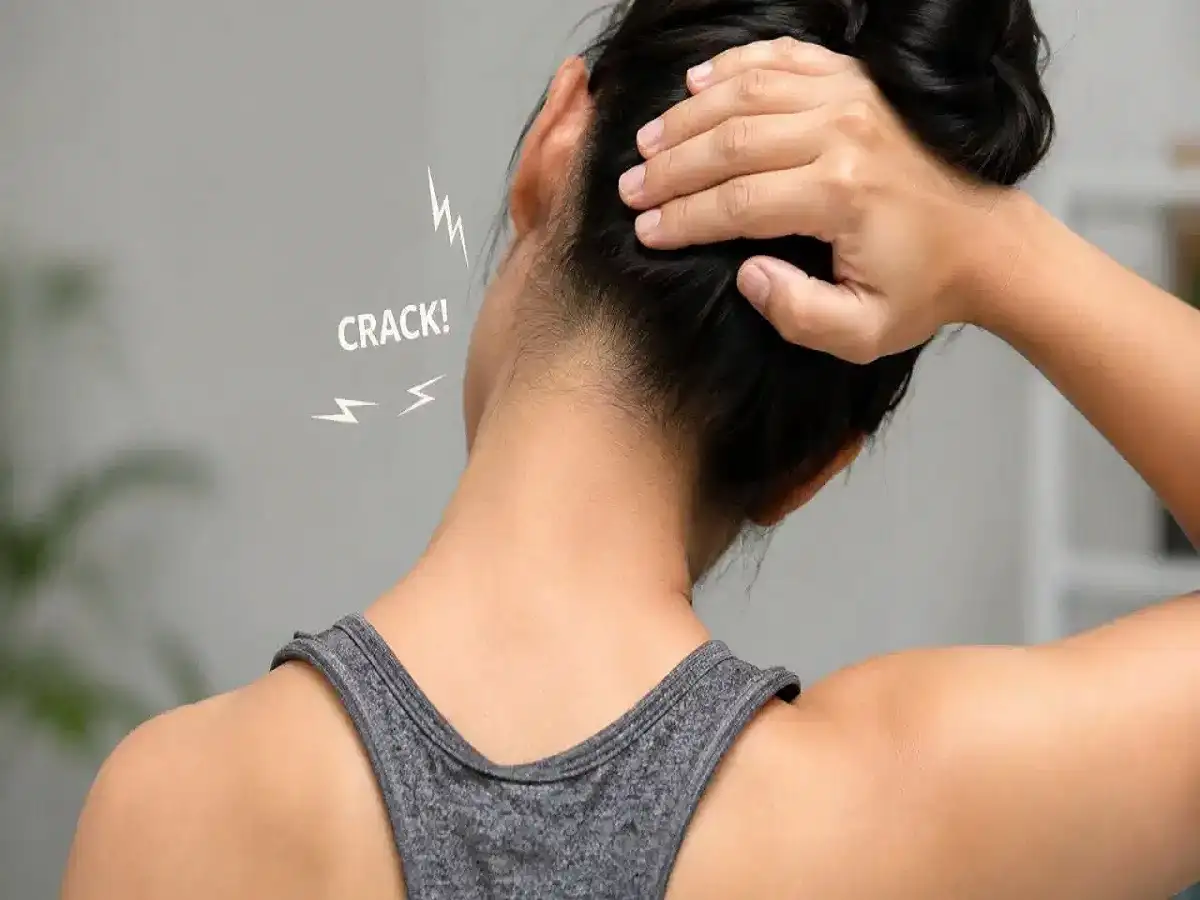
After spending hours looking at a laptop, scrolling on a smartphone or sitting at a desk, it is common to experience stiffness or tightness around the neck and shoulders. Some people respond by tilting or rotating their neck until they hear a noticeable "pop" or "crack."
The sound can feel satisfying and may be accompanied by a temporary sense of relief. This often leads people to repeat the movement whenever their neck feels stiff.
But is cracking your neck actually harmful?
An occasional clicking or popping sound during normal movement is not necessarily a sign of damage, particularly when there is no pain or other symptom. However, repeatedly forcing the neck to crack or using sudden, aggressive movements is different and should be avoided.
Understanding why these sounds occur and recognising warning signs can help you protect your neck in the long term.
Why Does Your Neck Make a Cracking or Popping Sound?
The neck contains several joints that allow the head to move in different directions. During movement, changes in joint pressure can contribute to popping or cracking sounds.
These noises may be associated with changes involving gases within joint fluid or with structures such as tendons and ligaments moving as the neck changes position.
Therefore, hearing an occasional sound when turning or stretching your neck does not automatically mean that a bone has moved out of place or that the joint has been damaged.
If the sound occurs naturally during ordinary movement and there is no pain, swelling, numbness or weakness, it is often less concerning.
Is Occasional Neck Cracking Dangerous?
There is an important difference between a neck that naturally clicks during movement and deliberately twisting it forcefully to produce a sound.
Occasional painless popping can happen during normal movement. On the other hand, repeatedly rotating the neck to its extreme range or applying a sudden force can place unnecessary stress on joints and surrounding tissues.
The neck contains muscles, ligaments, nerves, joints and important blood vessels within a relatively small area. Aggressive movements are therefore not a good strategy for dealing with recurring stiffness.
If you constantly feel the need to crack your neck to obtain relief, it may be more useful to investigate why the neck keeps feeling tight.
Excessive Screen Time May Be Contributing to Neck Stiffness
The problem may have less to do with the neck joint itself and more to do with your daily habits.
Spending long periods looking downward at a phone or sitting in front of a computer can put the neck in an uncomfortable position for extended periods.
Poor workstation ergonomics can contribute as well. A monitor positioned too low, inadequate chair support or continuously leaning forward can increase muscular strain.
Over time, the muscles around the neck and shoulders may become tight or fatigued, creating the urge to stretch, rotate or crack the neck.
Correcting these habits may provide more lasting relief than repeatedly producing a popping sound.
Why Forceful Neck Twisting Should Be Avoided
Deliberately using strong or sudden movements to crack the neck is not the same as gentle stretching.
Forceful manipulation can potentially irritate joints, muscles or ligaments. Although serious complications are uncommon, aggressive neck manipulation has also been associated in rare cases with injury involving blood vessels in the neck.
This does not mean that every neck pop is dangerous. The concern is primarily with forceful, rapid or repeated manipulation, particularly when performed without appropriate training or medical assessment.
People with existing neck problems, previous injuries or certain medical conditions should be especially cautious.
Don't Ignore Persistent Neck Pain
A clicking sound without symptoms is different from a neck problem accompanied by pain or neurological symptoms.
Persistent or worsening neck pain deserves attention, particularly if it does not improve after changing posture, taking appropriate breaks or reducing activities that aggravate the problem.
Pain following an accident, fall, sports injury or sudden movement should also not be dismissed simply as muscle stiffness.
Depending on the symptoms and circumstances, medical evaluation may be appropriate.
Warning Signs That Need Medical Attention
Certain symptoms occurring with neck pain or after neck manipulation should not be ignored.
Seek medical advice if neck discomfort is accompanied by persistent or worsening pain, tingling, numbness, weakness in the arms or legs, or symptoms that developed after an injury.
Sudden severe headache, significant dizziness, difficulty speaking, facial drooping, vision changes, trouble walking or loss of coordination require urgent medical assessment, particularly if they occur after sudden or forceful neck movement.
These symptoms can have many possible causes, and attempting to diagnose them at home can delay appropriate care.
Improve Your Posture Instead of Repeatedly Cracking Your Neck
If neck stiffness is linked to desk work or screen use, improving posture is a better long-term approach.
Position the computer screen so you do not have to continuously bend your head downward. Sit with appropriate back support and try to keep your shoulders relaxed rather than rounded forward.
Smartphone users should also avoid keeping their head bent toward the screen for prolonged periods. Bringing the device closer to eye level can reduce the amount of sustained forward neck bending.
Small adjustments made consistently can be more beneficial than repeatedly twisting the neck for momentary relief.
Take Regular Breaks During Desk Work
Remaining in one position for hours can contribute to muscle fatigue even when your posture is relatively good.
Take short breaks during extended periods of computer work. Stand up, walk around and gently move your shoulders and neck within a comfortable range.
Regular movement helps prevent prolonged static loading of the same muscles.
If an activity causes pain, dizziness, numbness or other unusual symptoms, stop and seek appropriate advice rather than trying to "crack" through the discomfort.
Gentle Stretching May Help, but Don't Force It
Gentle neck and shoulder movements can sometimes help with stiffness related to prolonged sitting. However, stretches should be slow and controlled.
Avoid jerking the head, aggressively pushing the neck beyond its comfortable range or using your hands to force a rotation simply to produce a cracking sound.
People experiencing persistent pain or recurrent stiffness may benefit from assessment by a qualified healthcare professional or physiotherapist, who can recommend exercises appropriate to the underlying problem.
The Bottom Line on Neck Cracking
An occasional painless click or pop from the neck during ordinary movement is not necessarily dangerous. The bigger concern is turning neck cracking into a habit that involves repeated or forceful twisting.
If your neck constantly feels stiff, focus on the possible cause rather than the sound. Improving posture, reducing prolonged screen positions, taking regular movement breaks and using gentle stretches may help address everyday muscular tension.
Most importantly, do not ignore persistent pain, numbness, weakness, severe headache, dizziness or symptoms following an injury. When such warning signs are present, professional medical evaluation is safer than attempting to relieve the problem by repeatedly cracking your neck.