NEWS
Messenger 2026 Update: Forwarding Limits, Stronger Privacy Controls and Anti-Misinformation Tools
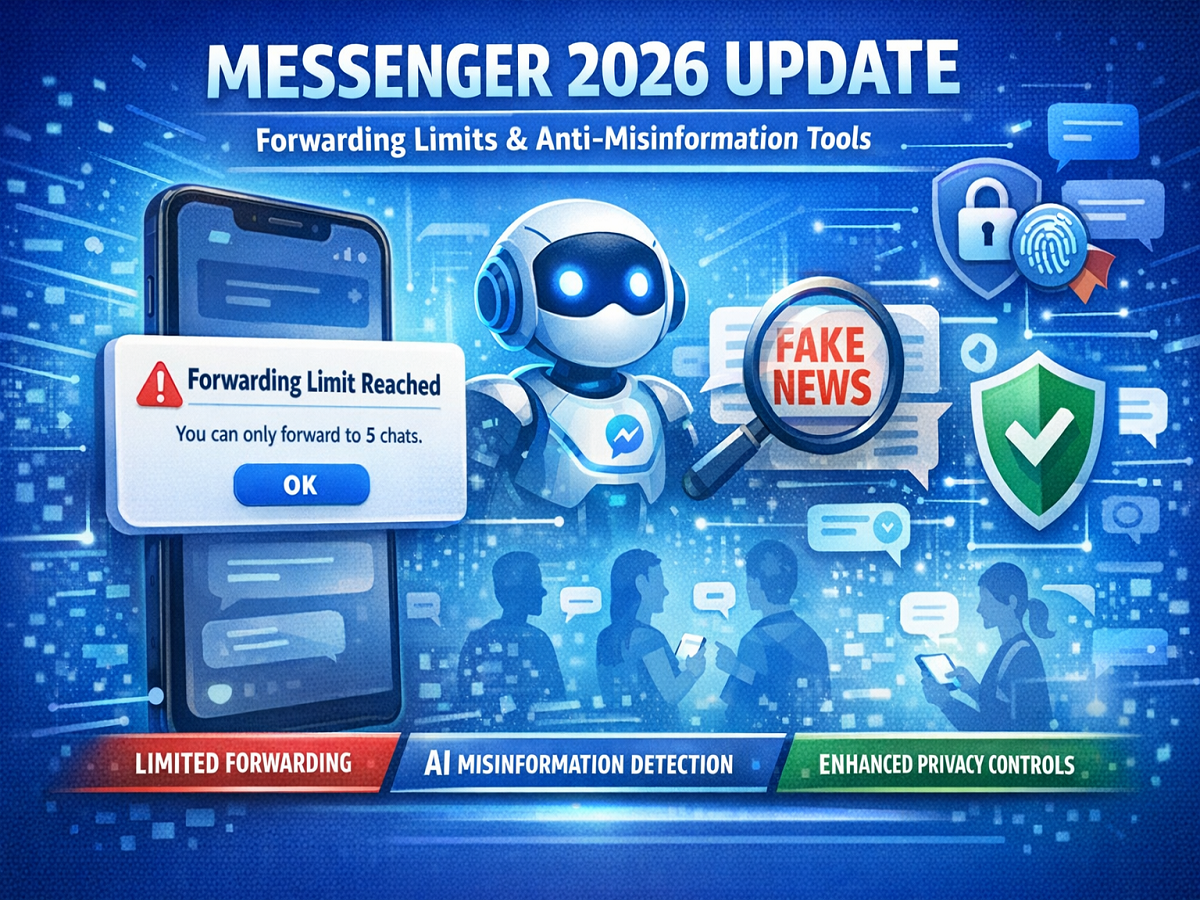
Meta-owned Facebook Messenger has significantly strengthened its platform in 2026 with updated message forwarding limits, enhanced privacy features, and new tools to curb the spread of misinformation. What started as a basic restriction feature has now evolved into a broader strategy to make conversations safer and more controlled.
Message Forwarding Limits Still in Place—Now Smarter
The forwarding limit—initially introduced to reduce the spread of fake news—remains a key feature in 2026. Users can still forward a message to a limited number of chats at once, typically capped at five recipients.
However, the system is now more intelligent. Messenger uses AI-based detection to identify frequently forwarded or potentially misleading messages. In such cases, stricter limits may apply, sometimes allowing forwarding to only one chat at a time.
If users attempt to exceed the allowed limit, they receive a notification such as “Forwarding limit reached,” ensuring transparency and control.
AI-Powered Misinformation Detection
In 2026, Messenger has gone beyond basic limits by introducing AI tools that actively monitor message patterns. Without reading private messages (due to encryption policies), the system analyzes forwarding behavior and flags suspicious viral content.
Users may also see warning labels or prompts encouraging them to verify information before sharing it further. This helps reduce the spread of harmful or misleading content across the platform.
Enhanced Privacy and Security Features
Messenger has also upgraded its privacy tools significantly. Features like App Lock, biometric authentication (Face ID and fingerprint), and device-based security checks are now standard.
Users can control who can message them, filter unknown contacts, and restrict message requests. End-to-end encryption has been expanded to more chats, ensuring that conversations remain private and secure.
Better Control Over Message Sharing
In addition to forwarding limits, Messenger now gives users more control over shared content. For example:
- Users can restrict message resharing in private chats
- Sensitive content can be protected with additional privacy settings
- Temporary messages can be enabled for automatic deletion
These improvements give users greater authority over how their messages are distributed.
Inspired by Industry-Wide Changes
Messenger’s forwarding restrictions were initially inspired by similar measures introduced on WhatsApp, especially in markets like India where misinformation had become a major concern.
Over time, these policies have been refined and adopted globally across Meta platforms, reflecting a unified approach to digital safety.
Why This Update Matters
The spread of fake news and viral misinformation has been a growing challenge worldwide. By limiting how quickly and widely messages can be forwarded, Messenger aims to slow down the chain reaction that often fuels misinformation.
According to Meta, such measures have proven effective in reducing the virality of harmful content without impacting normal user communication.
User Reactions and Ongoing Improvements
While many users appreciate the safety-focused updates, some have raised concerns about limitations on sharing messages freely. However, Meta continues to balance user convenience with platform safety by refining these features over time.
Final Thoughts
The 2026 update shows that Messenger is evolving into a more secure and responsible messaging platform. With forwarding limits, AI-powered detection, and advanced privacy controls, the app is taking strong steps to ensure safer digital communication.
As misinformation continues to be a global issue, such features are likely to become even more advanced in future updates.