Business
Lost Your Debit or Credit Card? Block It Immediately Using These Simple Steps to Prevent Banking Fraud
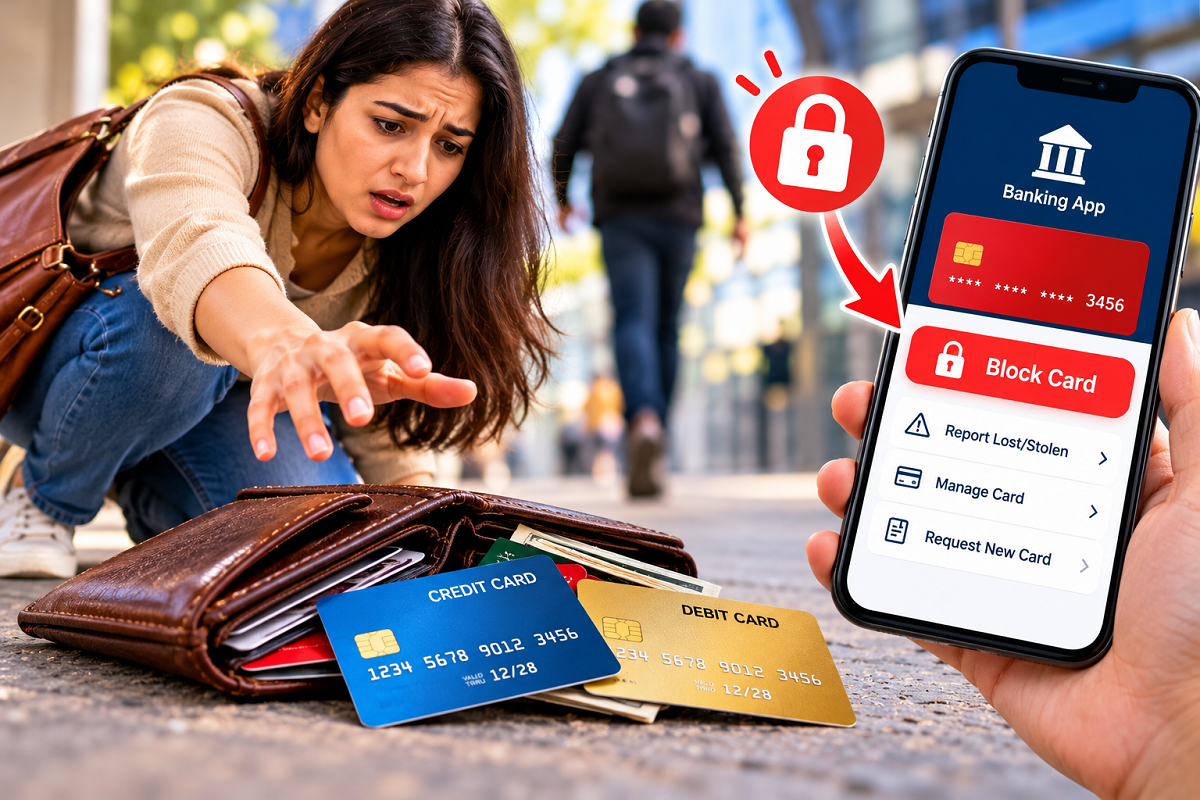
Lost Credit Card and Debit Card Safety Tips: Credit and debit cards have become essential tools for everyday financial transactions. Whether paying restaurant bills, shopping online, booking tickets or purchasing groceries, millions of people rely on bank cards for convenient payments. Many banks also offer cashback, reward points and special discounts on eligible card transactions.
However, losing a wallet containing a credit or debit card can create serious financial risks. If the card falls into the wrong hands, criminals may attempt unauthorised transactions, particularly where additional authentication is not required.
The good news is that most banks provide several ways to block lost or stolen cards quickly. Customers can generally use mobile banking applications, internet banking, customer care services or SMS facilities, depending on the bank.
Taking immediate action can reduce the risk of misuse and help protect your money.
1. Block Your Lost Credit or Debit Card Through Mobile Banking
One of the quickest ways to secure a missing bank card is through the official mobile banking application.
Most major banks in India provide card management facilities that allow customers to temporarily disable or permanently block their cards.
Follow these steps to block your card:
- Open your bank's official mobile banking application.
- Log in using your registered credentials.
- Navigate to the 'Cards', 'Card Management' or 'Card Services' section.
- Identify the missing debit or credit card using its last four digits.
- Select the card and look for the blocking option.
- Choose 'Block Card', 'Report Lost/Stolen' or 'Permanent Block', depending on the available features.
- Complete the required verification and confirm the request.
After the process is completed, the bank may send a confirmation through SMS, email or an in-app notification.
Keep the confirmation message or complaint reference number for future records.
Remember that temporarily switching off a card may not provide the same protection as permanently reporting it lost or stolen. If the card cannot be located, follow the bank's official lost-card procedure.
2. Use Internet Banking to Disable Your Missing Card
Customers who cannot access their mobile banking application may be able to block their cards through internet banking.
This method is particularly useful when a mobile phone is unavailable but secure access to a computer is possible.
Visit the bank's official website by entering its verified address directly into your browser.
Log in to your internet banking account and open the section dedicated to debit cards, credit cards or account services.
Select the relevant card and follow the instructions for reporting it lost or stolen.
Once the request has been submitted, verify that the card's status has changed to blocked or inactive.
Avoid clicking banking links received through unknown messages, emails or social media platforms. Fraudsters sometimes create fake banking websites to steal login credentials.
3. Block Your Debit or Credit Card Through SMS or Customer Care
Some banks allow customers to block missing cards by sending an SMS from their registered mobile number.
However, the required message format and destination number differ between banks.
Before using this facility, verify the instructions through the bank's official website, mobile application or authorised customer support channel.
Never send your complete card number, CVV, PIN, OTP or internet banking password through an ordinary SMS unless the bank's verified process specifically requires permitted information.
If SMS blocking is unavailable, contact the bank's official customer care number immediately.
Many banks operate dedicated helplines for reporting lost or stolen cards.
The customer service representative may verify your identity before permanently blocking the affected card.
Make sure you receive a complaint number or confirmation of the blocking request.
4. Check Recent Transactions and Report Suspicious Payments
Blocking the card is only the first step in protecting your account.
After reporting the loss, review recent transactions through your banking application, account statement or credit card statement.
Look for unfamiliar payments, unexpected withdrawals or transactions you did not authorise.
If you discover suspicious activity, report it to your bank immediately and request that the transaction be investigated.
In India, the Reserve Bank of India has established rules concerning customers' liability for unauthorised electronic banking transactions.
Under the applicable RBI framework, a customer's liability depends on factors such as the cause of the transaction and how quickly the incident is reported.
For certain third-party breaches where neither the bank nor the customer is responsible, reporting within three working days of receiving the bank's communication can result in zero customer liability.
Other situations may involve different liability limits, and customers should not assume that every fraudulent transaction will automatically qualify for a full refund.
Prompt reporting and preserving evidence are therefore extremely important.
5. Request a Replacement Card After Blocking the Old One
Once the missing card has been permanently blocked, customers can generally request a replacement from their bank.
The replacement request may be available through mobile banking, internet banking, customer care or a bank branch.
Banks may charge a replacement fee depending on the card type and account conditions.
The new card will generally have updated card credentials, and customers may need to activate it before making transactions.
If the missing card was linked to subscription services, shopping platforms or recurring payments, review those arrangements after receiving the replacement.
Some recurring payments may require updated card details.
Customers should also check whether the bank offers any automatic card credential update service for participating merchants.
What Should You Do If Your Wallet and Mobile Phone Are Both Missing?
Losing a wallet and mobile phone together can make the situation more complicated because banking applications and OTP messages may become inaccessible.
In such cases, contact the bank immediately using another phone and request that the missing cards be blocked.
You should also contact your mobile network operator to suspend the lost SIM card, reducing the risk of misuse.
If you suspect that someone has gained access to your banking applications or digital payment accounts, inform the bank and follow its security instructions.
Change affected passwords from a trusted device and review linked payment services.
If financial fraud has occurred in India, you can report it through the national cybercrime helpline 1930 or the official cybercrime reporting portal.
Important Precautions to Keep Your Bank Cards Safe
Cardholders can reduce the risk of financial fraud by following a few basic security practices.
- Enable transaction alerts through SMS or email.
- Set suitable spending and withdrawal limits where supported.
- Disable international, online or contactless transactions when they are not needed.
- Never share your card PIN, CVV, OTP or banking passwords.
- Use only official banking applications and verified websites.
- Regularly review bank statements for unusual transactions.
- Avoid storing card PINs or passwords inside your wallet.
These precautions cannot eliminate every risk, but they can make unauthorised card usage more difficult.
Final Thoughts
Losing a credit or debit card can be stressful, especially when it happens along with the loss of a wallet or other important belongings.
However, quick action can significantly reduce the possibility of financial misuse.
The most important step is to report the missing card to your bank and have it blocked immediately. After that, review recent transactions, report suspicious activity and request a replacement card if necessary.
Customers should also preserve complaint numbers and confirmation messages in case they need to dispute unauthorised transactions.
Disclaimer: Card-blocking procedures, replacement charges and fraud liability rules may vary depending on the bank, card type and circumstances. Always follow your bank's official instructions and applicable RBI guidelines.