NEWS
Know 10 big things about Rajput king Rana Sanga, which heated up the political temperature across the country
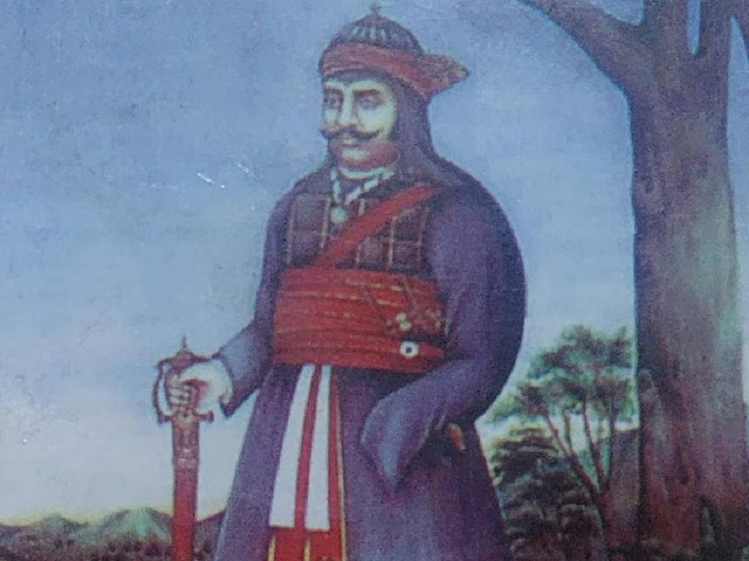
Rajput King Rana Sanga: The ruler of Mewar, Rana Sanga fought more than 100 battles in his life and lost only one battle. He faced defeat against Babur at Khanwa. Rana Sanga was considered the ruler of northern India.
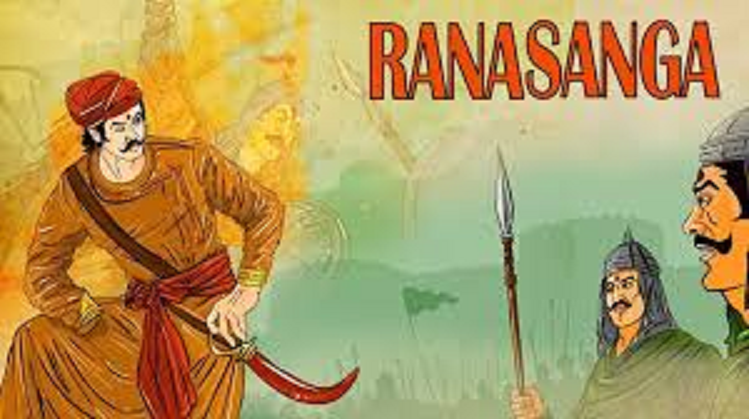
Rajput King Rana Sanga: In the last few days, there has been a heated debate in India about medieval history. The debate started with the rule of Mughal emperor Aurangzeb and his tomb which reached Rajput ruler Rana Sanga. Samajwadi Party (SP) MP Ramji Lal Suman called Rana Sanga a 'traitor' in Parliament. He claimed that Rana Sanga had invited Babur to invade India. This comment sparked a major controversy and rekindled the long-standing debate.
Did Rana Sanga really invite Babur to defeat Ibrahim Lodi? Know historical facts about Rana Sanga here…
1 Rana Sanga's full name was Rana Sangram Singh. His father's name was Rana Raimal. It is said that he gave political stability and prosperity to Mewar. Rana Sanga's mother's name was Rani Ratan Kunwar. Although the year of his birth is not mentioned in contemporary texts. But according to the calculations of historian Gaurishankar Hirachand Ojha, the year of Sanga's birth was 1482. Rana Sanga became the ruler of Mewar in 1508. He fought more than 100 battles in his lifetime. Apart from Khanwa (March 16, 1527), he was not defeated in any other war. He had more than 80 wounds on his body. He did not have one eye, one hand. One leg did not work.
2 Rana Sanga had three queens, out of whom Rani Karnavati made a big name in history. Rana Sanga died in January 1528 due to poisoning. After the death of Rana Sanga, Rani Karnavati took over the rule of Mewar. Her son was Uday Singh, who founded Udaipur.
3 According to Colonel James Todd, the boundary of Rana Sanga's kingdom of Mewar extended up to Agra in the east and Gujarat in the south. He fought 18 wars with the Sultans of Delhi, Malwa and Gujarat and emerged victorious in all of them. Rana Sanga defeated Delhi Sultan Ibrahim Lodi at Khatoli in 1517 and at Dholpur in 1518-19. Rana Sanga defeated the ruler of Malwa Mahmud Khilji II in the battles fought at Idar and Gagron in 1517 and 1519 and held him hostage for two months. In the year 1520, he defeated the army of Nizam Khan of Idar.
4 Babur looked southeast to Punjab as a potential expansion area. By 1519, he had reached the Chenab River, marking the beginning of his invasion of northern India. At the time, the Delhi Sultanate was in turmoil under Ibrahim Lodi. Lodi's strict centralization policies had alienated the major chieftains, including Daulat Khan Lodi, the governor of Punjab, who invited Babur to invade India to overthrow Ibrahim. Alam Khan Lodi also invited Babur.
5 Historians disagree on whether Rana Sanga explicitly invited Babur. Babur's memoirs, the Baburnama, mention Rana Sanga's greetings and proposal. According to the Baburnama, Rana Sanga wrote to Babur, "If the honourable king will approach Delhi from that side, I will proceed to Agra from this side." But historical records other than the memoirs do not confirm these claims. Modern historians such as Satish Chandra argue that Rana Sanga probably tried to take advantage of Babur's conflict with the Lodis rather than formally inviting him.
6 Rana Sanga and Babur first encountered each other on 21 February 1527 in Bayana. In this war, Rana Sanga defeated Babur badly. Babur returned to Agra after being defeated. Babur himself has described this war in his autobiography 'Baburnama'. After the defeat at Bayana, Babur united his soldiers in the name of Islam and vowed not to drink alcohol.
7 On March 16, 1527, in the field of Khanwa, the armies of Rana Sanga and Babur again came face to face. In this war, Babur fought with cannons and guns, while the Rajputs fought with swords. Rana Sanga fell unconscious after being hit by an arrow, which broke the morale of his army. Babur won this war.
8 The story of Rana Sanga's son and successor Rana Uday Singh is an important part of the folklore of Mewar. It is said that when he was a very young child, Rana Sanga's nephew Banveer Singh came to kill him, but Uday Singh's caretaker Panna Dhai saved his life. She let her child become the target of Banveer's sword. After Rana Sanga's death, due to weak rulers, Banveer Singh claimed the throne. He wanted to kill Uday Singh and sit on the throne.
9 Rana Sanga was the grandfather of Maharana Pratap. Maharana Pratap was a brave warrior. He was unique in physical ability. His height was 7 feet and weight was 110 kg. He used to walk with a chest armor of 72 kg, a spear of 81 kg and two heavy swords of 208 kg. Even the enemies were impressed by his war skills. He also broke the pride of Mughal ruler Akbar. Even after continuous efforts for 30 years, Akbar could not capture him.
10 Rana Sanga also abolished the Jaziya tax on Hindus which was earlier imposed by Muslim rulers. Rana Sanga is considered to be the last independent Hindu king of northern India who ruled over a significant territory. Rana Sanga has been described as a 'Hindu Emperor' in some contemporary texts.