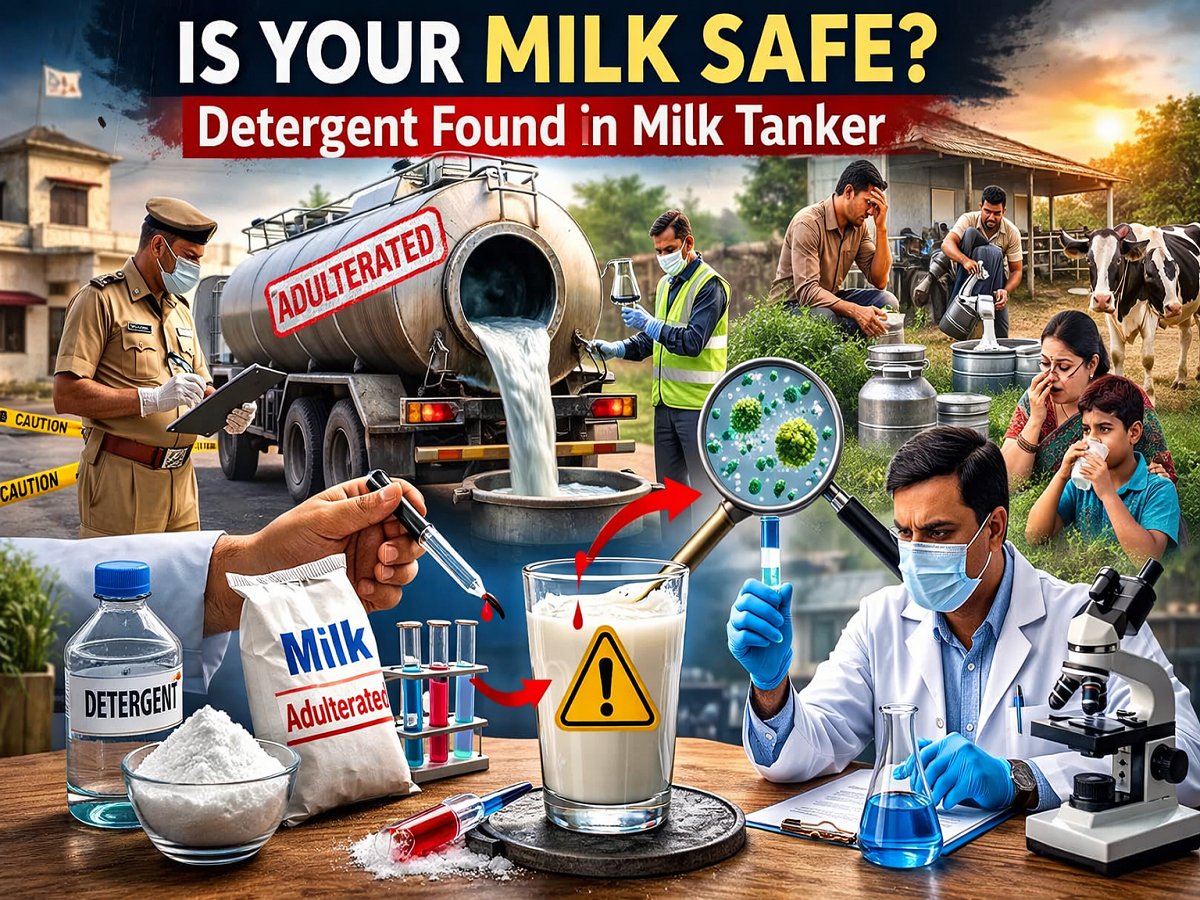
Milk is a daily staple in millions of Indian households, valued for its nutrition and essential role in diets across age groups. However, a recent incident from Gujarat has raised alarming concerns about milk safety and adulteration, prompting many to question the quality of what they consume every day.
Shocking Discovery During Tanker Inspection
In a major development, authorities in Gujarat’s Junagadh region intercepted a milk tanker during a routine inspection. Preliminary tests reportedly revealed the presence of detergent and synthetic substances in the milk.
This revelation is not just about compromised quality—it directly points to a potential public health risk. The presence of such harmful chemicals in a widely consumed food item has once again highlighted gaps in food safety monitoring.
How Milk Adulteration Happens
Investigations and past reports suggest that adulteration is often carried out using dangerous substances to mimic the look and texture of pure milk. Common adulterants include:
- Detergent powder (to create foam and thickness)
- Urea (to increase whiteness and protein-like appearance)
- Chemical oils
- Synthetic powders
In some cases, a small quantity of real milk is mixed with these substances to produce a larger volume of fake milk, making detection even more difficult.
A Long-Standing Issue
Reports indicate that such practices may not be new. In some cases, illegal dairy units have allegedly been producing adulterated milk for years without detection.
What makes the situation more concerning is that consumers may unknowingly consume such milk over long periods. This is not just a regional issue—milk adulteration has been reported in multiple parts of India, making it a nationwide concern.
Health Risks of Adulterated Milk
Milk contaminated with chemicals like detergent and urea can be extremely harmful to health. Possible effects include:
- Digestive problems and stomach infections
- Food poisoning
- Damage to liver and kidneys
- Long-term health complications
Children and elderly individuals are especially vulnerable, as their immune systems are more sensitive to such harmful substances.
Why Is Adulteration So Common?
Several factors contribute to the rise in milk adulteration:
- High demand for milk across the country
- Short shelf life of dairy products
- Pressure to supply large quantities at low cost
- Lack of strict monitoring in small or unregulated dairy units
- Profit-driven malpractice
Despite being the world’s largest milk producer, India continues to face challenges in maintaining consistent quality control.
Simple Ways to Check Milk Purity at Home
While lab testing is the most reliable method, there are a few basic checks you can try at home:
- Shake milk with water—excess foam may indicate detergent
- Drop milk on a smooth surface—pure milk flows slowly, adulterated milk may flow quickly
- Use iodine to detect starch presence
These quick checks can help identify suspicious quality, although they are not foolproof.
Questions Raised on Food Safety Systems
The incident has also raised concerns about the preparedness of local authorities. Reports suggest that officials on-site lacked proper testing equipment, making immediate verification difficult.
This highlights the urgent need for better infrastructure, stricter enforcement, and regular monitoring to prevent such incidents.
What Consumers Should Do
To reduce risks, consumers are advised to:
- Buy milk from trusted brands or verified local suppliers
- Check the quality and consistency before consumption
- Report any suspicious product to authorities
- Be extra cautious when serving milk to children
Final Take
Milk is one of the most essential food items in daily life, and any compromise in its quality is a serious concern. The Gujarat tanker case serves as a wake-up call for both authorities and consumers.
Ensuring food safety requires strict government action as well as increased public awareness. Staying informed and cautious is the first step toward protecting your health and that of your family.