NEWS
Inflation reaches its highest level in the last 10 months, nearing 93 rupees. Learn how the Iran war will affect your pocket.
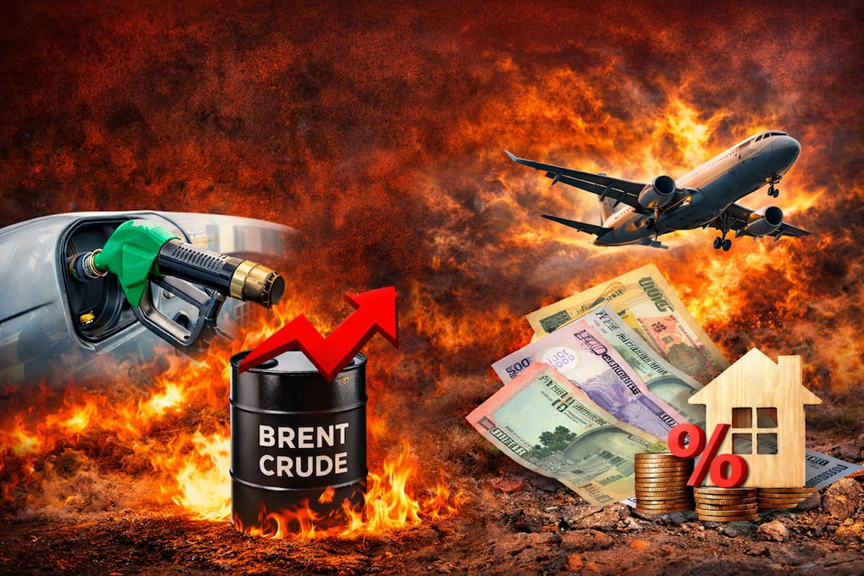
The rupee has steadily weakened, reaching close to 93 rupees per dollar, creating economic uncertainty. At the same time, inflation in the country has also reached a nearly ten-month high.

If inflation increases due to the Iran Wall, it could have a major impact on India.
India's Inflation Impact: The escalating tensions in West Asia are now impacting India's economy. Rising oil prices and global uncertainty have increased pressure on the Indian currency. The rupee has steadily weakened, reaching close to 93 rupees per dollar, creating economic uncertainty. Meanwhile, inflation in the country has reached a nearly ten-month high.
Experts believe that if this crisis continues for a long time, it could directly impact the pockets of ordinary people. While the impact on consumers isn't significant at the moment, if the situation continues for a long time, fuel, travel, and daily expenses could increase.
Potential impact on India
1. Fuel and gas may become expensive
If the price of Brent crude oil remains above $100 per barrel in the international market, the prices of petrol, diesel, and gas may rise. This is likely to increase the cost of travel and daily living.
2. Imports will become expensive
India imports a large portion of its needs. A weakening rupee could lead to higher prices for food items, industrial components, electronics, and other imported goods.
3. Traveling and studying abroad is expensive
Due to the weakening of the rupee, services like foreign travel, fees of foreign universities and international online subscriptions may become more expensive than before.
4. EMIs may also be affected
If inflation rises, the Reserve Bank of India may have to be cautious about cutting interest rates. In such a situation, the possibility of lower loan EMIs may decrease, and the pressure of higher interest rates may persist for a longer period. Clearly, the crisis in West Asia is currently having a limited impact on India, but if oil prices remain high and the rupee weakens, its impact could gradually reach ordinary people through inflation, fuel, and daily expenses.