
NEWS
India will become the new textile capital of the world- why have orders shifted from Bangladesh?
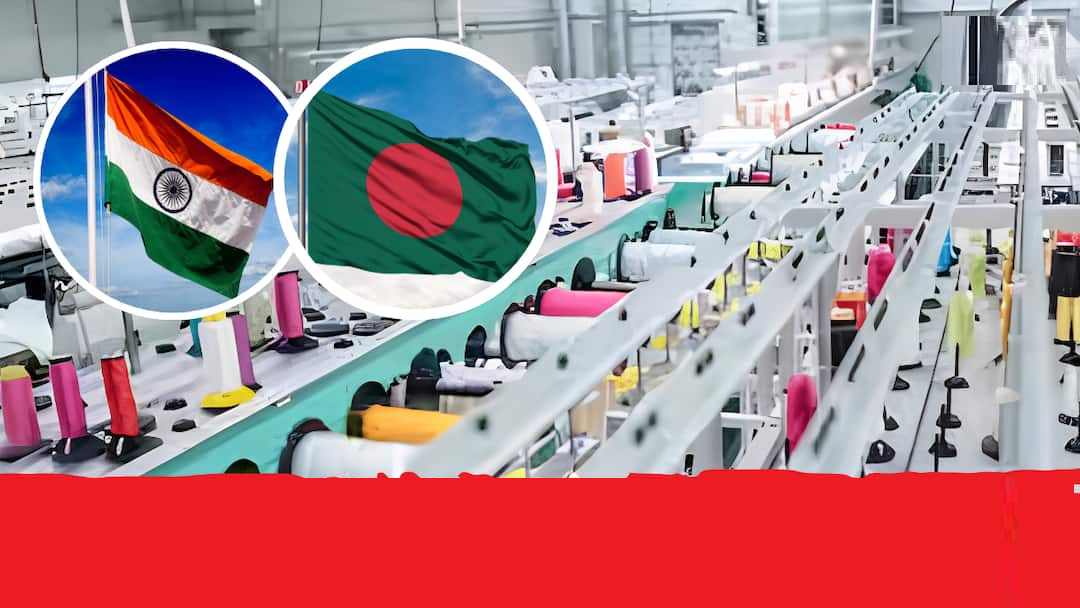
Due to labour unrest and disruption in factory production in Bangladesh, garment orders are shifting to other countries, including India, which is expected to benefit the Indian textile industry.
India will become the new textile capital of the world.
A major opportunity has emerged for India's textile and garment industry to strengthen its position in the international market. Amid labor unrest, strikes, and factory production disruptions in Bangladesh, garment orders are shifting to other countries. India is claiming to benefit from this. The Chamber of Trade and Industry (CTI), an organization of traders and entrepreneurs in Delhi and across the country, has described this as the biggest opportunity for the Indian textile industry in the last 20 years.
According to CTI, between November 1 and November 18, 2026, garment orders worth $254 million, or approximately ₹2,360 crore, were shifted from Bangladesh. The organization claims that India has emerged as the biggest beneficiary of this shift. CTI Chairman Brijesh Goyal says that major fashion brands in the world are now showing interest in sourcing clothing from India. This could give a new impetus to the country's textile and garment industries.
Big brands like ZARA, H&M and M&S are heading towards India
According to CTI, major global fashion brands are shifting their orders from Bangladesh to other countries, including India. These include brands like ZARA, H&M, Marks & Spencer (M&S), and Celio. These companies are also placing orders in Vietnam, Cambodia, and Indonesia, in addition to India. However, CTI claims that India is benefiting the most from this shift.
According to the organization, major textile and garment centers like Tirupur, Surat, Ludhiana, Delhi-NCR, Noida , Gurugram, and Bengaluru could directly benefit from this. If these orders from international brands remain in India for a long time, production in small and medium-sized garment industries could also increase. This is expected to create new employment opportunities.
Labor unrest and rising costs became the reason
CTI cites labor unrest, strikes, and factory closures as the primary reasons for the shift of garment orders from Bangladesh. According to the organization, these circumstances have resulted in production losses of over $400 million in Bangladesh. The lack of timely production of goods has also hindered international buyers.
Additionally, there is talk of increasing the minimum wage in Bangladesh from 12,500 taka to 17,000 taka. According to CTI, this has led to an increase in production costs there. The organization also describes India as being in a better position in terms of delivery. According to it, garment orders in Bangladesh take approximately 120 days to be delivered, while in India, goods can be delivered within 60 to 90 days. This means India has the opportunity to fulfill orders faster than Bangladesh.
The textile industry directly employs 40 million people.
According to CTI, India's textile and apparel industry directly employs over 40 million people. More than 50% of these are women. The organization claims that, including indirect employment, approximately 90 million people are involved in this sector. Furthermore, over 3.6 million MSMEs operate in this sector.
This industry impacts not only clothing factories, but also cotton farmers, those involved in the yarn, button, zip, packaging, transport, trading, and retail industries. CTI says that if orders from international brands increase in India, the benefits could reach all these sectors. According to the organization, this business is not limited to just a few large companies, but is linked to the livelihoods of millions of families.
CTI wrote a letter to PM Modi
CTI has written to Prime Minister Narendra Modi, urging him to make India a major hub in the international textile and garment market . The organization thanked the Prime Minister for the Make in India campaign and stated that by providing additional facilities and incentives to the textile and garment industry, India can become the world's largest garment hub.
CTI Chairman Brijesh Goyal said that while the US is imposing 25% tariff pressure, the world's leading fashion brands are turning to India. Therefore, this opportunity should not be missed. He said that the government and traders together can increase the ₹2,360 crore worth of orders shifted from Bangladesh to ₹20,000 crore.
To this end, CTI has made five demands of the government:
1. Relief for textile exporters: Provide a relief package for exporters. Reduce electricity, provide GST refunds within seven days, and waive interest.
2. 24-hour electricity and water: 24-hour electricity and water facilities should be provided in textile parks and garment clusters.
3. Relief from US tariffs: The textile industry should be given special exemptions in the trade deal with the US, so that the impact of the 25 per cent tariff is reduced.
4. Single Window System: International brands like ZARA and H&M should easily get land and necessary approvals to set up factories in India.
5. Training of one lakh artisans: One lakh new skilled artisans should be trained in the field of sewing, cutting and designing.
Brijesh Goyal said that if the government and businesses work together, India's textile and garment industry can gain new recognition internationally. CTI believes that by leveraging the current situation, India can move forward to become the world's largest textile and garment hub.