
Business
India Sugar Production 2026-27: Output Jumps Fourfold, Domestic Supply May Improve but Prices Remain High
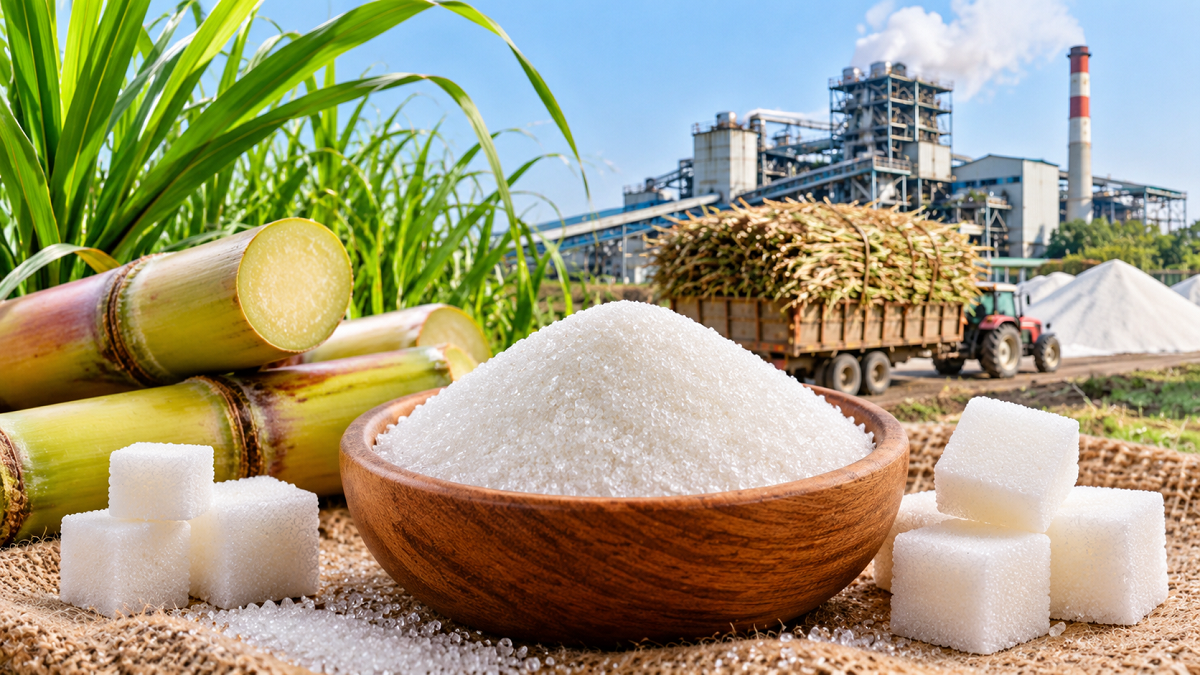
India Sugar Production Update 2026: India's sugar industry has reported a sharp increase in production during the opening month of the 2026-27 season, raising expectations of improved domestic availability. According to figures cited in a report attributed to credit rating agency ICRA, sugar output reached approximately 1.3 million metric tonnes, more than four times the level recorded during the corresponding period of the previous year.
The reported increase comes amid government measures aimed at limiting the diversion of sugar for ethanol manufacturing. By restricting the quantity used for fuel production, more sugar could become available for household consumption and other domestic requirements.
However, higher production does not automatically guarantee lower retail prices. Industry estimates suggest that India's closing sugar inventories could remain below historical comfort levels, keeping the supply situation relatively tight.
Here is a detailed look at the reported production figures, ethanol restrictions, stock estimates and possible implications for consumers.
India's Sugar Production Records Sharp Increase
According to the ICRA figures cited in the November 23 report, domestic sugar production reached 1.3 million metric tonnes during the first month of the period described as ESY 2027.
This represents a more than fourfold increase compared with the corresponding period a year earlier.
The improvement is significant for India's sugar industry, which plays an important role in agriculture, food processing and the rural economy.
Sugarcane cultivation supports farmers across major producing states, including Uttar Pradesh, Maharashtra and Karnataka.
Higher sugar output can help improve supplies to wholesalers, food manufacturers and retail markets.
However, production trends depend on several factors, including sugarcane availability, weather conditions, mill operations and government policies.
Government Restrictions on Ethanol Diversion May Increase Sugar Availability
One of the important factors highlighted in the report is the government's approach to sugar diversion for ethanol production.
Ethanol is commonly blended with petrol as part of India's fuel policy. Sugarcane-based feedstocks, including sugar syrup and molasses, can be used to manufacture ethanol.
However, using more sugar-related feedstock for ethanol may reduce the quantity available for food consumption, depending on the feedstock and production process involved.
The report suggests that restrictions on diversion could support domestic sugar supplies during the 2026-27 season.
During the previous sugar year, approximately 3 million metric tonnes of sugar were reportedly diverted for ethanol-related purposes.
A reduction in this diversion could increase the amount of sugar available for the domestic market.
Nevertheless, the actual impact will depend on production levels, the type of feedstock used and subsequent government decisions.
Sugar Production Expected to Reach 28–29 Million Tonnes
The report projects India's total sugar production for SY2027 at approximately 28 million to 29 million metric tonnes.
This compares with an estimated 27.6 million metric tonnes during SY2026.
If these projections materialise, the country could register a moderate increase in annual production.
The figures suggest an improvement in the overall supply outlook, although they remain forecasts rather than final production totals.
India Sugar Production and Stock Estimates
| Particulars | Reported Figure |
|---|---|
| Production in the opening month of ESY 2027 | 1.3 million metric tonnes |
| Year-on-year increase in opening-month output | More than fourfold |
| Estimated sugar production in SY2026 | 27.6 million metric tonnes |
| Projected production in SY2027 | 28–29 million metric tonnes |
| Sugar diverted for ethanol in previous season | Approximately 3 million metric tonnes |
| Projected domestic consumption | 28.3 million metric tonnes |
| Estimated closing stock for SY2027 | 3.5–4.5 million metric tonnes |
| Estimated closing stock for SY2026 | 4.8 million metric tonnes |
Figures are based on the ICRA estimates quoted in the supplied report and have not been independently verified against the original agency publication.
Sugar Stocks May Remain Below Historical Levels
Despite the improvement in production, the report indicates that India's sugar inventories could remain under pressure.
ICRA reportedly expects closing sugar stocks for SY2027 to range between 3.5 million and 4.5 million metric tonnes.
The projection cited in the source includes an approved import quota of 1 million metric tonnes.
This estimate is lower than the approximately 4.8 million metric tonnes of closing inventory reported for SY2026.
With domestic consumption projected at around 28.3 million metric tonnes annually, the estimated closing stock would cover less than two months of consumption.
Historically, the industry has generally preferred a larger inventory buffer to manage seasonal demand and supply fluctuations.
Lower stocks can make the market more sensitive to unexpected production disruptions, higher demand or changes in government policy.
Why Are Sugar Prices Still High Despite Increased Production?
A rise in production usually improves supply conditions, but its effect on retail prices may not be immediate.
The source report suggests that sugar prices remained elevated in November 2026 despite the improvement in output.
Several factors may explain this situation.
Strong festive demand: Consumption of sugar often increases during festivals and celebrations because of higher demand from households, sweet manufacturers, bakeries and food businesses.
Slower production in Uttar Pradesh: Delays in crushing operations or lower initial output in a major producing state can temporarily affect market supplies.
Limited opening inventories: Even when production improves, low available stocks can prevent prices from falling quickly.
Distribution and market conditions: Transportation expenses, wholesale trading activity and regional supply differences can influence prices paid by consumers.
Consequently, higher production may ease supply concerns without immediately producing a noticeable reduction in retail sugar prices.
What Does Higher Sugar Production Mean for Consumers?
For households, improved production is generally a positive development because it can help ensure a more reliable supply of sugar.
However, consumers should not assume that retail prices will fall sharply simply because production has increased.
The direction of prices will depend on actual market arrivals, inventory levels, demand and government decisions.
If domestic availability improves consistently over the coming months, it could help reduce supply-related pressure.
On the other hand, lower closing inventories may limit the extent of any price decline.
Retail prices can also differ across cities and states depending on local market conditions.
Impact on Sugar Mills and Farmers
The sugar industry is closely connected with India's agricultural economy.
Higher sugar production can influence mill operations, working capital requirements and the availability of sugarcane-based products.
For sugar mills, the balance between sugar sales and ethanol production is an important commercial consideration.
Ethanol manufacturing provides an additional revenue opportunity for some mills, while sugar sales remain central to their operations.
Changes in government diversion policies may therefore affect the product mix and financial planning of sugar manufacturers.
For sugarcane farmers, timely payments from mills remain an important concern.
Improved production does not necessarily guarantee better financial outcomes for every farmer or mill, as profitability also depends on cane prices, recovery rates, operating expenses and payment arrangements.
What Should the Sugar Industry Watch Next?
The coming months will be important for assessing whether the initial production improvement continues throughout the season.
Actual sugarcane crushing volumes, production performance in major states and changes in ethanol-related policy will help determine the supply outlook.
Domestic consumption trends and closing stock estimates will also remain important indicators.
If production exceeds expectations and diversion remains controlled, domestic availability could improve further.
However, weaker-than-expected output or stronger demand could keep inventories tight.
Conclusion
India's reported fourfold increase in opening-month sugar production is an encouraging development for the domestic sugar market.
The production estimate of 28–29 million metric tonnes for SY2027 suggests a modest improvement over the previous season.
Government restrictions on sugar diversion for ethanol may also support domestic availability.
However, projected closing stocks of 3.5–4.5 million metric tonnes indicate that the supply situation could remain relatively tight.
For consumers, the key question is whether increased production will eventually translate into more stable retail prices.
The answer will depend on actual output, demand, inventory levels and policy developments during the remainder of the season.