NEWS
'Illegal, the Chief Commissioner should...', what did the former commissioners say on the SIR-ECI dispute?
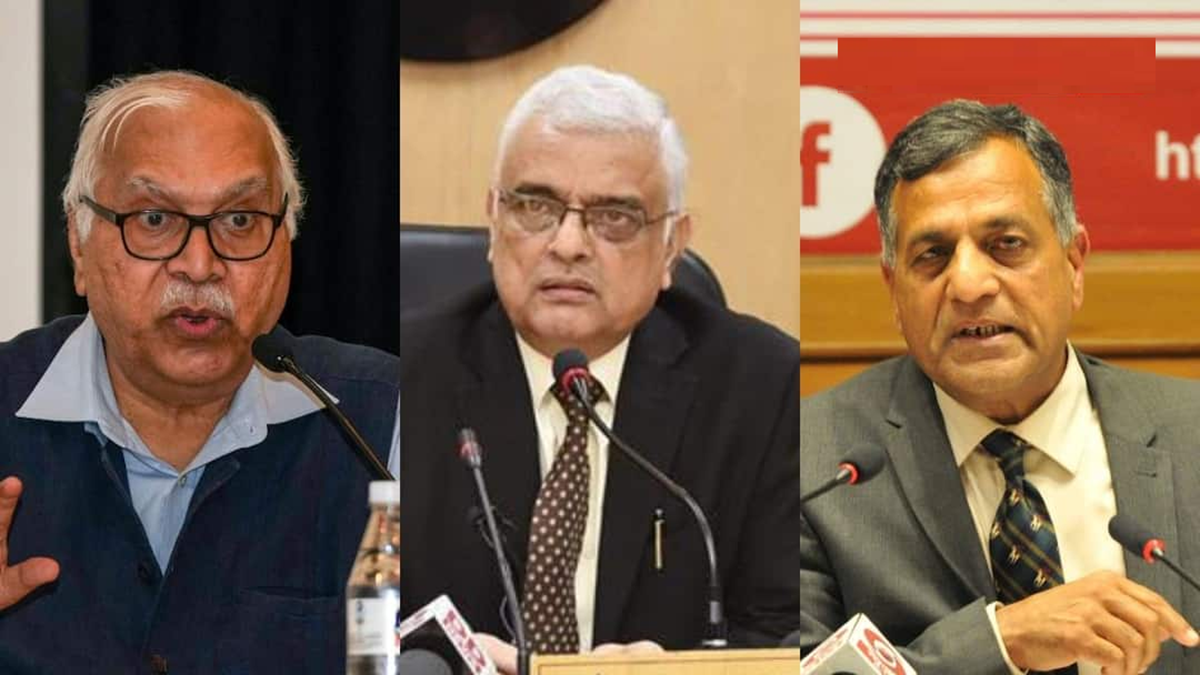
Former Chief Election Commissioners SY Qureshi and OP Rawat have demanded an investigation into the SIR process and the Election Commission, while former commissioner Ashok Lavasa has demanded that the Commission clarify the entire situation.
SY Qureshi, OP Rawat and Ashok Lavasa
Amid the ongoing In-depth Revision (SIR) of the electoral rolls, the Election Commission has come under scrutiny from its own commissioners. Two of the commission's three commissioners filed multiple objections during the SIR process. Following this revelation by the Indian Express newspaper, opposition parties have intensified their demand for action against Chief Election Commissioner (CEC) Gyanesh Kumar. Congress leader Rahul Gandhi is expected to hold a press conference today. The CPI(M) has also announced a press conference. It is believed that further steps may be taken to demand the CEC's resignation.
Meanwhile, former Election Commissioners have also demanded an investigation. OP Rawat, who served as Chief Election Commissioner from January 2018 to December 2018, said, "This is very unfortunate and should never have happened. The Election Commission is an institution renowned worldwide for delivering free, fair, and credible elections. Therefore, this dispute should be resolved immediately by the Election Commissioners and the Chief Election Commissioner."
Criminal Neglect in West Bengal – OP Rawat
OP Rawat said, "Regarding the SIR, he said that there were errors in the process from the beginning, and they even came to the court. I also spoke about them, and the Election Commission made corrections. They gradually improved it. But the tribunal's decision regarding West Bengal stated that 93% of those deleted were voters and were deprived of voting. This is criminal neglect. The Election Commission should immediately take some action to address this, or else the entire SIR process should be stopped."
What did SY Qureshi say?
SY Qureshi, who served as Chief Election Commissioner from July 2010 to June 2012, told news agency ANI that both Election Commissioners were vigorously questioning and arguing about everything, but they were not even taken into confidence, and I even found out that the Election Commission did not hold meetings for four months at a time.
He said, "If majority decisions are not made, then all decisions are illegal. A complete list of all decisions taken over the past year and a half should be compiled and made public, including how many were unanimous. If there is consensus, then the decision is correct. This matter is already before the Supreme Court. The Supreme Court should convene and take the entire list, and the entire public deserves to know."
What did Ashok Lavasa say?
Meanwhile, Ashok Lavasa, who was the Election Commissioner from January 2018 to August 2020, has questioned how the Election Commission can consider differing opinions as general comments, when decisions were taken despite objections from two of its three members.
Speaking to NDTV, he said, "It seems there are definitely differences of opinion. In such a situation, it is the responsibility of the Election Commission to clarify the entire situation."
It should be noted that during the 2019 Lok Sabha elections, then-Election Commissioner Ashok Lavasa had expressed his disagreement with the clean chit given to BJP leaders for alleged violations of the Model Code of Conduct. However, the Commission, headed by then-Chief Election Commissioner Sunil Arora, rejected his demand. Lavasa subsequently resigned from the Election Commission.
What did the Election Commission say?
On Wednesday (September 24), the Election Commission responded to objections raised by two of its commissioners regarding the SIR process, stating that differing opinions and comments are part of the normal process during deliberations within any institution. The Commission further stated that all its orders have full legal validity and are in accordance with established statutory procedures. The commissioners' suggestions were intended to further improve the election process.