With electricity bills rising every year and power cuts still affecting many areas, homeowners are increasingly looking for reliable alternatives to traditional electricity. Among the most popular renewable energy solutions today is the Hybrid Solar System, a technology that combines the advantages of both on-grid and off-grid solar setups.
Unlike conventional solar systems, a hybrid setup not only generates electricity from sunlight but also stores excess energy in batteries for use during power outages. This makes it an attractive option for households and businesses seeking both energy savings and uninterrupted power supply.
Here's everything you need to know about how a hybrid solar system works, along with its major benefits and drawbacks.
What Is a Hybrid Solar System?
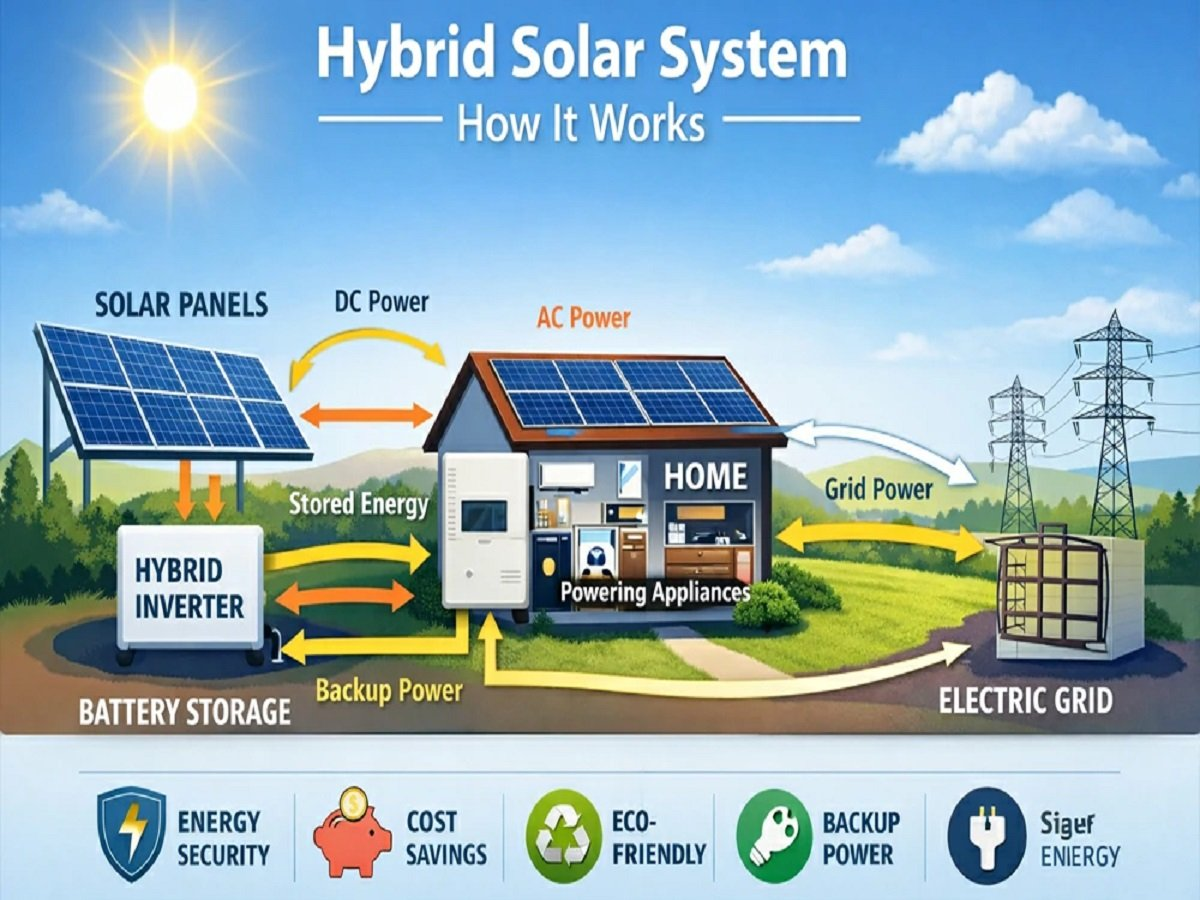
A hybrid solar system is an advanced solar power solution that connects solar panels, battery storage, and the electricity grid into a single integrated system.
During the daytime, solar panels generate electricity to power household appliances. Any surplus energy is stored in batteries for later use. If additional power is still available after charging the batteries, it can be exported to the electricity grid through net metering.
When solar production drops, such as during nighttime or cloudy weather, the system automatically draws power from the batteries. If the batteries are depleted, electricity is sourced from the grid.
This combination offers greater flexibility and energy security compared to standard solar installations.
Main Components of a Hybrid Solar System
A complete hybrid solar setup typically includes:
- Solar Panels
- Hybrid Solar Inverter
- Lithium-Ion Battery Bank
- Utility Grid Connection
- Net Meter
- Monitoring System
Most modern solar panels can continue producing electricity efficiently for 25 to 30 years with proper maintenance.
How Does a Hybrid Solar System Work?
The working process is relatively simple:
- Solar panels capture sunlight and generate electricity.
- Household appliances consume the generated power.
- Excess energy charges the battery bank.
- Additional surplus electricity is exported to the grid.
- During power outages, batteries automatically supply backup electricity.
- When both solar and battery power are unavailable, the system switches to grid electricity.
This intelligent energy management ensures continuous power availability throughout the day.
Advantages of a Hybrid Solar System
1. Reliable Backup During Power Cuts
One of the biggest benefits of a hybrid solar system is uninterrupted electricity.
Whenever the utility grid fails, the battery backup automatically takes over, ensuring essential appliances continue running without interruption.
This feature is particularly valuable in regions where frequent power outages are common.
2. Significant Reduction in Electricity Bills
Hybrid systems help homeowners reduce their dependence on grid electricity.
Through net metering, surplus solar energy can be exported to the grid, allowing users to earn credits or offset future electricity consumption.
As a result, monthly power bills can decrease substantially over time.
3. Environmentally Friendly Energy Solution
Unlike conventional electricity generated from coal and other fossil fuels, solar energy is clean and renewable.
Using a hybrid solar system helps reduce carbon emissions and supports a greener environment while lowering the household's carbon footprint.
4. Greater Energy Independence
Generating and storing your own electricity provides protection against rising utility rates.
Users become less vulnerable to unexpected tariff hikes and energy shortages, offering greater control over long-term energy expenses.
5. Better Utilization of Solar Power
In traditional on-grid systems, excess solar energy is sent directly to the grid.
Hybrid systems, however, first store that energy in batteries, allowing homeowners to maximize solar power usage and improve overall efficiency.
Disadvantages of a Hybrid Solar System
1. Higher Initial Investment
The biggest challenge associated with hybrid solar systems is their upfront cost.
Because they require batteries and specialized hybrid inverters, installation expenses are significantly higher than standard on-grid solar systems.
For many homeowners, the initial investment can be substantial.
2. Battery Replacement Costs
Although solar panels can last for decades, batteries have a shorter lifespan.
Most lithium battery systems typically require replacement after several years, adding to the overall ownership cost over the long term.
3. More Complex Installation
Hybrid systems involve additional components, wiring, and configuration requirements.
As a result, installation is more technically demanding and may require experienced professionals for setup and maintenance.
4. Maintenance Requirements
Battery systems require periodic monitoring and maintenance to ensure optimal performance and longevity.
This makes hybrid systems slightly more demanding compared to simple grid-connected solar installations.
Who Should Consider a Hybrid Solar System?
A hybrid solar system may be an ideal choice if:
- Your area experiences frequent power outages.
- You want both electricity savings and backup power.
- You are planning a long-term investment in renewable energy.
- You want greater protection from rising electricity tariffs.
- You prefer energy independence and sustainability.
However, if your area has highly reliable power supply and net metering benefits are sufficient, a standard on-grid solar system may offer a more cost-effective solution.
Final Verdict
Hybrid solar systems combine the best features of both grid-connected and battery-based solar solutions. While the upfront cost is higher, the ability to store energy, reduce electricity bills, and maintain power during outages makes them a compelling option for many households.
For homeowners seeking long-term energy security, lower utility expenses, and a cleaner source of electricity, a hybrid solar system can be a smart and future-ready investment.