In today’s digital world, the Aadhaar card has become one of the most important identity documents in India. From opening bank accounts and booking SIM cards to hotel check-ins and government services, Aadhaar is used almost everywhere. But as Aadhaar usage has increased, cases of fake Aadhaar cards and identity fraud have also started rising rapidly.
Cybercriminals and fraudsters are now creating fake Aadhaar cards that often look almost identical to genuine ones. In many cases, it becomes difficult to identify a fake Aadhaar card through simple visual inspection. These fake documents are reportedly being used in banking scams, SIM card fraud, online cheating, rental verification fraud, and even job-related scams.
Because Aadhaar contains sensitive personal information, it is important for every Indian citizen to know how to verify whether an Aadhaar card is genuine or fake. Fortunately, there are several safe and simple methods that can help users identify suspicious Aadhaar cards without requiring advanced technical knowledge.
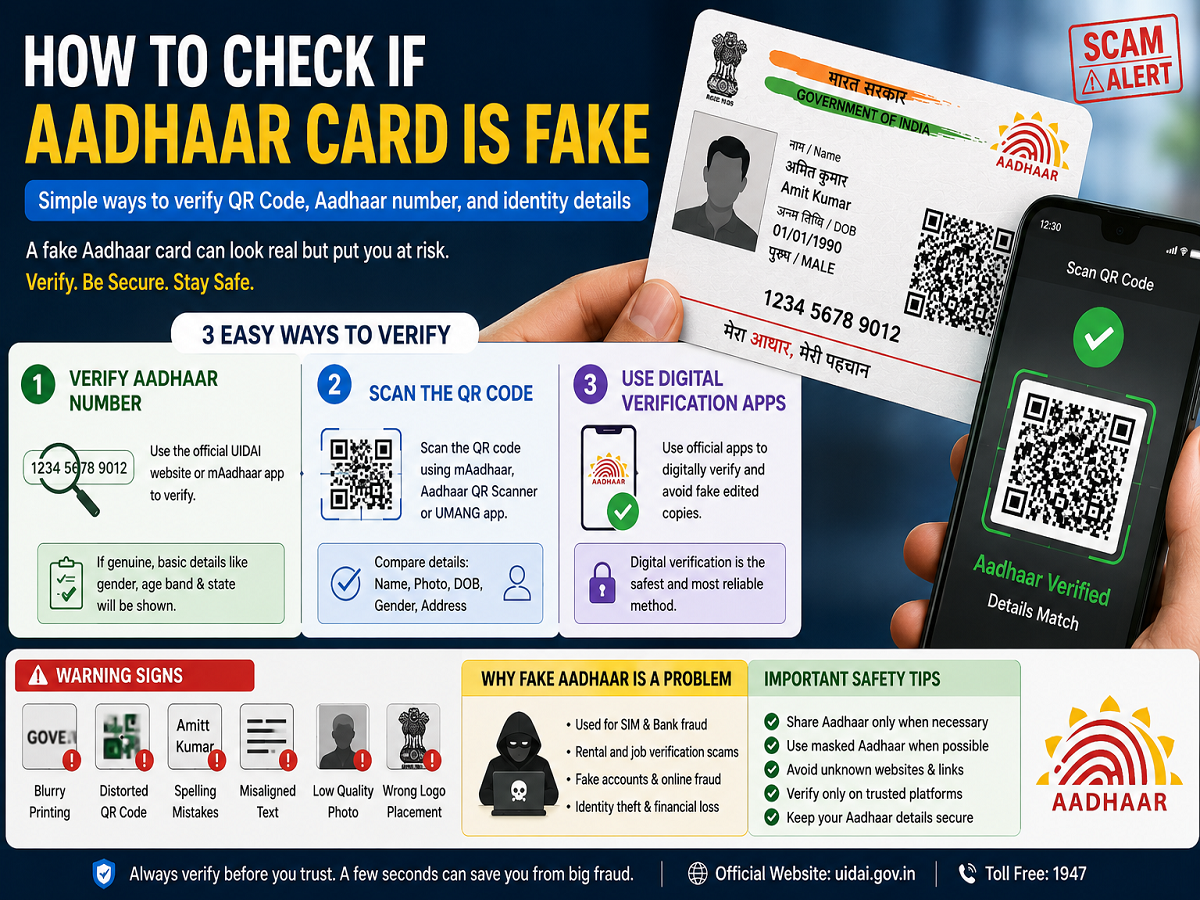
Verify the Aadhaar Number First
One of the easiest ways to check the authenticity of an Aadhaar card is by verifying the 12-digit Aadhaar number itself. Every genuine Aadhaar card issued by UIDAI carries a unique identification number linked to official records.
If the Aadhaar number is valid, the verification process may display basic information connected to it, such as:
- Gender
- Age group
- State information
If the number does not exist, appears inactive, or fails verification, the Aadhaar card could be fake or tampered with.
QR Code Scanning Is the Safest Verification Method
Modern Aadhaar cards come with a secure QR code that stores digitally signed information. Experts consider QR code scanning one of the safest and most reliable methods to identify fake Aadhaar cards.
The biggest advantage of QR code verification is that the information inside the code is encrypted and difficult to manipulate. Even if someone edits the printed photo or modifies details on the physical card, the original information stored inside the QR code can still reveal the truth.
After scanning the QR code, users can compare details such as:
- Name
- Photograph
- Date of Birth
- Gender
- Address
If the scanned information does not match the printed details on the card, it may indicate that the Aadhaar card is fake, altered, or tampered with.
Watch Out for Physical Signs of Tampering
Although many fake Aadhaar cards now appear highly realistic, there are still several warning signs users should check carefully.
Some common red flags include:
- Blurry or low-quality printing
- Distorted QR codes
- Spelling mistakes
- Misaligned text
- Poor-quality photographs
- Incorrect UIDAI logo placement
- Unusual fonts or formatting
However, experts warn that visual inspection alone is no longer fully reliable because scammers now use advanced editing tools to create convincing fake documents.
Use Official Digital Verification Apps
Digital verification methods are becoming increasingly important in preventing identity fraud. Official Aadhaar-related apps can help users securely scan QR codes and verify Aadhaar details digitally.
Using digital verification reduces the risk of accepting edited photocopies or manipulated paper documents. Fraudsters often use image-editing software to alter Aadhaar copies, but secure digital verification tools can still detect inconsistencies.
Why Fake Aadhaar Cards Are a Growing Concern
Fake Aadhaar cards are becoming a major security issue because Aadhaar is deeply linked to banking, travel, government schemes, and financial services across India.
According to reports, scammers may:
- Edit photographs on real Aadhaar cards
- Create fake printouts
- Use stolen Aadhaar numbers
- Manipulate photocopies digitally
These methods are increasingly being used for identity theft and financial fraud.
Important Safety Tips for Aadhaar Users
To stay protected from Aadhaar-related fraud, users should follow a few important safety precautions:
- Avoid sharing Aadhaar copies unnecessarily
- Never upload Aadhaar details on unknown websites
- Do not click suspicious verification links
- Use only trusted platforms for Aadhaar verification
- Prefer Masked Aadhaar whenever possible
Experts also recommend regularly checking where and how Aadhaar details are being used to avoid misuse.
Final Takeaway
As Aadhaar continues to play a central role in India’s digital ecosystem, awareness about fake Aadhaar scams has become extremely important. A fake Aadhaar card may look genuine at first glance, but secure QR code verification, Aadhaar number validation, and official digital tools can help users identify suspicious documents quickly.
Instead of relying only on visual checks, users should adopt digital verification methods whenever possible. A few minutes of careful verification can help prevent identity theft, financial fraud, and serious security risks in the future.