Ministers in Government: How is the number of ministers in the government determined? This is a question people often ask. What are the rules for this, and how is the limit set? Learn the full story.
Limit on the number of ministers in the government
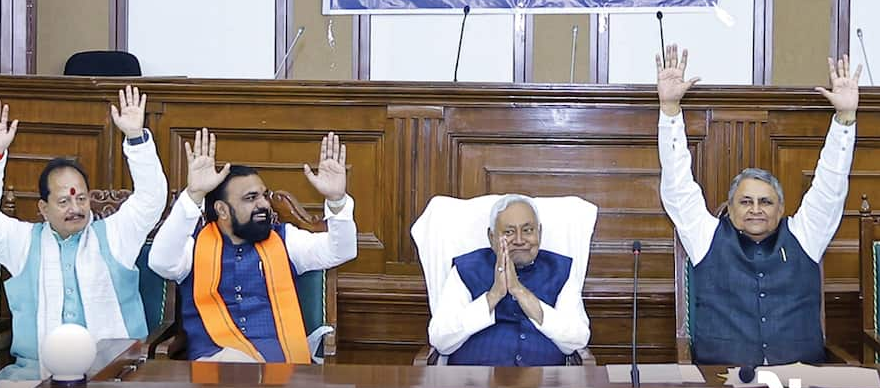
Ministers in Government: Today, November 20th, Nitish Kumar was sworn in as Chief Minister for the tenth time, along with his cabinet, which included a total of 26 ministers. People often wonder how many ministers a government can have, especially when a state or central cabinet expands and new faces are added. Can anyone be appointed a minister at will?
Or perhaps there are some rules in the Constitution that limit the number of ministers at the Centre and in the states. People often want to know how the number of ministerial positions is determined and when and how it changes. Let us tell you the full details about this.
How is the number of ministers decided?
The 91st Constitutional Amendment determines the number of ministers in a government. The total number of ministers in a government depends directly on the total strength of the House. This limit is determined by the number of members of the Lok Sabha at the Centre and the number of state legislative assemblies. This is intended to ensure that the government does not become unnecessarily large and impose a significant burden on resources.
Previously, ministerial positions were distributed as political concessions in many states, leading to oversized cabinets. This rule has now put a stop to this. Both the central and state governments must keep the number within a 15 per cent limit. A separate minimum limit of 12 ministers has been set for smaller states.
Who is made a minister in the cabinet?
The Prime Minister or Chief Minister has the authority to select ministers. They decide who gets the opportunity based on position, experience, and political responsibility. Cabinet ministers typically handle large and important ministries. Ministers with independent charge have full portfolios but report directly to the Prime Minister or Chief Minister.
Ministers of State assist a senior minister and often handle specific tasks within a department. Although the selection process is political, the number of ministers is limited, ensuring that only trustworthy individuals are selected.