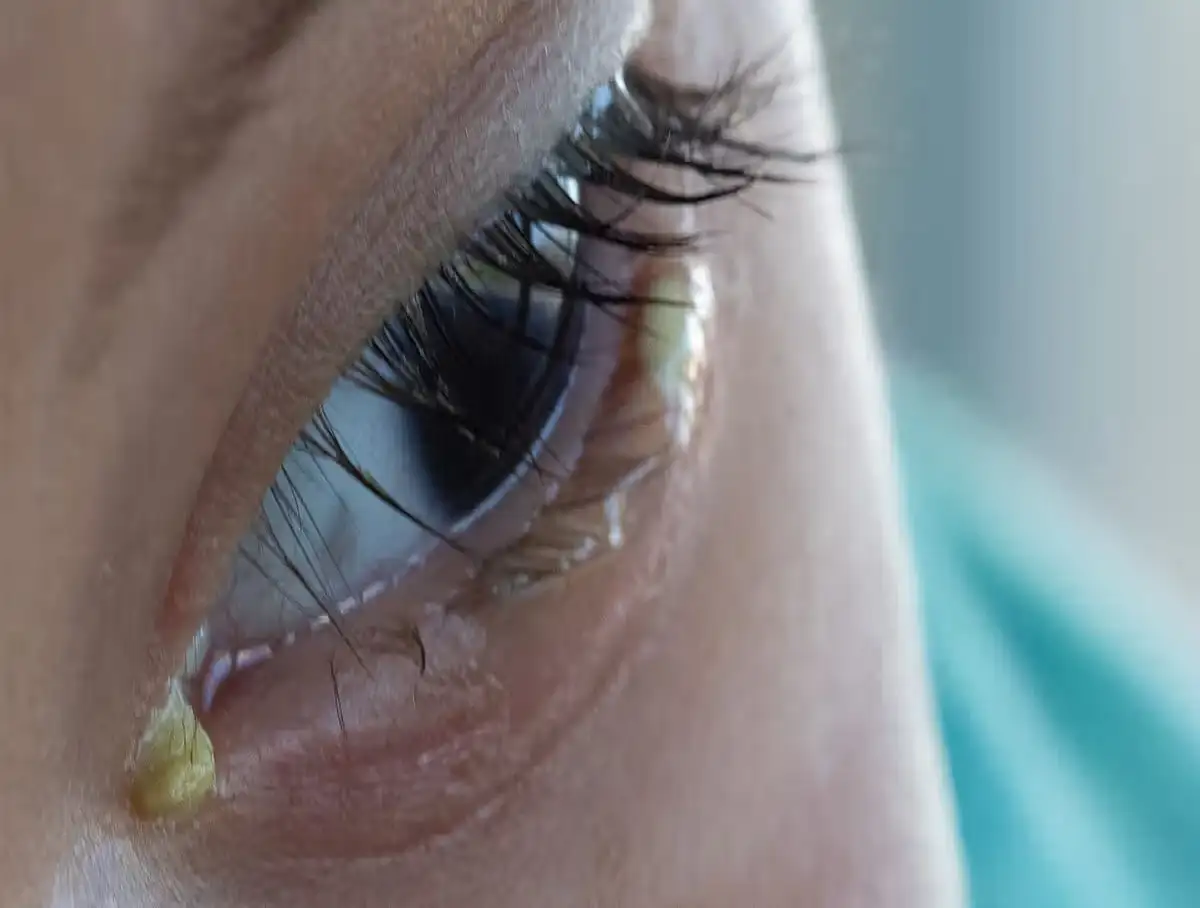
Have you ever woken up to find a small amount of white, dry or slightly sticky material collected in the corners of your eyes? In many cases, a little morning eye discharge is normal and is part of the eye's natural cleaning process.
However, changes in the amount, colour or consistency of eye discharge can sometimes indicate irritation, allergy or infection. Discharge accompanied by significant redness, swelling, eye pain, blurred vision or sensitivity to light deserves particular attention.
It is therefore important to distinguish ordinary morning eye crust from symptoms that may require medical evaluation.
Why Does Eye Discharge Collect Overnight?
Eye discharge can contain mucus, oils, dead skin cells, tears and tiny particles collected from the surface of the eye.
During the daytime, blinking continuously spreads tears across the eye and helps remove this material. Because people do not blink while sleeping, small amounts can accumulate around the eyelids and corners of the eyes overnight.
A small amount of clear, whitish or slightly crusty discharge after waking can therefore occur without indicating an infection.
The situation becomes more concerning when there is a sudden increase in discharge or when other symptoms appear.
What Can Thin or Whitish Eye Discharge Mean?
A small amount of whitish or clear discharge may sometimes occur with dry or irritated eyes.
Spending long periods looking at a computer or smartphone screen can reduce normal blinking. Exposure to air conditioning, fans, dry air, dust or smoke can also contribute to eye irritation in some people.
Taking regular breaks from screens and consciously blinking more often may help people who experience mild dryness.
Avoid rubbing the eyes, as this can worsen irritation.
Artificial tears may help some people with dry-eye symptoms, but anyone with persistent or recurring symptoms should consult an eye-care professional rather than repeatedly self-treating.
Watery Eyes With Mild Sticky Discharge
Watery eyes accompanied by mild discharge can have several possible causes.
Allergic conjunctivitis, for example, commonly causes itching, watering and redness. Exposure to pollen, dust, pet dander or other allergens may trigger symptoms in susceptible people.
Viral conjunctivitis can also produce redness, watering and a gritty or foreign-body sensation.
Because different eye conditions can produce similar symptoms, the appearance of discharge alone is generally not enough to determine the exact cause.
A cool compress may provide temporary comfort in some cases of allergy or irritation, while preservative-free artificial tears may also help certain people. Persistent or worsening symptoms should be medically assessed.
Thick Yellow Discharge Should Not Be Ignored
Thick yellow discharge, particularly when it causes the eyelids to stick together after sleeping, can occur with bacterial conjunctivitis.
Redness and irritation may also be present.
However, it is important not to diagnose an eye infection solely on the basis of discharge colour. Several eye conditions can have overlapping symptoms, and treatment depends on the underlying cause.
Antibiotic eye drops do not treat viral or allergic conjunctivitis and should not be used unnecessarily.
If a healthcare professional determines that a bacterial infection requires treatment, an appropriate antibiotic eye drop or ointment may be prescribed.
Avoid using leftover antibiotic or steroid-containing eye drops without medical advice.
What Does Thick Green Discharge Mean?
Green or yellow-green discharge, especially when it is thick and repeatedly returns after the eye has been cleaned, may be associated with an infection and warrants medical attention.
Contact-lens users need to be especially cautious.
If you wear contact lenses and develop unusual discharge, significant redness, pain or changes in vision, remove the lenses and avoid wearing them again until the eye has been appropriately evaluated.
Certain infections involving the cornea can become serious, particularly in people who use contact lenses.
Eye Pain or Sensitivity to Light Can Be a Warning Sign
Not every red or watery eye is simply conjunctivitis.
Seek prompt medical evaluation if eye discharge occurs with symptoms such as:
- Moderate or severe eye pain
- Significant or rapidly worsening redness
- Blurred or reduced vision
- Marked sensitivity to light
- Significant swelling around the eye
- Eye injury or chemical exposure
- Rapidly increasing or persistent discharge
- Severe symptoms in a contact-lens wearer
Pain, reduced vision and sensitivity to light can occur with conditions affecting deeper parts of the eye or the cornea. These symptoms should not be dismissed as ordinary morning eye crust.
Sudden loss of vision or a serious eye injury requires urgent medical attention.
How to Clean Eye Discharge Safely at Home
For mild discharge without warning symptoms, basic eye hygiene may help keep the eyelids clean.
Wash your hands thoroughly before touching the area around your eyes. A clean cloth or cotton pad dampened with clean lukewarm water can be used to gently soften dried crust around the eyelids.
Use a fresh section of the cloth or a separate pad for each eye, particularly if an infection is suspected.
Do not aggressively rub the eye or attempt to scrape away dried material.
If conjunctivitis may be present, avoid sharing towels, pillowcases, cosmetics or other personal items that come into contact with the eyes.
Avoid Using Eye Drops Without Knowing What's in Them
One important precaution is to avoid randomly purchasing medicated eye drops simply because an eye looks red.
Some combination eye drops can contain antibiotics, steroids or other medicines that may be inappropriate for the actual condition.
Steroid-containing eye drops in particular should not be used without medical supervision because they can worsen certain eye infections and cause other complications.
For recurring or unexplained discharge, an examination is safer than repeatedly trying different medicines.
When Should You See an Eye Doctor?
A little crust around the eyes after sleeping can be completely normal. What matters is whether the pattern has changed.
If discharge becomes unusually thick, repeatedly returns, changes significantly in colour or is accompanied by redness, swelling or discomfort, getting an eye examination is advisable.
Seek medical attention sooner if you develop pain, sensitivity to light, reduced or blurred vision, significant swelling or severe redness.
The key takeaway is simple: morning eye discharge by itself does not prove that you have an eye disease. Pay attention to changes in the discharge and, more importantly, to any additional symptoms that occur with it.