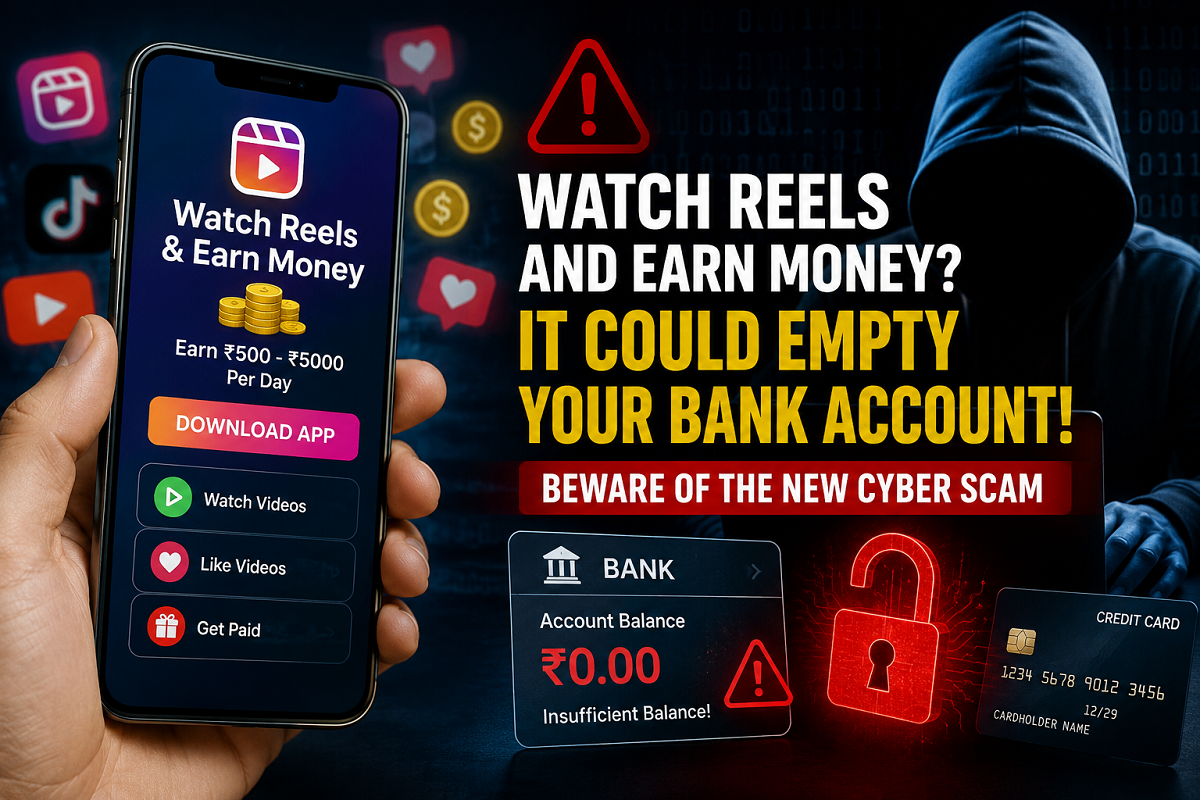
The promise of earning easy money from home is attracting millions of internet users every day. Social media platforms are increasingly flooded with advertisements claiming that people can make quick cash simply by watching videos, liking content, or viewing short reels online. While these offers may appear harmless and tempting, cybersecurity experts are warning that many of them are part of a growing online fraud scheme designed to steal personal and banking information.
The latest scam, commonly promoted under slogans such as “Watch Reels and Earn Money,” targets individuals looking for simple side-income opportunities. Fraudsters use fake apps, deceptive websites, and misleading advertisements to lure victims into sharing sensitive information that can eventually lead to financial losses.
How the ‘Watch Reels and Earn’ Scam Works
Cybercriminals typically begin by advertising attractive earning opportunities on social media platforms, messaging apps, and online forums. These promotions often claim that users can earn money by watching short videos, engaging with social media posts, or completing simple online tasks.
Interested users are then directed to download a mobile application or register on an unfamiliar platform.
At first, the app may appear legitimate. It may even display fake earnings, reward points, or account balances to convince users that money is being accumulated successfully.
However, the real danger begins when the application requests permissions that are unrelated to its stated purpose.
Permissions Commonly Requested by Fraudulent Apps
These suspicious applications may ask for access to:
- SMS messages
- Contact lists
- Phone storage
- Accessibility settings
- Screen recording permissions
- Notification access
Many users grant these permissions without carefully reviewing their purpose. Once access is provided, scammers may gain visibility into sensitive information stored on the device.
The Fake Withdrawal Trick
One of the most common tactics used in these scams involves fake withdrawal options.
After users spend time watching videos and accumulating virtual rewards, they attempt to withdraw their earnings. At this stage, the app displays a button or link claiming to process the payment.
Instead of transferring money, the link may trigger the download of a malicious file, often disguised as a required update or verification tool.
In some cases, the file may contain malware capable of:
- Monitoring banking activity
- Capturing passwords
- Reading SMS-based One-Time Passwords (OTPs)
- Recording screen activity
- Stealing financial credentials
Once cybercriminals obtain banking details and verification codes, unauthorized transactions can occur within minutes.
Why These Scams Are Becoming More Common
The increasing popularity of digital payments, mobile banking, and work-from-home opportunities has created an ideal environment for fraudsters.
Many people are actively searching for additional income sources, making them more vulnerable to offers that promise fast and effortless earnings.
Scammers take advantage of this mindset by presenting opportunities that appear simple, risk-free, and highly rewarding.
In reality, legitimate companies rarely pay users significant amounts of money simply for watching short videos or social media content.
Warning Signs You Should Never Ignore
Users should be cautious if an app or website:
- Promises unusually high earnings with little effort
- Requires downloading software from unknown sources
- Requests banking details upfront
- Asks for unnecessary phone permissions
- Demands payment before releasing earnings
- Uses poor-quality websites or suspicious links
- Pressures users to act quickly
Any of these signs could indicate a potential fraud attempt.
How to Protect Yourself
Cybersecurity experts recommend following several basic precautions to reduce the risk of becoming a victim.
Download Apps Only from Trusted Sources
Install applications exclusively from official platforms such as the Google Play Store or Apple App Store.
Review App Permissions Carefully
Avoid granting access to SMS messages, contacts, screen controls, or other sensitive features unless absolutely necessary.
Avoid Unknown Links
Do not click on suspicious links received through social media, messaging apps, emails, or advertisements.
Verify Earning Claims
If an offer sounds too good to be true, it probably is. Research the company and read independent reviews before participating.
Keep Security Software Updated
Use updated antivirus and security solutions to detect potentially harmful files and applications.
What to Do If You Become a Victim
If you suspect that your personal or banking information has been compromised:
- Immediately contact your bank.
- Change passwords for banking and financial accounts.
- Uninstall suspicious applications.
- Report the incident through India's National Cyber Crime Reporting Portal.
- Call the cybercrime helpline at 1930 as quickly as possible.
Prompt action can significantly improve the chances of preventing financial losses.
The Bottom Line
The growing popularity of “Watch Reels and Earn Money” schemes has created new opportunities for cybercriminals to target unsuspecting users. While the promise of easy income may be appealing, downloading unknown apps or granting unnecessary permissions can expose personal and financial information to serious risks.
Before installing any application or sharing sensitive data, users should verify its authenticity and remain cautious of offers that promise effortless earnings. In the digital world, protecting your personal information is often more valuable than any quick-money opportunity.