NEWS
Corona's new attack... Active cases cross 1000 for the first time this year, more than 100 patients in Delhi
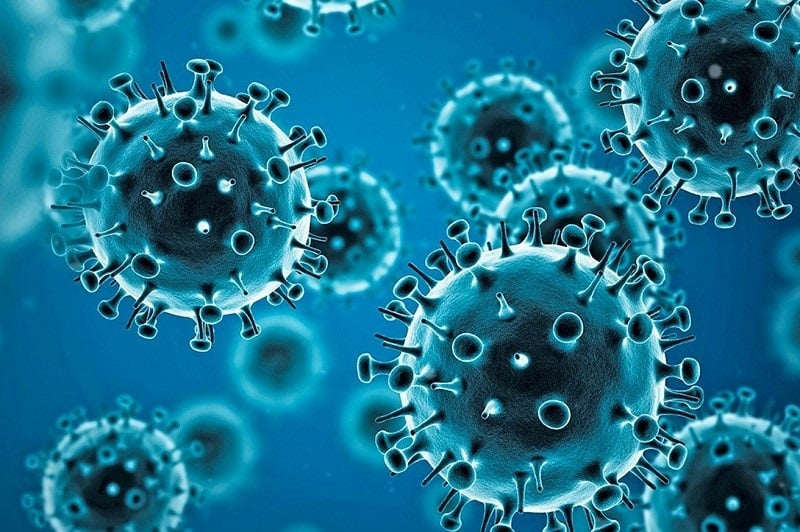
Coronavirus is a group of RNA viruses that affect mammals and birds. It infects the wind pipe and lungs of humans and birds which can range from mild to fatal. It can be mild and common like a cold in humans or it can be more fatal like SARS, MERS. Coronavirus i.e. COVID-19 has been said to be the cause of the pandemic (SARS, MERS and COVID-19).
The genome size of coronaviruses is between 26 and 32 kilobases (Genome Size of Coronaviruses). They have characteristic club-shaped spikes that project from their surface. It is reminiscent of the solar corona in electron micrographs, from which its name is derived (Reminiscent of Solar Corona).
The name "corona virus" is derived from the Latin corona, which means "crown" or "wreath". The name was coined by June Almeida and David Tyrrell who first observed and studied human coronaviruses. The term was first used in 1968 in the journal Nature to name a new family of viruses (Etymology of Coronavirus).
The earliest reports of coronavirus infection in animals came in the late 1920s during respiratory infections of domestic chickens in North America (Earliest Reports of Coronavirus Infection in Animals).
Human coronaviruses were discovered in the 1960s. E.C. Kendall, Malcolm Bynoe, and David Tyrrell named an unusual common cold virus B814 in 1961 (Discovery of Human Coronaviruses). Coronaviruses are large, roughly spherical particles with a distinct surface. Their size is extremely variable with an average diameter of 80 to 120 nm. Their total molecular mass is on average 40,000. They are in a cover with many protein molecules. The lipid bilayer cover, membrane proteins, and nucleocapsid protect the virus (Structure of Coronavirus).
Carriers infected with coronavirus can spread the virus in the environment. Coronaviruses primarily target epithelial cells. These viruses spread from one host to another, depending on the coronavirus variant, by an aerosol, fomite, or fecal-oral route (Coronavirus Transmission).
Human coronaviruses infect epithelial cells of the respiratory tract, while animal coronaviruses usually infect epithelial cells of the digestive tract. For example, SARS coronavirus infects human epithelial cells of the lungs via an aerosol route by binding to the angiotensin-converting enzyme 2 (ACE2) receptor (Human Coronaviruses Infect Epithelial Cells of Respiratory Tract).