NEWS
China's tensions rise! This country has developed a missile capable of destroying enemies up to 1,000 km away. Learn about its technology.
Type-12 Missile: Amid rising tensions in the Asia-Pacific region, Japan appears to be making a major shift in its military strategy. According to reports, Japan has begun deploying its indigenous truck-mounted anti-ship missile system near the East China Sea. This move is believed to raise China's strategic concerns as it appears to be expanding Japan's military policy beyond a purely defensive framework.
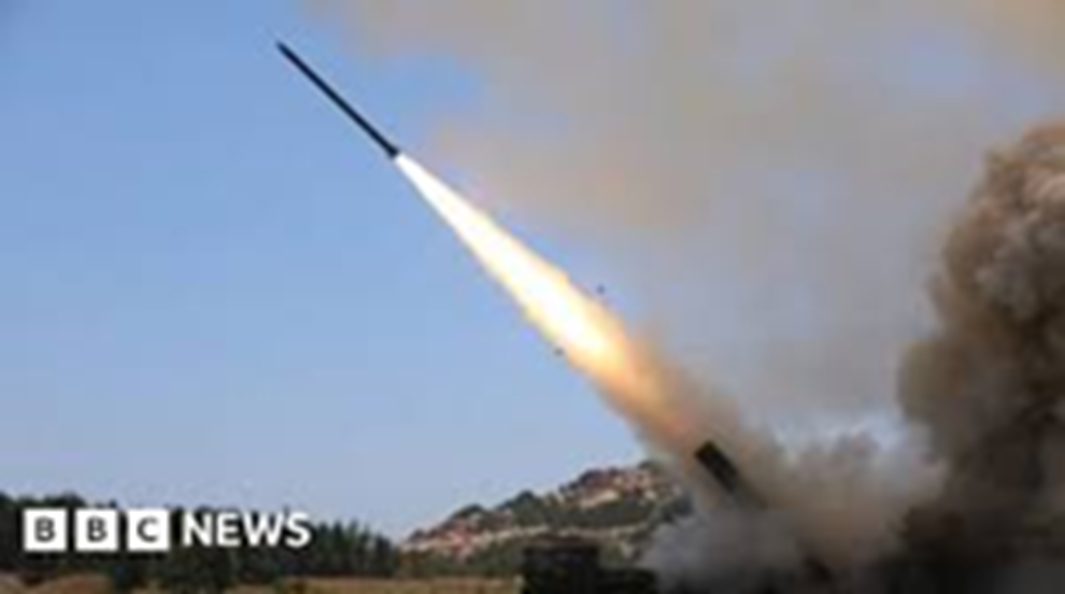
What is the Type-12 missile system and its technology?
This missile system is called the Type 12 Surface-to-Ship Missile . It is designed to target ships at sea from land and is fired from a special truck launcher. It was manufactured by the Japanese company Mitsubishi Heavy Industries. The current version has a range of approximately 200 kilometers. It was initially developed to protect Japan's coastal areas and is considered an advanced version of the older Type 88 Surface-to-Ship Missile.
The missile uses an inertial navigation system and GPS-based guidance, allowing it to accurately hit its target. It also incorporates advanced radar technology and terrain-matching capabilities.
Work on a new version with a range of 1000 km
According to reports, Japan is now developing an advanced version of the Type-12, which could have a range of up to 1,000 kilometers. This new model will be able to be launched from land, ships, and aircraft.
If this plan is realized, the missile could be capable of striking not only ships but also land targets. This could represent a major transformation in Japan's military capabilities.
The Taiwan Strait may also be targeted.
These missiles are reportedly being deployed in the Kumamoto area of Japan's Kyushu Island. If the advanced-range version is deployed, it will be able to easily target ships in the East China Sea.
Moreover, with the new range, these missiles could also reach a large part of the Taiwan Strait. This would mean that Japan could gain the ability to intercept a Chinese navy from a distance if it advances toward Taiwan.
Major change in post-war policy
After World War II, Japan limited its military policy to self-defense. Article 9 of the Japanese Constitution also limits the military's primary use to defense.
But the arrival of new long-range missiles could also give Japan the ability to launch a retaliatory or pre-emptive strike before a potential attack. This is being seen as a major shift in Japan's military thinking.
China and the background of regional tensions
China sees this move as a strategic encirclement by the US and its allies, and believes that growing military cooperation between Japan, the US, Australia, and the Philippines is part of that strategy.
At the same time, Japan argues that in view of China's increasing military activities in the region and the expansion of its navy, it has become necessary to strengthen its defense capabilities.
Japan is also concerned that Chinese missiles could target its military bases. Therefore, Tokyo is now seeking to develop capabilities that would allow it to respond quickly to a threat.