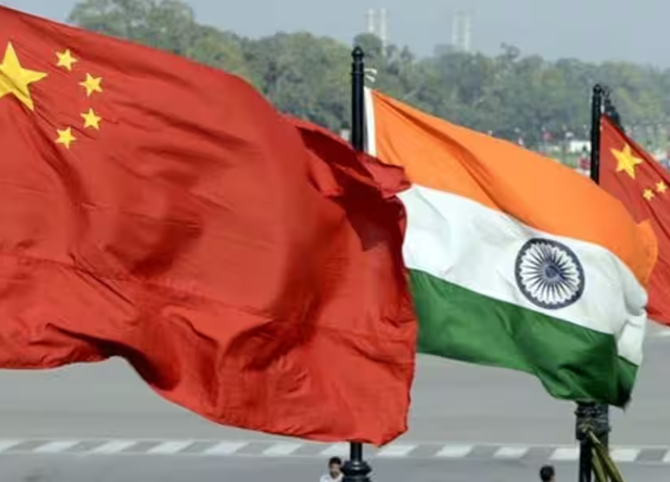
Tensions between India and China over Arunachal Pradesh appear to be escalating again, with a recent US Pentagon report making startling claims.
India and China may have resolved the border dispute along the LAC (International Line of Control) in eastern Ladakh, but the potential for another conflict remains in the coming years. According to a recent US Pentagon report, China has asserted its claim to Taiwan as well as Arunachal Pradesh, citing it as one of its core interests.
The Pentagon report states that this northeastern state could become a major point of tension in New Delhi-Beijing relations. The report, submitted to the US Congress, states that Arunachal Pradesh, Taiwan, and the South China Sea are of great importance to China. The report states that China's goal to make the country great again is to build a world-class military power capable of fighting and winning. India has always maintained that Arunachal Pradesh was, is, and always will be an integral part of the country.
Tensions Resurface Over Arunachal Pradesh
Last year, India and China reached an agreement to disengage troops along the LAC (Line of Control) in eastern Ladakh. However, after several months of calm, tensions have recently resurfaced over Arunachal Pradesh. Last month, Indian national Prema Thongdok, traveling from London to Japan, was detained for 18 hours during a stopover in Shanghai.
Thongdok , an Arunachal-born woman detained by China,
said Chinese authorities claimed her passport was invalid because it listed her birthplace as Arunachal Pradesh. She was eventually able to resume her journey after contacting the Indian Embassy in Shanghai through a friend living in the UK.
Earlier this week, an Indian YouTuber was detained in China for calling Arunachal Pradesh an integral part of India in a video he made in support of Thongdok.
China does not recognize the McMahon Line.
Beijing considers Arunachal Pradesh to be part of China and calls the region Southern Tibet or Xangnan. This is because China does not accept the McMahon Line, drawn by the British in 1914. This border was agreed upon between Britain and the then-independent Tibet.