It's been over three months since domestic cylinder prices were last revised. The last increase was on June 7, 2026. Commercial cylinder prices, meanwhile, were revised on September 1.
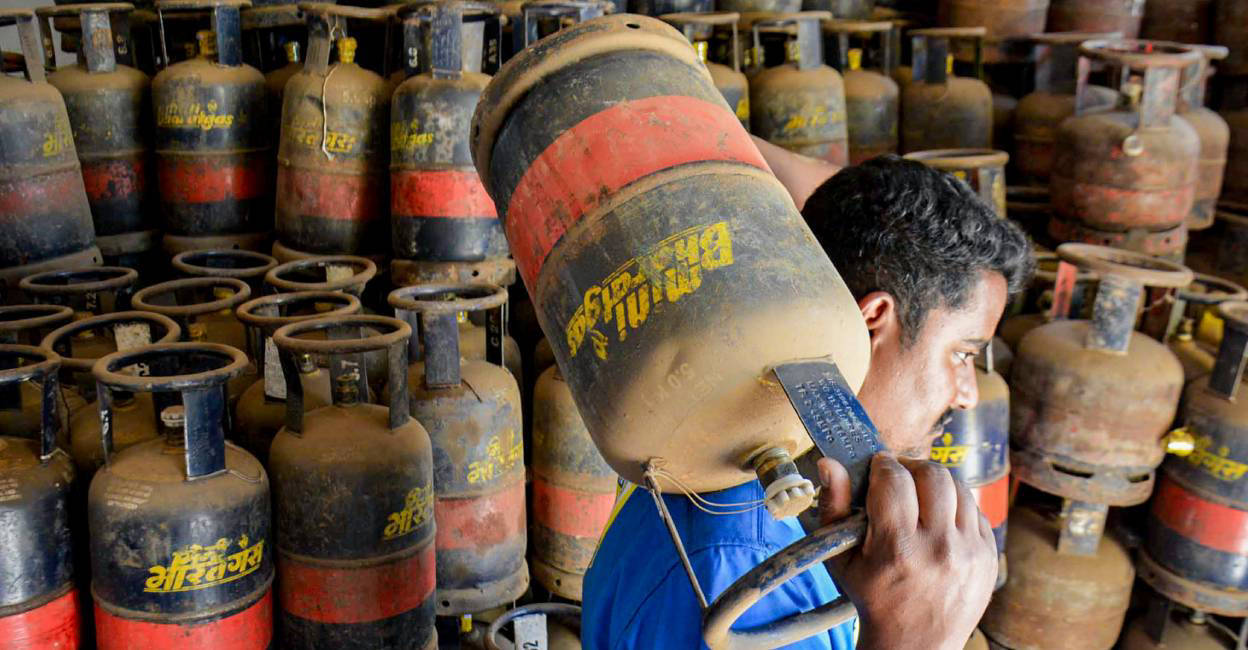
Gas cylinder prices remain stable today
There has been no change in the price of domestic LPG (14.2 kg) cylinders in India today, September 10, 2026. However, earlier this month, oil marketing companies slightly increased the price of 19 kg commercial cylinders by ₹9.50 to ₹11.50 per cylinder. Domestic LPG (14.2 kg) cylinder prices were last increased on June 7, 2026. Prices have remained largely stable since then.
Check city-wise price
| City | Domestic Cylinder (14.2 kg) | Commercial Cylinder (19 kg) |
| Delhi | 942.00 | 2,747.50 |
| Mumbai | 941.50 | 2,701.00 |
| Kolkata | 968.00 | 2,884.00 |
| Chennai | 957.50 | 2,916.50 |
| Bengaluru | 955.50 | 2,831.00 |
| Hyderabad | 994.00 | 2,996.00 |
| Patna | 1,031.50 | 3,029.00 |
| Noida | 939.50 | 2,747.50 |
| Gurugram | 950.50 | 2,764.50 |
Big revelation of CEEW report
Efforts are underway to make LPG accessible to more and more households in India, but a new study by the Council on Energy, Environment and Water (CEEW) shows that more than 10 crore beneficiaries of the Ujjwala Yojana are still using stoves.
Show Quick Read
Key points generated by AI, verified by newsroom
According to a CEEW survey, although over 105 million free LPG connections have been provided under the Pradhan Mantri Ujjwala Yojana (PMUY), only 23% of rural households are exclusively using cooking gas. The remaining households use gas as well as traditional fuels.
These findings are from a survey of 2,222 rural households in Assam, Jharkhand, Maharashtra, Telangana, Uttar Pradesh, and Uttarakhand conducted between November 2024 and January 2025. The study found that 48% of households use LPG as their primary cooking fuel, while 50% rely primarily on wood.
To be completely dependent on gas, at least 7 to 8 cylinders are needed annually, whereas on average, Ujjwala beneficiaries are only able to refill 4.8 cylinders annually. This CEEW report clearly shows that although, on paper, LPG access is shown to be nearly 100% for rural households, its actual use is still very low.