NEWS
Centre Invokes Civil Defence Rules Amid Pakistan Tensions: States and UTs Granted Emergency Powers
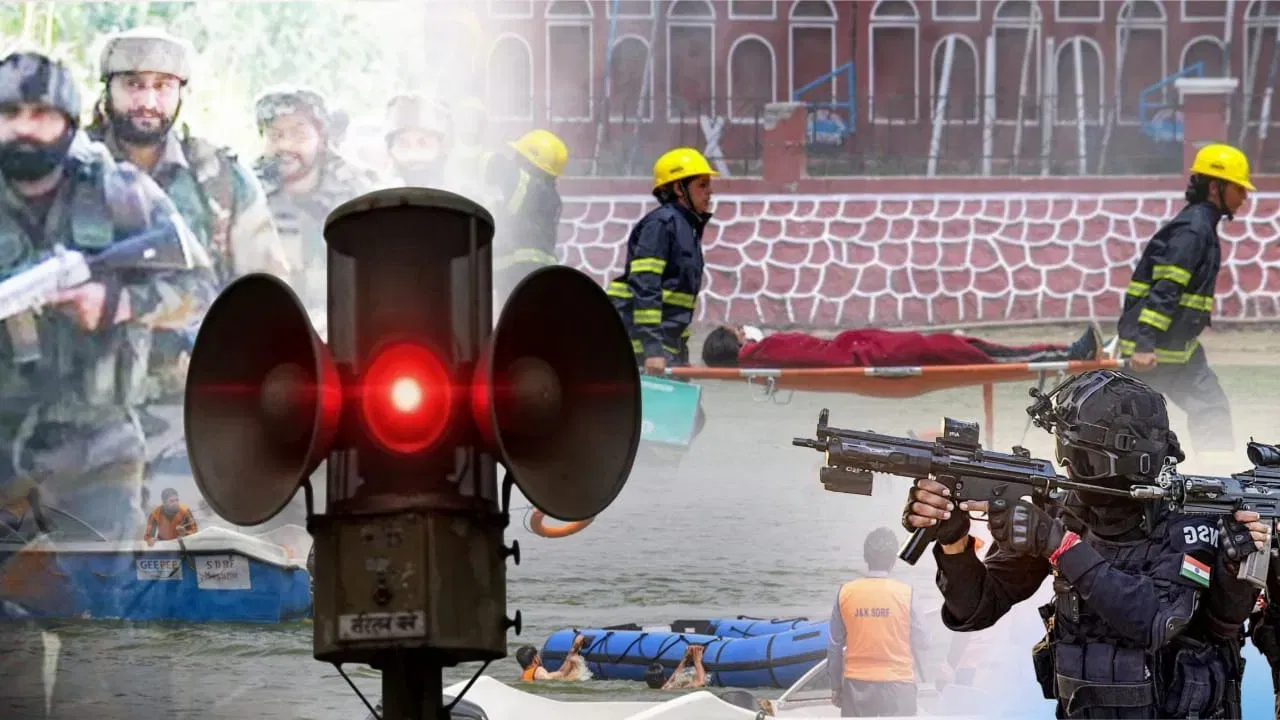
In the wake of rising tensions with Pakistan, the Ministry of Home Affairs (MHA) has authorized all states and Union Territories to activate emergency powers under the Civil Defence Rules, 1968. This move empowers local authorities to initiate precautionary and protective measures amid a looming external threat.
Emergency Powers Under Section 11 of Civil Defence Rules
According to the Home Ministry's directive, administrations can invoke Section 11 of the Civil Defence Rules, 1968, allowing Directors of Civil Defence to conduct emergency procurement of essential equipment and resources. The goal is to ensure rapid response capabilities and protect civilian populations during times of national emergency or hostile attacks.
The directive follows heightened military alert across India's western borders in response to Pakistan's missile and drone attacks post Operation Sindoor, a precision strike launched by India on May 7 targeting terror infrastructure in Pakistan and Pakistan-occupied Kashmir (PoK).
What Are the Civil Defence Rules, 1968?
The Civil Defence Rules, framed under the Civil Defence Act, are a legal framework designed to safeguard the civilian population and infrastructure from attacks via air, land, sea, or other means. These rules grant sweeping powers to both the central and state governments to act before, during, and after hostile incidents.
Key Provisions Under the Civil Defence Rules:
✅ Lighting Restrictions
- Governments may regulate or ban street lights and home lighting to prevent visibility during aerial attacks.
- Vehicle lights may need to be dimmed or covered.
- Light signals and traffic may be controlled to avoid detection.
✅ Smoke, Flame & Noise Control
- Activities involving flames, sparks, or noise may be restricted to avoid enemy targeting.
✅ Fire Safety & Control
- Premises owners may be required to install fire extinguishers, remove flammable materials, or make buildings unrecognizable (e.g., painted rooftops).
- In case of non-compliance, the government may take corrective action and recover costs.
✅ Hazardous Materials Regulation
- Authorities can ban, limit, or inspect storage of toxic, explosive, or flammable materials to prevent secondary hazards.
✅ Air Raid Shelters
- Construction of air raid shelters may be ordered in high-risk areas. Design, materials, and deadlines may be specified by state authorities.
✅ Control of Emergency Services
- Firefighting and water services near cities or ports can be commandeered by the government during crises.
- All emergency personnel must follow government directives.
✅ Civil Defence Exercises
- Mock drills may be authorized to test preparedness. During these, civil defence teams can enter private land, use water sources, and restrict roads/services.
- If property damage occurs during exercises, compensation is mandated.
Why Were These Powers Invoked?
On May 8, Pakistan launched more than 50 missiles and drones targeting multiple Indian states — including Jammu & Kashmir, Punjab, Rajasthan, and Gujarat. Critical zones such as Srinagar, Pathankot, Amritsar, and Jammu were among the targets.
Thanks to India’s integrated counter-UAS grid and the S-400 'Sudarshan Chakra' air defence system, most of the threats were successfully neutralized.
Pakistan has also escalated ceasefire violations along the Line of Control (LoC) using mortars and heavy artillery in sectors like Kupwara, Baramulla, Uri, Poonch, Mendhar, and Rajouri. These attacks have resulted in the deaths of at least 16 civilians, including women and children.