NEWS
Budget 2026: Will PM Kisan Assistance Increase from ₹6,000 to ₹8,000? Farmers Await Major Announcement
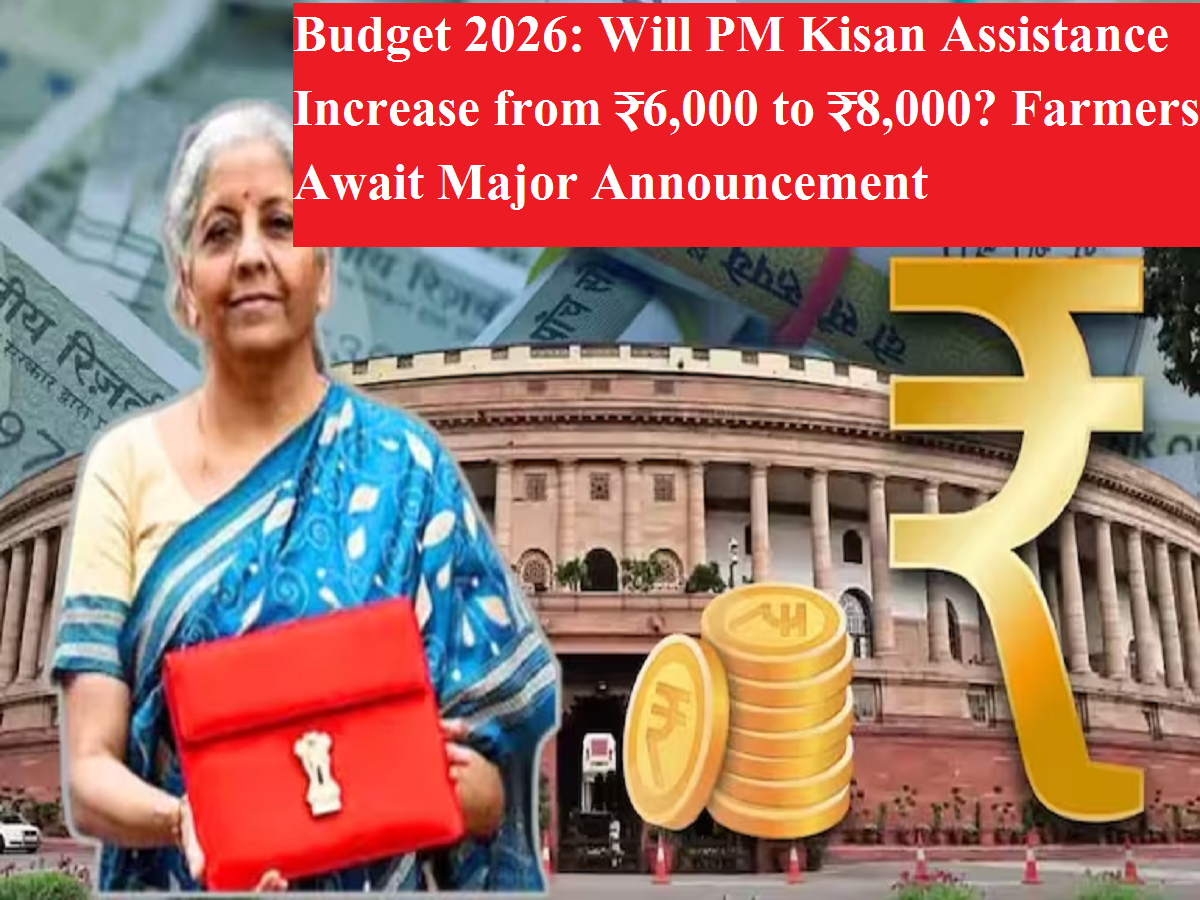
Rising farming costs fuel demand for higher financial support under PM Kisan scheme
As the Union Budget 2026 is set to be presented, expectations among farmers across the country are running high. A key demand gaining momentum is an increase in financial assistance under the Pradhan Mantri Kisan Samman Nidhi (PM-KISAN) scheme. Currently, eligible farmers receive ₹6,000 annually in three equal installments. There is growing speculation that the government may announce an increase in this amount to ₹8,000 in the upcoming budget.
The PM-KISAN scheme has played a crucial role in providing direct income support to millions of farmers since its launch. However, farmer unions and agricultural experts argue that the existing amount is no longer sufficient given the sharp rise in farming expenses over the past few years.
Why Farmers Want an Increase in PM Kisan Amount
Under the PM-KISAN scheme, farmers receive ₹2,000 every four months, totaling ₹6,000 per year. While this support offers some relief, it has not kept pace with the increasing cost of cultivation.
In recent years, prices of seeds, fertilizers, and pesticides have risen significantly. Diesel and electricity costs have also gone up, increasing irrigation and transportation expenses. The cost of agricultural machinery and tools has become higher as well, putting pressure on small and marginal farmers who already operate with limited resources.
Experts believe that increasing the PM-KISAN assistance to ₹8,000 could help farmers better manage seasonal expenses and reduce their dependence on informal loans.
Potential Impact on Rural Economy
If the government decides to raise the PM-KISAN amount, it could have a positive ripple effect on the rural economy. With higher income support, farmers are likely to spend more on farming inputs and household needs.
Economists suggest that improved cash flow in rural areas would boost demand for seeds, fertilizers, tractors, and farm equipment. It could also benefit small shopkeepers, local markets, and rural businesses. Increased consumption in villages may help revive rural demand, which is considered a key driver of India’s economic growth.
Experts’ View on the Proposal
Agricultural analysts say that strengthening income support schemes is necessary to protect farmers from unpredictable weather conditions and volatile crop prices. They argue that even a modest increase of ₹2,000 annually can make a meaningful difference for families dependent on agriculture as their primary source of livelihood.
Some experts also recommend linking PM-KISAN payments with inflation or production costs so that the assistance remains relevant over time.
A Look at PM-KISAN Scheme’s Journey
The PM-KISAN scheme was launched in December 2018 with the objective of providing direct financial assistance to eligible farmers. Under the program, money is transferred directly into beneficiaries’ bank accounts through the Direct Benefit Transfer (DBT) system.
So far, crores of farmers have benefited from this initiative, making it one of the largest income support programs in the world. The scheme has helped farmers meet basic agricultural and household expenses and has provided a safety net during times of economic stress.
What Farmers Expect from Budget 2026
Farmer organizations have urged the government to announce a hike in the PM-KISAN amount in Budget 2026. They believe that increasing the annual support to ₹8,000 would reflect the government’s commitment to strengthening the agricultural sector.
While no official confirmation has been made yet, the issue has become one of the most discussed topics ahead of the budget presentation.
Conclusion
As Budget 2026 approaches, farmers across the country are closely watching for an announcement regarding the PM-KISAN scheme. An increase from ₹6,000 to ₹8,000 could offer much-needed relief amid rising farming costs and contribute to stronger rural demand.
Whether the government fulfills this expectation will be revealed during the budget speech, but the demand highlights the growing need for enhanced financial support for India’s farming community.