
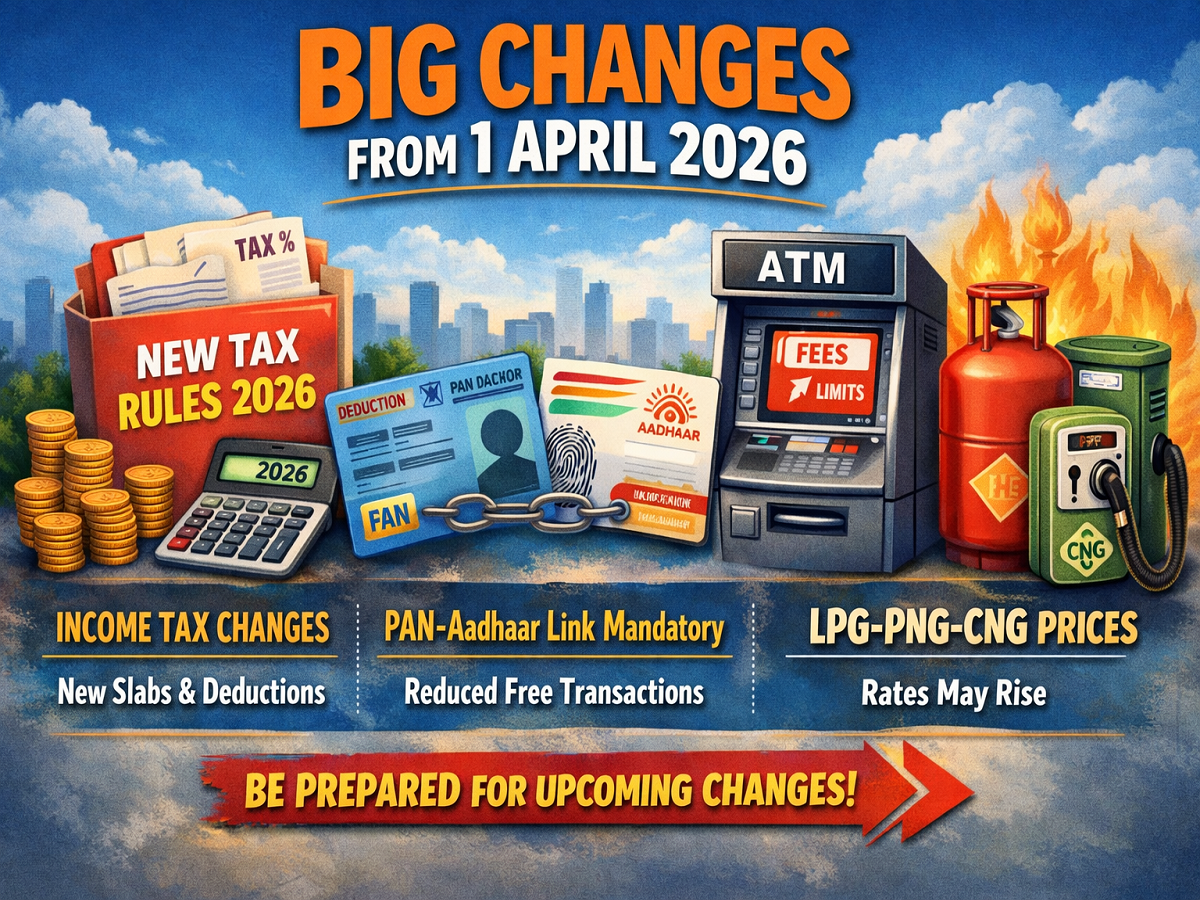
Starting April 1, 2026, several important financial changes are set to come into effect across India, directly impacting household budgets and daily expenses. From updates in income tax rules to stricter PAN requirements and possible changes in banking services, these developments are expected to influence salaried individuals, investors, and consumers alike.
Here’s a detailed look at what’s changing and how it could affect you.
Income Tax Rules to See Major Overhaul
One of the biggest changes comes under the new Income Tax Act 2025, which replaces the decades-old framework. The updated system is expected to simplify tax filing but may also bring adjustments in:
- Tax slabs
- Deductions and exemptions
- Salary structure and taxable components
These changes are likely to have a noticeable impact, especially on salaried employees and the middle-income group. Experts suggest that while the system may become simpler, some taxpayers could see a shift in their take-home salary depending on how perks and allowances are taxed.
PAN Rules to Become Stricter
From April 2026, compliance around Permanent Account Number (PAN) is expected to tighten.
Key Updates:
- PAN-Aadhaar linking may become mandatory for more financial activities
- Transactions without updated PAN details could face restrictions
- High-value transactions may require stricter verification
This means individuals must ensure their PAN details are updated to avoid disruptions in banking, investments, or large purchases.
ATM and Banking Changes Likely
Banks are also updating their ATM usage rules, which could affect how customers access cash.
Possible Changes:
- Reduced number of free ATM transactions
- Higher charges after the free limit is exhausted
- Inclusion of new transaction types (like UPI-based withdrawals) in limits
Leading banks such as HDFC Bank, Punjab National Bank, and Bandhan Bank have already indicated updates in transaction limits and fees.
Customers are advised to monitor their usage carefully to avoid extra charges.
Fuel Price Concerns: LPG, PNG, and CNG May Get Costlier
Apart from financial rules, there is growing concern over a possible increase in fuel prices.
Due to ongoing geopolitical tensions in the Middle East, supply chains for energy resources may face disruptions. This could lead to:
- Higher LPG (cooking gas) prices
- Increase in PNG (piped natural gas) rates
- Rise in CNG prices affecting transportation
If prices rise, households may face higher kitchen expenses, while commuters could see increased travel costs.
Why These Changes Matter
These updates reflect broader economic adjustments aimed at:
- Improving tax compliance
- Enhancing transparency in financial transactions
- Strengthening digital and banking systems
- Adjusting to global economic pressures
However, for the average consumer, the immediate impact will likely be seen in:
- Monthly expenses
- Banking charges
- Tax liabilities
What You Should Do Now
To stay prepared for April 2026 changes:
- Review your tax planning and salary structure
- Ensure PAN and Aadhaar details are updated
- Track your ATM usage to avoid extra fees
- Stay informed about fuel price trends
Final Takeaway
April 1, 2026, marks the beginning of a new financial phase in India, with multiple rule changes across taxation, banking, and energy sectors. While some updates aim to simplify systems and improve efficiency, others may increase costs for consumers.
Staying informed and planning ahead will be key to managing your finances effectively in the coming months.