Looking to cut your monthly fuel expenses? Here's a comparison of IndianOil co-branded credit cards from RBL Bank, HDFC Bank, and Axis Bank to help you choose the right option.
With petrol and diesel prices remaining high, many vehicle owners are looking for ways to reduce their monthly fuel bills. One popular option is using fuel co-branded credit cards, which offer rewards, surcharge waivers, and cashback on fuel purchases.
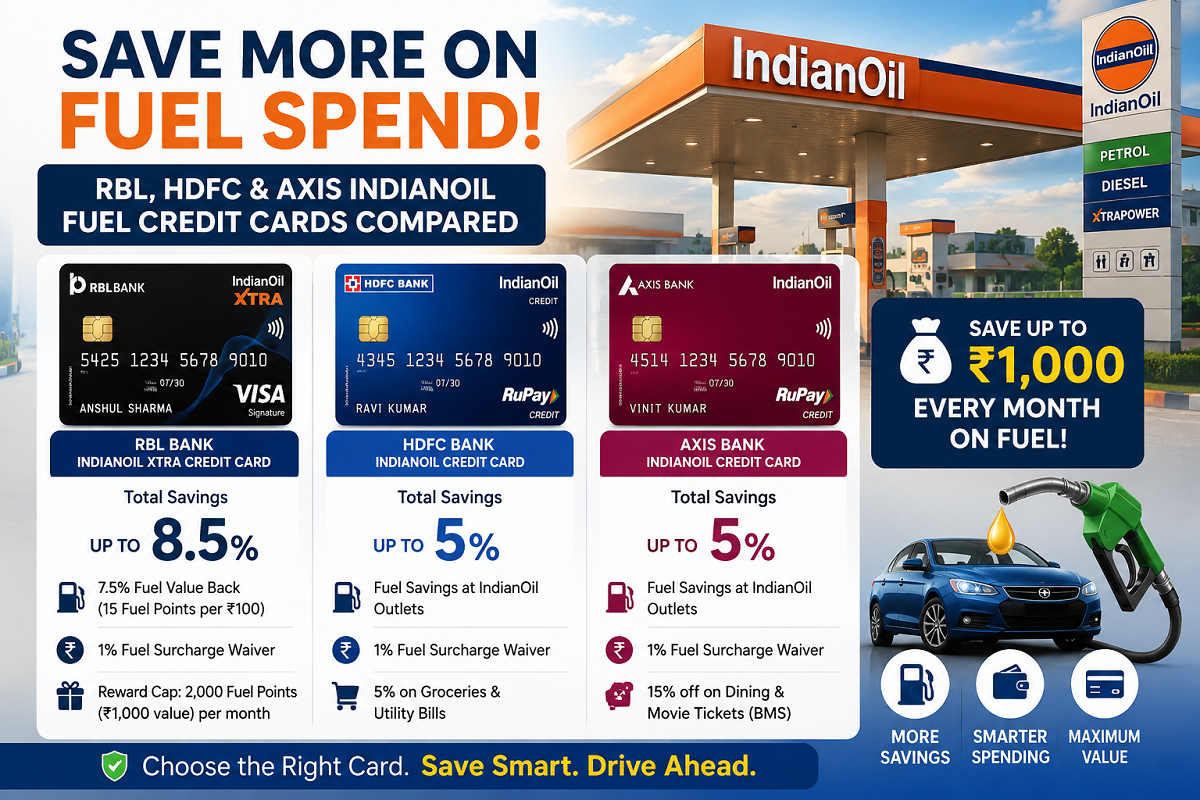
Among the available options, one card stands out by offering up to 8.5% value back on eligible fuel transactions at IndianOil outlets. However, the maximum benefit depends on spending limits, reward caps, and the card's terms and conditions.
Fuel Credit Card Comparison
| Feature | RBL Bank IndianOil XTRA | HDFC Bank IndianOil | Axis Bank IndianOil |
|---|---|---|---|
| Maximum Fuel Benefit | Up to 8.5% | Up to 5%* | Up to 5%* |
| Fuel Surcharge Waiver | Yes | Yes | Yes |
| Annual Fee | ₹1,500 + GST | Lower than RBL | Lower than RBL |
| UPI (RuPay Variant) | Depends on variant | Available | Available |
| Best For | High fuel spending | Moderate spending | Moderate spending + lifestyle benefits |
*Subject to the card's reward structure, spending conditions, and applicable caps.
Why RBL Bank IndianOil XTRA Stands Out
According to the card's reward programme:
- Earn 15 Fuel Points for every ₹100 spent at eligible IndianOil outlets.
- Each Fuel Point is valued at ₹0.50, translating to 7.5% value back.
- An additional 1% fuel surcharge waiver increases the total benefit to up to 8.5% on eligible transactions.
Monthly Reward Cap
The maximum reward is capped at:
- 2,000 Fuel Points per month
- Equivalent to ₹1,000 in reward value
To maximise the benefit, monthly fuel spending generally needs to remain within the card's eligible reward limits.
HDFC Bank IndianOil Credit Card
This card is suitable for users with relatively lower monthly fuel expenses.
Key highlights include:
- Fuel rewards at IndianOil outlets.
- RuPay variant available for UPI payments (subject to card availability).
- Additional benefits on categories such as groceries and utility bill payments.
- Lower annual fee compared to premium fuel cards.
It can be a practical choice for users seeking an all-round rewards card.
Axis Bank IndianOil Credit Card
The Axis Bank variant offers:
- Fuel rewards at IndianOil fuel stations.
- Fuel surcharge waiver (subject to terms).
- RuPay option for UPI-enabled payments.
- Lifestyle benefits such as discounts on selected dining and entertainment offers.
It may appeal to users looking for both fuel savings and lifestyle rewards.
Which Fuel Card Should You Choose?
Choose RBL Bank IndianOil XTRA if:
- You spend around ₹8,000–₹13,000 per month on fuel.
- You want the highest possible fuel rewards.
- You can comfortably recover the annual fee through regular spending.
Choose HDFC Bank IndianOil if:
- Your monthly fuel expenses are moderate.
- You prefer a lower annual fee.
- You want additional everyday rewards and UPI compatibility (RuPay variant).
Choose Axis Bank IndianOil if:
- You want balanced fuel savings.
- You also value dining, movie, and lifestyle offers.
- You prefer a lower annual fee with UPI support.
Can You Really Save ₹1,000 Every Month?
Yes—but only if you meet the card's reward conditions.
For example, the RBL Bank IndianOil XTRA Credit Card allows users to earn rewards worth up to ₹1,000 per month, subject to:
- Eligible IndianOil fuel purchases.
- Monthly reward limits.
- Applicable terms and conditions.
- Timely payment of credit card dues.
Final Take
If your primary goal is maximising fuel savings, the RBL Bank IndianOil XTRA Credit Card offers one of the highest reward rates currently available among IndianOil co-branded cards. However, users should also consider the annual fee, spending patterns, reward caps, and additional lifestyle benefits before choosing a card.
Disclaimer: Reward rates, annual fees, spending limits, and benefits are subject to change by the respective banks. Always verify the latest card features and terms on the issuer's official website before applying.