NEWS
Bank Locker Rules Explained: Who Is Responsible for Valuables Kept in Bank Lockers? Questions Rise After Delhi Incident
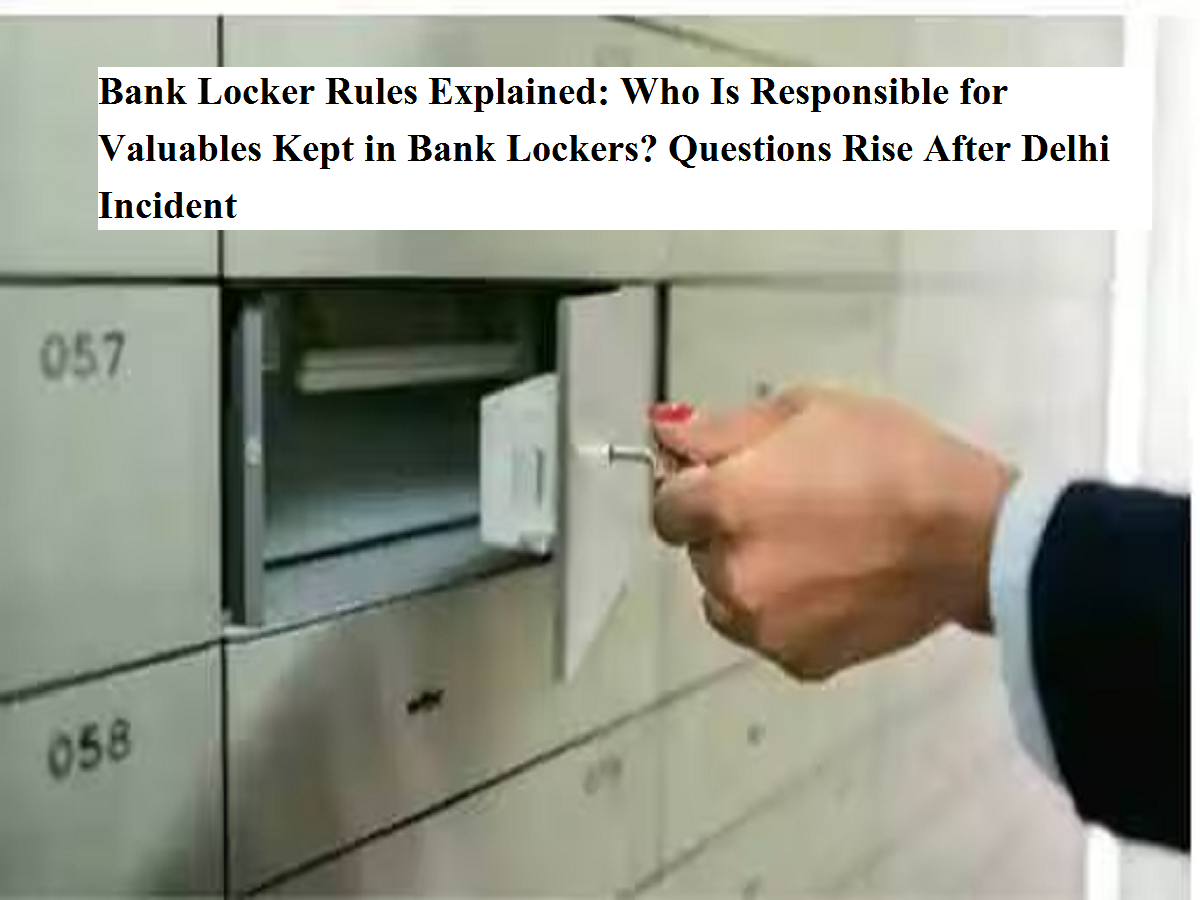
A recent incident from West Delhi has once again brought bank locker safety into sharp public focus. At a branch of Punjab National Bank in Kirti Nagar, panic broke out after a woman and her mother-in-law alleged that gold jewellery was missing from their bank locker. As soon as the claim surfaced, anxiety spread among customers, and rumours of large-scale theft began circulating rapidly.
According to initial reports, the locker was opened following standard banking procedures. However, the family claimed that their valuables were not found inside. News of the alleged disappearance spread quickly on social media, prompting several locker holders to rush to the bank to check their own belongings. Within a short span, a large crowd gathered outside the branch, leading to a tense situation.
What Did the Investigation Reveal?
The police were immediately informed and reached the spot to control the situation and initiate an inquiry. Preliminary investigations raised doubts about the theft claims. Officials confirmed that there were no visible signs of forced entry, tampering, or damage to the locker system. It was also revealed that the locker in question was a joint locker and had last been accessed on February 5.
After reviewing the available evidence, authorities clarified that rumours of mass locker theft were unfounded. The situation escalated largely due to panic and misinformation, not because of any confirmed breach in the bank’s security system.
A Bigger Question: Who Is Responsible for Locker Contents?
While the immediate situation was brought under control, the incident reignited an important and often misunderstood question—if valuables kept in a bank locker go missing, who bears the responsibility?
Many customers assume that banks are fully responsible for everything stored inside a locker. However, this is not entirely accurate. A bank locker is essentially a safe deposit facility, and banks do not maintain records of the items stored inside by customers. This lack of inventory plays a key role in determining liability.
RBI Guidelines on Bank Locker Liability
As per the guidelines issued by the Reserve Bank of India, banks are not automatically responsible for losses from lockers unless negligence on their part is clearly established. Negligence may include serious security lapses such as non-functional CCTV cameras, failure of access control systems, fire incidents due to poor maintenance, or proven involvement of bank staff.
If a customer can prove that the loss occurred due to the bank’s fault—such as theft, robbery, fire, or employee fraud—the bank is required to provide compensation. However, this compensation is capped.
How Much Compensation Can You Get?
Under rules introduced in 2022 and currently in force, the maximum compensation payable by a bank is limited to 100 times the annual locker rent. For example, if a customer pays ₹4,000 per year as locker rent, the maximum compensation payable by the bank would be ₹4 lakh—regardless of the actual value of the items lost.
Importantly, banks are not liable for losses caused by natural disasters such as floods, earthquakes, or other events beyond their control.
What Do Locker Agreements Say?
Most banks clearly mention in their locker agreements that they are not responsible for the contents stored inside. Since customers are not required to disclose what they keep in their lockers, the responsibility of documenting and safeguarding valuables primarily lies with the customer. Financial experts strongly advise reading the locker agreement carefully before signing it.
What Should Customers Do in Case of Discrepancy?
If customers suspect theft or notice any irregularity, they should immediately file a police complaint and inform the bank in writing. Maintaining photographs, purchase invoices, and a written list of items stored in the locker can serve as crucial evidence in case of disputes or insurance claims.
Is Insurance a Better Safety Net?
Financial advisors recommend taking separate insurance coverage for gold and valuable jewellery. Since bank compensation is limited and may not reflect the real value of assets, insurance offers an added layer of protection.
The Bottom Line
Banks provide the facility and basic security for lockers, but the primary responsibility for valuables rests with the customer. The Kirti Nagar incident serves as a reminder to stay informed, avoid panic, and understand bank locker rules clearly to prevent confusion and financial loss in the future.