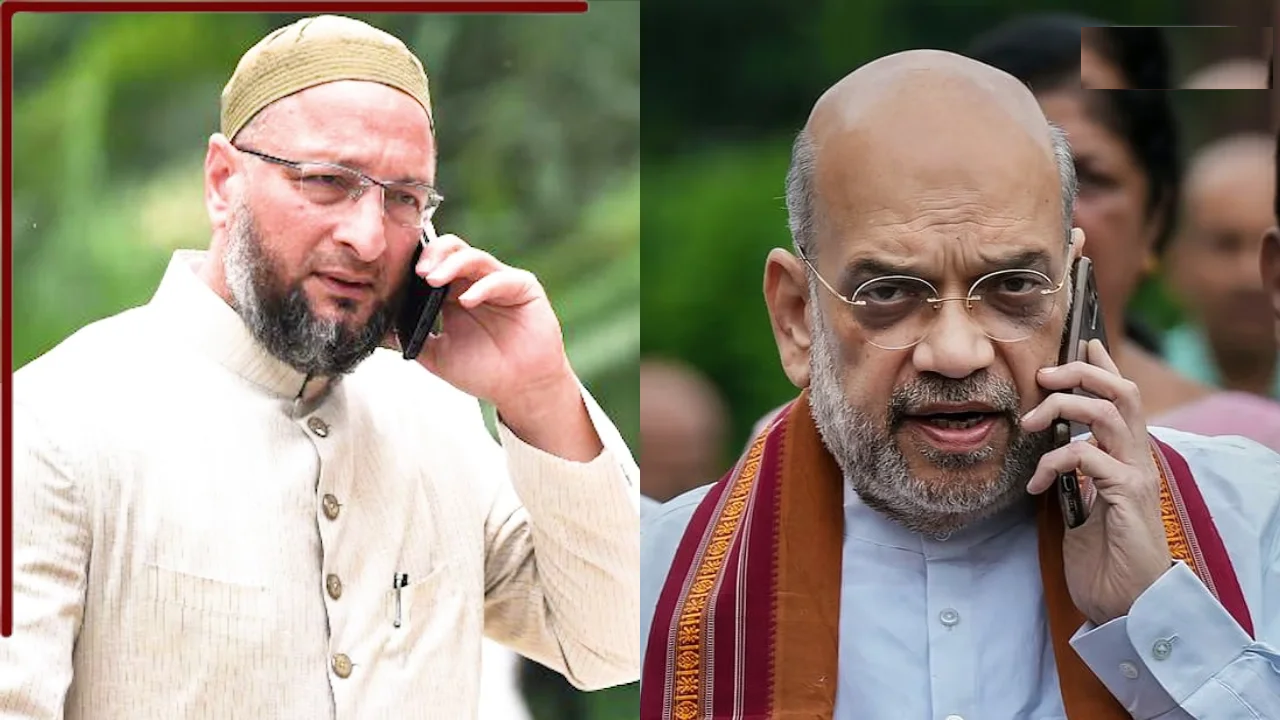
In a surprising turn of events, Union Home Minister Amit Shah personally contacted Asaduddin Owaisi, the Chief of AIMIM and Member of Parliament from Hyderabad, asking him to come to Delhi immediately. The reason for this sudden request is linked to the aftermath of the Pahalgam terror attack, which has raised security concerns in the region.
The Controversial Exclusion from the All-Party Meeting
An all-party meeting was scheduled to take place in Delhi on Thursday to discuss the implications of the Pahalgam attack and formulate a response. However, Asaduddin Owaisi was initially not invited to the meeting, which raised eyebrows. After realizing his exclusion, Owaisi reached out to Kiren Rijiju, the Union Law Minister, seeking an explanation. Rijiju clarified that only parties with at least five MPs were invited, citing the time constraints of accommodating a large number of participants.
Owaisi's Response and Shah's Intervention
Feeling that the gravity of the situation warranted his presence, Owaisi voiced his concern over the exclusion, noting the significance of the attack and the need for broader political involvement. He even suggested that an extra hour could have been allotted for a more inclusive discussion.
After Owaisi's call, Amit Shah intervened, agreeing to his request and personally contacting Owaisi. Shah asked the Hyderabad MP to make his way to Delhi, and Owaisi confirmed that he had booked his ticket and would soon be attending the meeting.
What’s Next?
This sudden change of plans indicates the importance of the upcoming high-level meeting. With the media closely watching the situation, it is expected that the meeting will discuss strategies for national security and address concerns related to the Pahalgam terror attack. The government’s decision to involve a wider range of political leaders, including Owaisi, suggests that this could be a critical moment in shaping India's counter-terrorism policies.
The all-party meeting is being held with the goal of uniting political leaders across party lines in the face of a national security threat. Historically, these meetings are convened when significant security issues arise, and they aim to foster a collective approach to tackling the crisis.