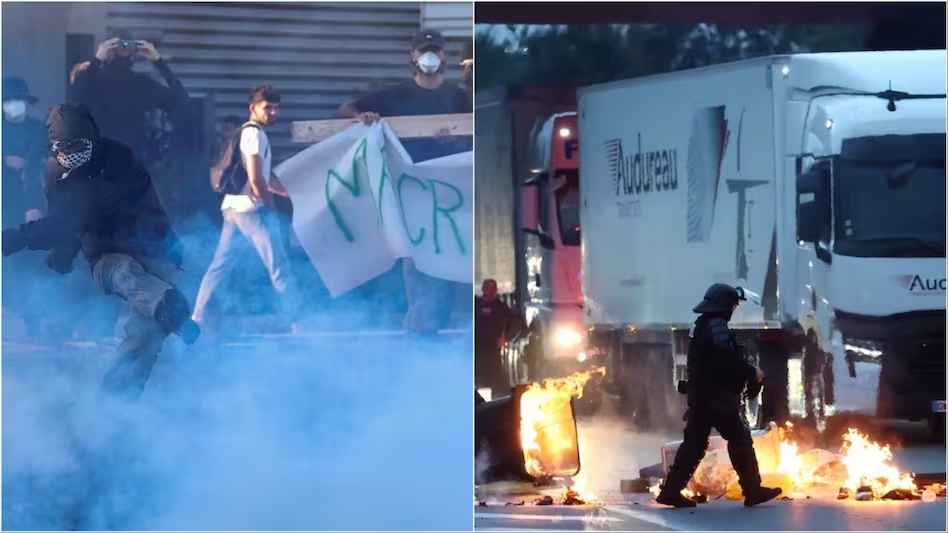
Following the recent political turmoil in Nepal, large-scale protests have now erupted in Paris, France, as citizens took to the streets to express their anger against the government of Emmanuel Macron. What began as peaceful demonstrations quickly turned violent, with reports of arson, vandalism, and mass clashes between protesters and law enforcement shaking the French capital.
The Trigger: Growing Public Discontent
The protests in Paris started as a reaction to unpopular government policies, including proposed pension reforms and increasing living costs that have hit the working class hard. Inspired partly by global movements and events like the Gen Z protests in Nepal, the discontent has gained momentum among French youth, labor unions, and social activists.
Thousands of protesters gathered in major areas of Paris, demanding Macron’s government step down and roll back controversial reforms. What started as a peaceful march escalated into chaos when some demonstrators began setting cars on fire, smashing shop windows, and clashing with police officers.
Scenes of Chaos on the Streets
Eyewitnesses described scenes of pandemonium as fires blazed across busy streets, thick black smoke filled the air, and angry crowds engaged in intense confrontations with riot police. Several barricades were set up by protesters, while law enforcement deployed tear gas and water cannons to try and disperse the crowds.
“The situation has become completely out of control,” said one local resident. “I never expected such widespread violence in Paris. It is heartbreaking to see our beautiful city in flames.”
Authorities reported dozens of injuries on both sides and announced that several arrests had been made as the situation intensified. The government condemned the violence, calling for calm and warning that further unrest would be met with a firm crackdown.
Macron’s Government Under Pressure
Emmanuel Macron’s administration, already facing declining approval ratings, now faces one of its toughest challenges in recent times. Analysts suggest that this unrest reflects not only economic frustrations but also a deeper dissatisfaction with political representation and perceived government arrogance.
In response, the French government issued a statement urging protesters to return home and warned of strict legal action against those involved in illegal activities. Interior Minister Christophe Castaner emphasized, “While citizens have the right to peaceful protest, violence and destruction will not be tolerated.”
Global Impact and Solidarity Movements
Interestingly, the Paris protests have drawn comparisons to the Nepal Gen Z protests earlier in September, where citizens rose against the communist regime, leading to significant political changes. Observers note that global youth-led movements seem to be gaining ground, demanding systemic reforms in governments worldwide.
Social media platforms are flooded with posts showing solidarity between protesters in Nepal and France, while activists from various countries express support for the cause of democracy, transparency, and accountability.
What Happens Next?
As of now, the situation in Paris remains tense. The government is expected to impose curfews in some districts, and further law enforcement reinforcements are likely to be deployed in the coming days. The possibility of continued protests cannot be ruled out, especially as public anger shows no signs of abating.
International observers are closely monitoring the situation, urging restraint from both protesters and authorities. The next few weeks are critical, as the world watches to see whether the protests will force significant political change in France or lead to prolonged instability