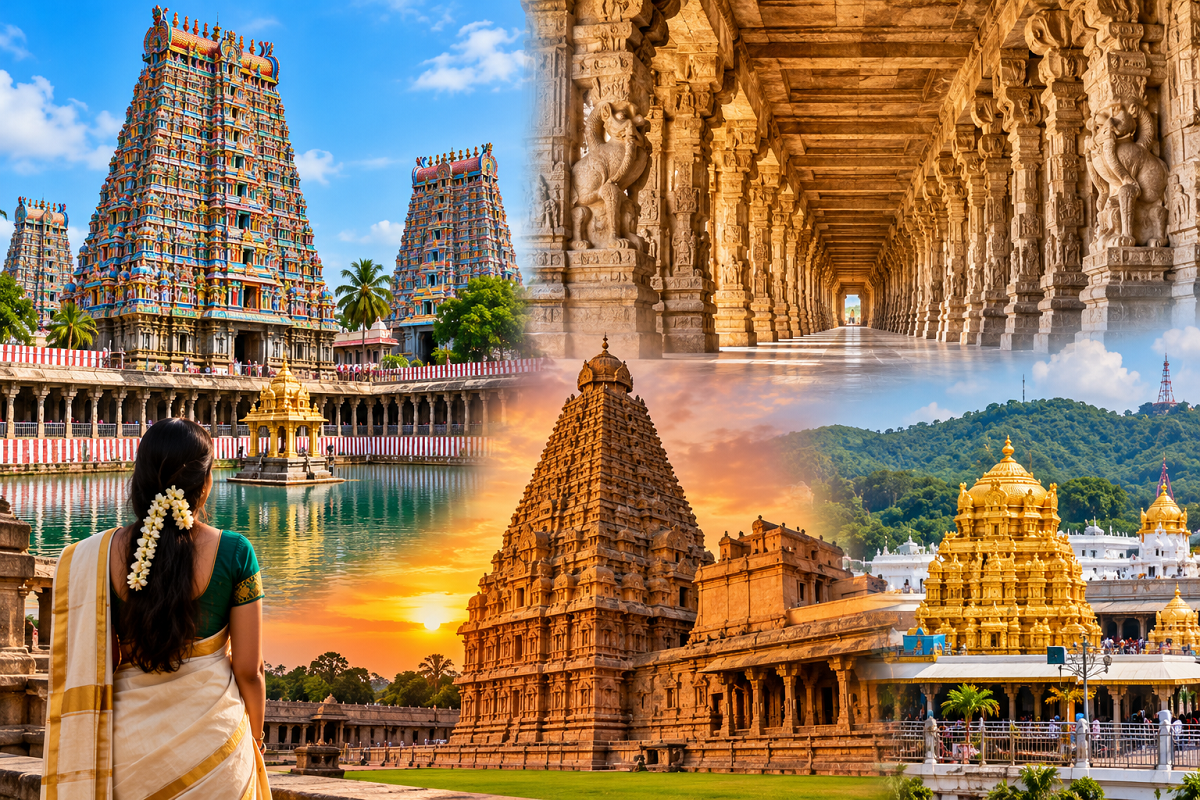
South India Temple Travel Guide 2026: India is known for its diverse culture, ancient traditions and extraordinary religious destinations. While northern India attracts visitors with its majestic mountains and historical landmarks, southern India offers an equally fascinating experience through its magnificent temples, centuries-old architecture and rich spiritual heritage.
The southern states of Tamil Nadu, Andhra Pradesh, Karnataka and Kerala are home to numerous sacred sites that reflect the region's religious traditions and artistic achievements. Many of these temples have stood for hundreds of years and continue to welcome thousands of devotees and tourists.
From beautifully decorated entrance towers to impressive stone corridors and intricately carved sculptures, South Indian temples represent some of the finest examples of traditional Indian architecture.
If you enjoy exploring historical monuments, experiencing cultural traditions or visiting sacred destinations, these four remarkable temples deserve a place on your travel list.
1. Meenakshi Amman Temple, Madurai, Tamil Nadu
Located in the historic city of Madurai, Meenakshi Amman Temple is one of Tamil Nadu's most celebrated religious and architectural landmarks.
The temple is dedicated to Goddess Meenakshi, considered a form of Goddess Parvati, and Lord Sundareswarar, a manifestation of Lord Shiva.
One of its most distinctive attractions is its collection of magnificent entrance towers, commonly known as gopurams. These structures are decorated with thousands of colorful sculptures depicting Hindu deities, mythological figures and traditional artistic designs.
The temple complex also contains beautifully carved pillars, sacred shrines and spacious corridors that reflect the extraordinary craftsmanship of South Indian artisans.
What Makes Meenakshi Temple Special?
The temple is particularly famous for its impressive Dravidian architecture and vibrant religious celebrations.
One of its most important festivals is Meenakshi Thirukalyanam, which celebrates the divine marriage of Goddess Meenakshi and Lord Sundareswarar.
During the festival, Madurai becomes a major center of religious and cultural activities, attracting large numbers of pilgrims.
Visitors can explore the temple's architectural details, observe traditional ceremonies and experience the spiritual atmosphere of this historic destination.
For travelers interested in photography, sculpture and Indian cultural heritage, the temple offers an unforgettable experience, subject to local photography restrictions.
2. Ramanathaswamy Temple, Rameswaram, Tamil Nadu
Ramanathaswamy Temple, situated on Rameswaram Island in Tamil Nadu, is among the most significant pilgrimage destinations dedicated to Lord Shiva.
The temple holds special religious importance because it is recognized as one of the twelve sacred Jyotirlinga shrines.
Its spiritual traditions are closely associated with the Ramayana and stories connected with Lord Rama.
Apart from its religious importance, Ramanathaswamy Temple is widely admired for its extraordinary architectural design.
Famous for Its Magnificent Stone Corridors
One of the temple's most remarkable features is its extensive network of corridors supported by beautifully carved stone pillars.
The long passageways display impressive architectural symmetry and craftsmanship, making them a major attraction for visitors.
Another important feature is the presence of 22 sacred water sources, known as theerthams, within the temple complex.
Many pilgrims participate in traditional bathing rituals associated with these sacred waters before offering prayers.
Rameswaram is also an important destination in the Char Dham pilgrimage tradition.
The temple's combination of mythology, religious significance and architectural beauty makes it an important stop for spiritual travelers.
Visitors can also explore the coastal surroundings of Rameswaram, which add another dimension to the journey.
3. Brihadeeswarar Temple, Thanjavur, Tamil Nadu
Brihadeeswarar Temple, popularly known as the Big Temple, is one of India's most impressive historical monuments.
Located in Thanjavur, Tamil Nadu, this magnificent temple was constructed during the reign of Chola emperor Rajaraja I in the early 11th century.
Dedicated to Lord Shiva, the temple is considered an outstanding example of Chola architecture and engineering.
Its historical and architectural importance has earned it recognition as part of the UNESCO World Heritage property known as the Great Living Chola Temples.
An Architectural Masterpiece of the Chola Dynasty
The temple's most striking feature is its enormous stone tower, called the vimana, which rises above the main shrine.
The structure reflects the advanced construction techniques and artistic abilities of the Chola period.
Visitors can admire intricate stone carvings, detailed sculptures, ancient inscriptions and the temple's expansive courtyard.
The architecture demonstrates how skilled craftsmen created monumental religious structures using sophisticated engineering methods centuries ago.
Another remarkable aspect is that Brihadeeswarar Temple continues to function as an active place of worship.
This allows visitors to experience both the historical significance and living religious traditions of the site.
For history enthusiasts, architecture lovers and cultural travelers, the temple provides an exceptional opportunity to explore India's medieval heritage.
4. Sri Venkateswara Temple, Tirumala, Andhra Pradesh
Sri Venkateswara Temple, located in the Tirumala Hills near Tirupati in Andhra Pradesh, is one of India's most prominent Hindu pilgrimage destinations.
The temple is dedicated to Lord Venkateswara, a manifestation of Lord Vishnu.
Every year, millions of devotees visit Tirumala to offer prayers and seek blessings.
The temple is known for its sacred atmosphere, traditional ceremonies and distinctive architectural features.
Why Is Tirumala Temple So Popular?
One of the main attractions is the temple's sacred sanctum, where devotees gather for darshan.
The religious traditions followed at Tirumala have been preserved over generations, making the pilgrimage particularly meaningful for worshippers.
Another famous aspect of the temple is Tirupati Laddu prasadam, which is distributed to devotees and has become closely associated with the pilgrimage experience.
The surrounding Tirumala Hills also contribute to the destination's natural beauty.
However, visitors should remember that Tirumala is an extremely busy pilgrimage center.
Waiting times can be substantial during weekends, religious festivals and holiday periods.
Travelers are advised to check official darshan arrangements and make necessary bookings before beginning their journey.
Best Time to Visit These Famous South Indian Temples
The period between October and March is generally considered comfortable for visiting many destinations in South India.
During these months, temperatures are often more manageable than during the peak summer season, although weather conditions vary across regions.
Visitors planning to explore multiple temples should consider local festivals, transportation arrangements and accommodation availability.
Religious celebrations can provide a memorable cultural experience, but they may also attract large crowds.
Travelers seeking a quieter visit may prefer ordinary weekdays rather than major festival dates.
Important Travel Tips for a Comfortable Temple Visit
Planning ahead can make a temple journey more convenient and enjoyable.
Follow temple dress codes: Many South Indian temples have specific clothing requirements. Visitors should check the rules before arriving.
Confirm darshan timings: Opening hours and worship schedules may vary depending on the temple and religious calendar.
Respect local customs: Follow instructions regarding footwear, photography, mobile phones and entry into restricted areas.
Arrange transportation in advance: Popular pilgrimage destinations may experience heavy traffic during festivals and holiday periods.
Carry essential belongings: Drinking water, identification documents and necessary medication can be useful, especially when visiting crowded locations.
Allow sufficient travel time: Temple visits may involve security checks, walking and waiting in queues.
Why South India's Temples Deserve a Place on Your Travel List
South Indian temples are not simply places of religious worship. They also preserve valuable historical records, artistic traditions and architectural achievements.
Their sculptures, inscriptions, towers and ceremonial practices offer insights into the civilizations and dynasties that shaped the region.
Each destination provides a different experience.
Madurai is celebrated for its colorful temple towers and vibrant cultural traditions, while Rameswaram is deeply connected with Hindu pilgrimage practices.
Thanjavur offers an extraordinary glimpse into Chola history, and Tirumala attracts devotees through its longstanding religious traditions.
Together, these destinations demonstrate the diversity and richness of India's spiritual heritage.
Final Thoughts
South India offers an extraordinary combination of ancient temples, cultural traditions, historical monuments and architectural beauty.
The Meenakshi Amman Temple in Madurai, Ramanathaswamy Temple in Rameswaram, Brihadeeswarar Temple in Thanjavur and Sri Venkateswara Temple in Tirumala are among the region's most remarkable destinations.
Whether you are planning a family holiday, a religious pilgrimage or a cultural exploration, visiting these temples can provide memorable experiences and a deeper appreciation of India's heritage.
For anyone interested in discovering the country's architectural brilliance and spiritual traditions, these four South Indian temples are well worth exploring.