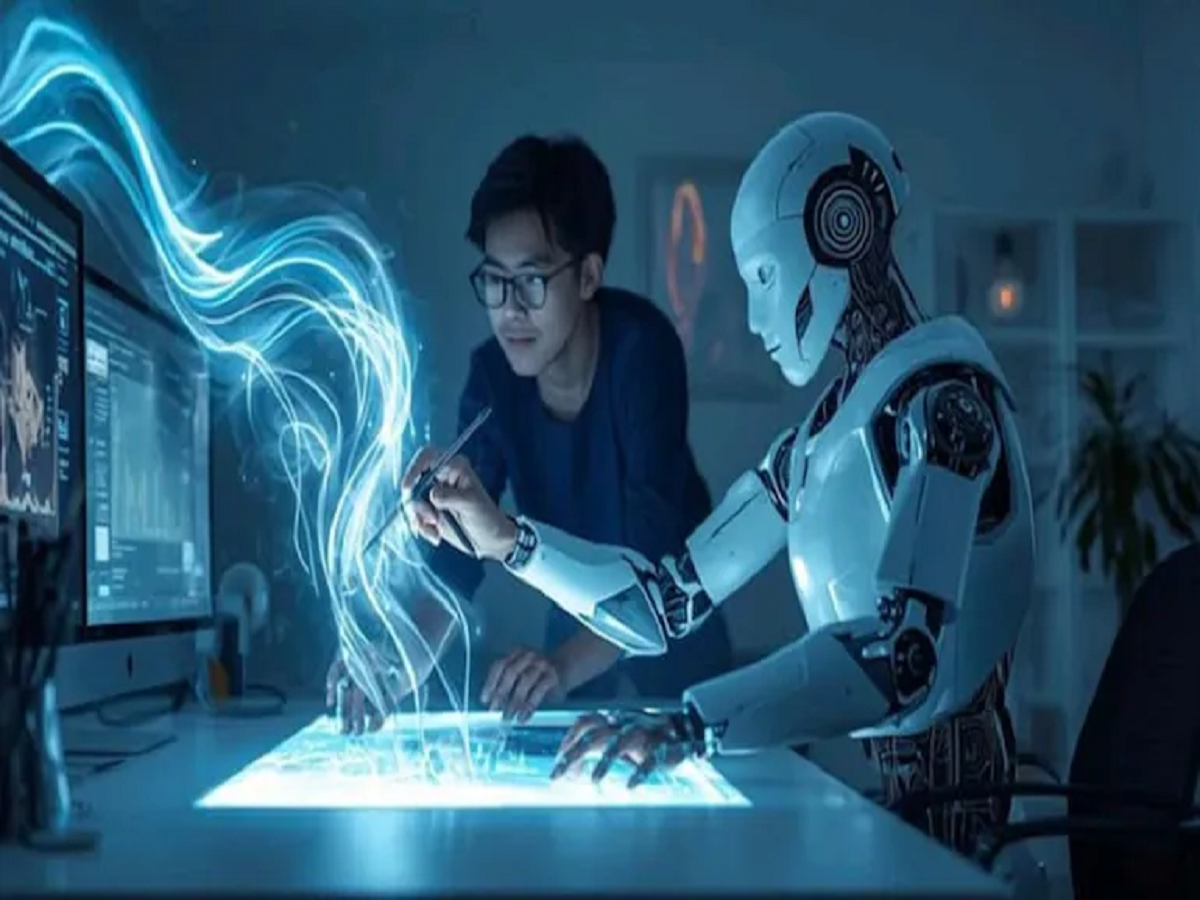
Artificial intelligence is rapidly changing the way people work. From generating content and analysing large datasets to writing computer code and automating customer support, AI tools are becoming part of everyday operations across industries.
The speed of this transformation has also created anxiety among employees. The concern is no longer limited to entry-level workers performing repetitive tasks. Professionals, managers and even senior executives are increasingly asking the same question: Will AI eventually replace my job?
Experts, however, suggest that the future of employment is more complicated than a simple battle between humans and machines. AI is likely to automate certain tasks and reshape existing roles, while also creating new opportunities. Careers requiring human judgement, accountability, empathy, creativity and complex interpersonal interaction may prove harder to automate completely.
Rather than trying to find a profession that is permanently "AI-proof," workers may benefit more from developing skills that complement artificial intelligence.
AI May Transform Jobs Rather Than Simply Eliminate Them
Artificial intelligence refers broadly to computer systems capable of performing tasks that typically require elements of human intelligence, such as recognising patterns, processing language, making predictions and generating content.
Many people already interact with AI without consciously thinking about it. Recommendation engines, navigation apps, fraud-detection systems, digital assistants and automated customer-service tools all use forms of artificial intelligence.
Generative AI has accelerated this transformation by making sophisticated AI tools accessible to ordinary users.
This does not necessarily mean every job exposed to AI will disappear. In many professions, specific tasks may be automated while humans continue to handle judgement, supervision, decision-making and interaction with customers or patients.
1. Healthcare and Patient-Care Roles
Healthcare is one area where AI could become extremely powerful without necessarily removing the need for people.
AI can help analyse medical data, organise records, assist with imaging and automate administrative work. But professions such as nursing, physiotherapy and other patient-facing healthcare roles involve far more than processing information.
Patients often need reassurance, physical assistance, communication and judgement based on circumstances that may not fit neatly into an automated system.
Doctors can similarly use AI as a decision-support tool, but diagnosis and treatment involve clinical judgement, accountability and communication with patients.
The likely future, therefore, may involve healthcare professionals working with AI rather than being completely replaced by it.
2. Mental Health and Psychology
Psychologists, counsellors and other mental-health professionals perform work that depends heavily on trust and human relationships.
AI chat systems may provide general information or assist with administrative tasks, but professional care can require a deeper understanding of a person's circumstances, behaviour and emotional responses.
Human professionals also carry ethical and professional responsibilities for the advice and treatment they provide.
For this reason, AI could become a supporting tool in mental healthcare while trained professionals remain central to many forms of assessment and treatment.
3. Teachers and Education Professionals
AI is already changing education. Students can use it to explain concepts, generate practice questions, summarise material and receive personalised learning assistance.
That does not automatically eliminate the teacher's role.
Effective teaching involves understanding why an individual student is struggling, motivating learners, managing classrooms, encouraging discussion and adapting explanations based on students' reactions.
Teachers also contribute to social development, discipline and mentoring.
The profession itself could change considerably, with educators increasingly using AI for lesson preparation, assessment support and personalised learning. But the human relationship between teachers and students remains difficult to reproduce entirely through software.
4. Creative Strategy, Writing and Direction
Generative AI can now produce articles, advertisements, images, videos, music and marketing concepts within seconds. As a result, creative industries are among those experiencing particularly visible AI disruption.
However, producing content is only one part of professional creative work.
Creative directors, experienced writers, editors and content strategists must understand audiences, culture, context, brand identity and business objectives. They also decide which ideas are worth pursuing and take responsibility for the final output.
AI may significantly reduce the time needed for research, ideation and first drafts, but professionals who combine creative judgement with AI skills could remain valuable.
The key shift may be from creating everything manually to directing, evaluating and improving AI-assisted work.
5. Law, Accounting, Cybersecurity and Other Specialist Careers
Professional fields such as law, accounting and cybersecurity are also being transformed by AI.
AI can examine documents, identify patterns, perform calculations and help professionals research information much faster. However, many decisions in these sectors carry serious financial, legal or security consequences.
Chartered accountants, for example, do more than calculate figures. They may interpret regulations, evaluate financial situations, manage audits and advise businesses.
Lawyers must apply legal principles to specific circumstances, represent clients and exercise professional judgement.
Cybersecurity professionals face another challenge: attackers themselves can use AI. This means security experts will need to continually adapt as both defensive and offensive technologies become more sophisticated.
These careers are not immune to automation, but expertise combined with AI proficiency may remain valuable.
AI Skills Could Become Important Across Almost Every Career
One message emerging from experts is that avoiding AI may be riskier than learning to use it.
A professional who understands their field deeply and knows how to use AI tools effectively may be able to complete routine work faster and devote more time to higher-value activities.
This means AI literacy could eventually become similar to computer literacy: useful not only for technology professionals but across industries.
Students and working professionals can begin with basic AI courses before deciding whether they need specialised qualifications.
Five Study Paths for Building an AI-Focused Career
For students who want to work directly in artificial intelligence, several educational routes are available.
MBA or postgraduate programmes in AI and business analytics: These programmes can suit professionals interested in combining technology, data and business decision-making. Fees can vary substantially depending on the institution and programme format.
Online AI certificate programmes: Shorter certificate courses can provide an introduction to machine learning, generative AI, data analysis and related concepts. They may be useful for beginners or professionals adding AI skills to an existing career.
MCA or MTech in AI and Machine Learning: Postgraduate technical programmes can provide deeper training in areas such as algorithms, machine learning, programming and AI systems.
BSc or BTech in AI and Data Science: Students beginning their higher education can pursue undergraduate programmes specialising in artificial intelligence, machine learning and data science.
AI bootcamps and industry programmes: Short-duration programmes can help learners acquire practical skills in areas such as Python, machine learning, data science and generative AI.
Course fees and salary outcomes vary widely, so students should verify placement records, curriculum quality, faculty and industry recognition instead of selecting a programme based solely on advertised salary packages.
No Career Can Be Declared Completely AI-Proof
Claims that certain professions can "never" be replaced by AI should be treated cautiously.
Technology is evolving quickly, and even professions considered highly dependent on human expertise may see substantial automation of individual tasks.
The more useful question is therefore not, "Which job can AI never replace?" but rather, "Which skills will become more valuable as AI improves?"
Human judgement, communication, empathy, leadership, accountability, creativity and deep domain expertise are likely to remain important. Technical literacy and the ability to use AI effectively can further strengthen those capabilities.
The Future May Belong to Professionals Who Work With AI
AI is unlikely to affect every employee or profession in the same way. Some routine tasks may disappear, some jobs may shrink, new roles may emerge and many existing careers will probably be redesigned around AI-powered tools.
Healthcare professionals, teachers, psychologists, creative strategists, lawyers, accountants and cybersecurity specialists may continue to rely heavily on human expertise even as AI becomes increasingly integrated into their work.
For students choosing a career and professionals worried about automation, the strongest strategy may therefore be continuous learning rather than trying to escape technology.
Instead of competing with AI at tasks it performs efficiently, workers can focus on developing expertise that allows them to use AI, question its output, make better decisions and provide the human judgement that technology cannot reliably supply on its own.