
NEWS
Will AI become the next dot-com crash? A bursting bubble could shake the global economy. Find out what's happening.
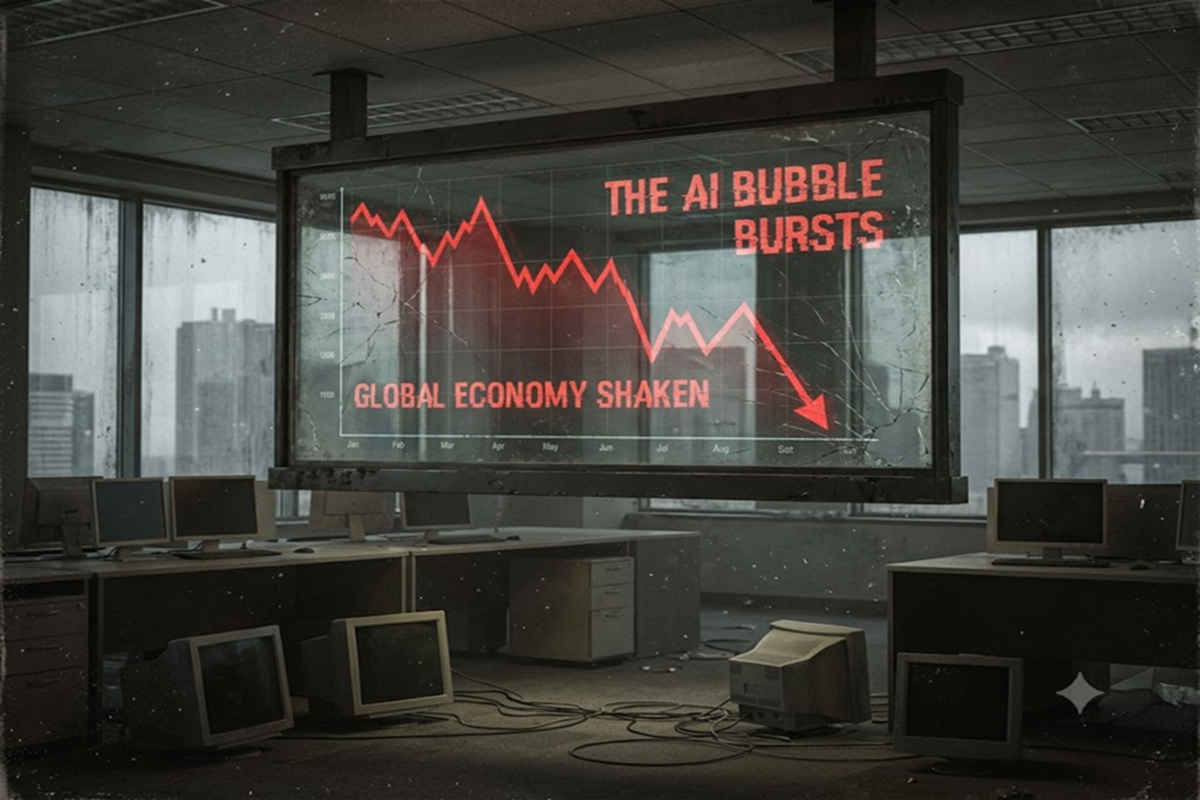
AI Bubble: In the economic world, a bubble is when the price of a company, sector, or asset increases much more than its actual potential.

AI Bubble: Artificial Intelligence (AI) is being considered one of the biggest technological revolutions of modern times. Just as the internet transformed the world, AI is also being considered a technology that will shape the future. Today, nearly every tech company, large and small, wants to be involved in AI in some way. Investor enthusiasm is also at its peak, and billions of dollars are being invested in this field.
But behind this rosy picture, there are some worrying signs. Many large companies have acknowledged that AI spending is steadily increasing, while revenues are lagging behind. This is why some experts are reminded of the dot-com bubble of the 1990s.
What is a bubble after all?
In the economic world, a bubble is a situation when the price of a company, sector, or asset inflates beyond its true potential. Investor expectations become so high that prices become disconnected from reality. When people realize that the valuations are unrealistic, a sudden decline occurs, and the bubble bursts.
What was the dot-com bubble?
In the mid-1990s, the internet began to reach the masses. At that time, investors believed it would become the most powerful force of the future. This expectation led to massive investments in internet-based companies. Many companies, even those without strong business models and clear revenue streams, began to reach billions of dollars in value. Simply being connected to the internet was enough to attract investment. During this period, tech stocks surged so much that the Nasdaq index of the US stock market increased exponentially in just a few years.
How did the dot-com bubble form?
At that time, the internet was a new and exciting technology. Investors believed that every company entering the online world would be successful. Low interest rates and readily available capital fueled this enthusiasm. Startups were receiving funding without question. Companies focused solely on increasing customer numbers rather than profits. Heavy spending was being spent on advertising and expansion, while actual revenues were meager. Even loss-making companies were successfully raising large sums by entering the stock market.
When the Internet bubble burst
Around 2000, investors began to realize that the prices of many internet companies were far below their real value. This led to a massive market decline. Within a few years, the Nasdaq index fell nearly 80 percent from its peak. Investors lost trillions of dollars, and many prominent internet companies collapsed completely. However, those with strong business models were able to weather this crisis over time.
How much impact did it have on India?
The impact of the dot-com crisis in India was not as severe as in the US. At that time, the influence of internet companies in the Indian market was limited. Nevertheless, the panic among global investors also affected the Indian stock market, resulting in losses for many investors. However, this did not lead to a major economic recession in the country.
Why are AI and the dot-com bubble being compared?
The excitement surrounding AI today resembles the dot-com era in many ways, but experts believe there are some signs that point to potential risks.
Valuation based on expectations rather than earnings
Many AI startups have market caps far in excess of their actual revenues. Investors are investing in them out of fear of being left behind by the next big tech wave. This same mentality was evident during the dot-com era.
Use of AI everywhere
Just as companies in the 1990s used .com to attract investors, today many companies are attracting attention by touting their products and services as AI-based. In many cases, AI is being heavily promoted despite its limited actual role.
Record spending on infrastructure
Running AI requires cutting-edge chips, vast data centers, and massive computing power. Companies around the world are spending billions of dollars on these resources. But the question is: will future earnings justify this investment? This is a concern that is troubling analysts.
What happens if the AI bubble bursts?
If investments and valuations in the AI sector significantly outpace reality and market confidence is lost, tech companies' stocks could be the first to see a sharp decline. Investors could suffer significant losses, and startups would find it difficult to raise funds.
Additionally, the potential for widespread layoffs in the technology sector could increase. Companies that have expanded based solely on expectations could face financial pressure. However, this does not mean the end of AI technology.
Is the future of AI in danger?
History shows that strong technologies survive even after bubbles burst. Thousands of companies disappeared after the dot-com crisis, but the internet emerged stronger than ever. Similarly, if there is a major correction or downturn in the AI field, weak companies may disappear, but technologies with real utility and strong business models will endure.
It is possible that the AI industry will undergo a major test in the coming years, but it is equally possible that after this process, only those companies will survive that are truly creating value for people and industries.