weather forecast
Weather Alert September 9: Heavy Rain Risk Continues in Parts of India, IMD Issues Fresh Warnings
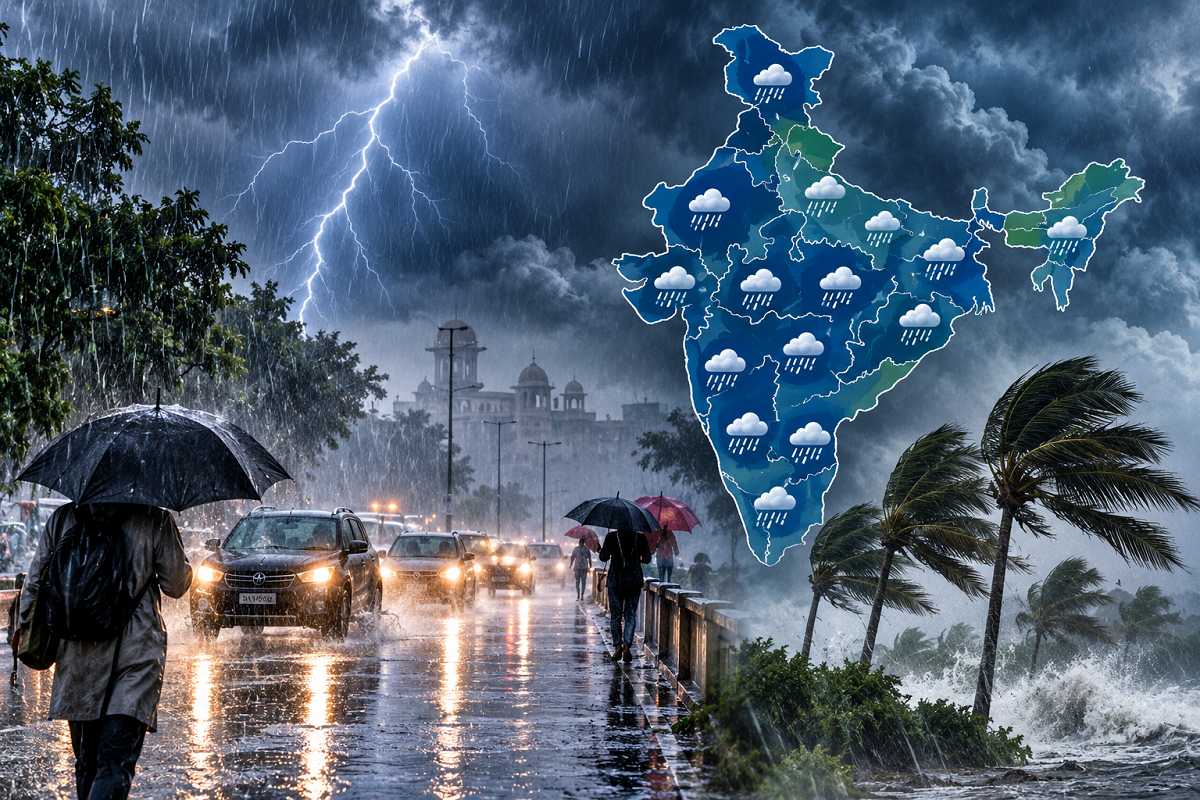
Weather conditions remain unsettled across several parts of India as the monsoon continues to influence different regions of the country. The India Meteorological Department (IMD) has issued fresh weather warnings for selected areas, with heavy rainfall, thunderstorms and lightning expected in some regions over the coming days.
However, the latest official advisories show that weather conditions are not equally severe everywhere. While some areas continue to face a risk of heavy rain, other major regions currently have no active subdivision-level warning.
People living in vulnerable locations, particularly hilly areas and places with a history of waterlogging or landslides, have been advised to keep track of local weather updates before travelling.
Uttarakhand Faces Increased Rain Risk
Uttarakhand is among the regions where weather conditions are expected to become more active.
According to the latest IMD subdivision-wise warning, thunderstorms and lightning may affect parts of the state on September 9. The risk is expected to increase from September 10, with heavy rainfall warnings continuing over the following several days.
Persistent rain in the Himalayan region can increase the possibility of landslides, falling rocks, blocked roads and sudden disruption to traffic.
Travellers heading towards hill stations, pilgrimage routes or remote mountainous areas should check road conditions and local administration advisories before beginning their journey.
Residents in areas near slopes, rivers and streams should also remain cautious if rainfall intensifies.
Heavy Rain Continues in Parts of the Northeast
Several northeastern areas are also witnessing an active spell of monsoon weather.
IMD warnings indicate that parts of Nagaland, Manipur, Mizoram and Tripura could experience heavy rainfall during the September 9-13 period.
The combination of persistent moisture and local weather systems can produce intense rain over a short period. Such spells may lead to temporary waterlogging, reduced visibility and disruption to road movement in vulnerable areas.
People should avoid crossing flooded roads or streams and follow instructions issued by district authorities whenever rainfall becomes intense.
No Current Heavy-Rain Warning for Uttar Pradesh
Contrary to some circulating weather reports, the latest IMD subdivision-level forecast issued on September 9 does not show an active heavy-rain warning for either East Uttar Pradesh or West Uttar Pradesh for September 9, 10 or 11.
This does not mean that isolated showers cannot occur. Local weather can still vary considerably, and thunderstorms or rainfall may develop in particular districts even when a broader subdivision-level warning is not in force.
Residents should therefore continue checking district-specific forecasts if outdoor travel or agricultural work is planned.
Delhi-NCR Also Has No Subdivision-Level Warning
The latest IMD warning page for Haryana, Chandigarh and Delhi also shows no active warning for September 9 through September 15.
Delhi-NCR may still experience normal seasonal changes in cloud cover, humidity or isolated rainfall, but the current subdivision-level bulletin does not support claims of a widespread severe rain or storm alert for the national capital during this period.
Commuters should nevertheless keep an eye on short-duration local forecasts because weather conditions can change rapidly during the monsoon season.
Rajasthan Forecast Remains Relatively Stable
The IMD's Jaipur Meteorological Centre bulletin issued on September 8 showed no active subdivision-level warning for either East Rajasthan or West Rajasthan for September 9 and the following several days.
Therefore, reports suggesting a widespread severe thunderstorm or heavy-rain warning across Rajasthan on September 9 should be treated cautiously unless backed by a newer district-level advisory.
Local showers may still develop in individual places, and residents should refer to district forecasts for the most precise information.
Why Weather Alerts Can Change Quickly
Monsoon forecasts can change within a short period because rainfall depends on several atmospheric factors.
The movement of low-pressure systems, moisture from the Bay of Bengal and Arabian Sea, wind patterns and local topography can all influence how much rainfall a particular region receives.
This is why a state may have no warning in a morning forecast but later receive a district-level alert if conditions strengthen.
Similarly, one part of a state may experience intense rainfall while another remains comparatively dry.
For this reason, people should rely on the latest IMD warnings rather than older or broadly worded forecasts.
Thunderstorms and Lightning Remain a Major Safety Concern
Even where extreme rainfall is not expected, thunderstorms can still pose a serious risk.
During lightning or strong winds, people should avoid standing beneath isolated trees, near electric poles, temporary sheds or weak structures.
Those working in open fields should move to a secure building when thunder is heard. People should also avoid touching electrical equipment in flooded or wet areas.
Drivers are advised to slow down during heavy showers because reduced visibility and water accumulation can make roads dangerous.
Extra Caution Needed in Hill Areas
Heavy rainfall in mountain states can trigger landslides and sudden road closures even when rainfall occurs far from a person's immediate location.
Water flowing down slopes can also increase the level of streams and small rivers rapidly.
Travellers heading into Uttarakhand and other mountainous areas should therefore check both the weather forecast and road-condition updates before departure.
Non-essential travel during intense rain is best avoided in locations where landslides are common.
Farmers and Outdoor Workers Should Track Local Forecasts
Weather changes can have a direct impact on agriculture.
Farmers should avoid spraying pesticides or carrying out other weather-sensitive activities when rain or strong winds are expected.
Harvested crops should be kept in protected areas wherever possible, while livestock should be moved away from low-lying or flood-prone locations during heavy rainfall.
Local agrometeorological advisories can provide more specific guidance based on crop and district conditions.
Check the Latest IMD Advisory Before Travelling
Weather forecasts during the monsoon can change from one update to another. Anyone planning a long-distance road journey, flight, hill trip or outdoor event should check the most recent official forecast before leaving.
The IMD provides subdivision-wise and district-wise warnings that can help people understand whether heavy rain, thunderstorms, lightning or other severe weather conditions are expected in their area.
The key takeaway for September 9 is that the risk is currently concentrated in selected regions rather than across all the states mentioned in some reports. Uttarakhand and parts of the Northeast require particular attention, while the latest subdivision-level IMD bulletins show no active warning for Uttar Pradesh, Delhi-NCR and Rajasthan.
Disclaimer: Weather conditions can change quickly. Readers should check the latest IMD and local administration advisories for real-time updates before travelling or making weather-sensitive plans.