LIFESTYLE
Vitamin B12 Deficiency: Add These Nutrient-Rich Vegetables to Your Daily Diet for Better Overall Health
While vitamin B12 is primarily found in animal-based foods, vegetables rich in folate, iron, and other essential nutrients can support healthy blood cell production and overall wellness. Here's what to include in your diet.
Maintaining good health requires a balanced intake of vitamins and minerals, including vitamin B12, vitamin C, iron, folate, magnesium, and potassium. Among these, vitamin B12 plays an essential role in the formation of red blood cells, nerve function, and DNA production. A deficiency can lead to symptoms such as fatigue, weakness, numbness, and difficulty concentrating.
It is important to note that vitamin B12 is naturally found almost exclusively in animal-based foods, such as dairy products, eggs, meat, fish, and fortified foods. Most vegetables do not contain significant amounts of vitamin B12. However, several nutrient-rich vegetables provide iron, folate, and antioxidants, which support healthy blood formation and overall well-being. Here's a closer look at some of the best options to include in your daily meals.
Understanding Vitamin B12 Deficiency
Vitamin B12 is essential for several important functions in the body, including:
- Formation of healthy red blood cells
- Proper nerve function
- DNA synthesis
- Energy metabolism
A lack of vitamin B12 may cause:
- Persistent tiredness
- Weakness
- Shortness of breath
- Tingling or numbness in the hands and feet
- Difficulty with memory or concentration
If left untreated, a prolonged deficiency can lead to neurological complications. Anyone experiencing these symptoms should seek medical advice and undergo appropriate testing.
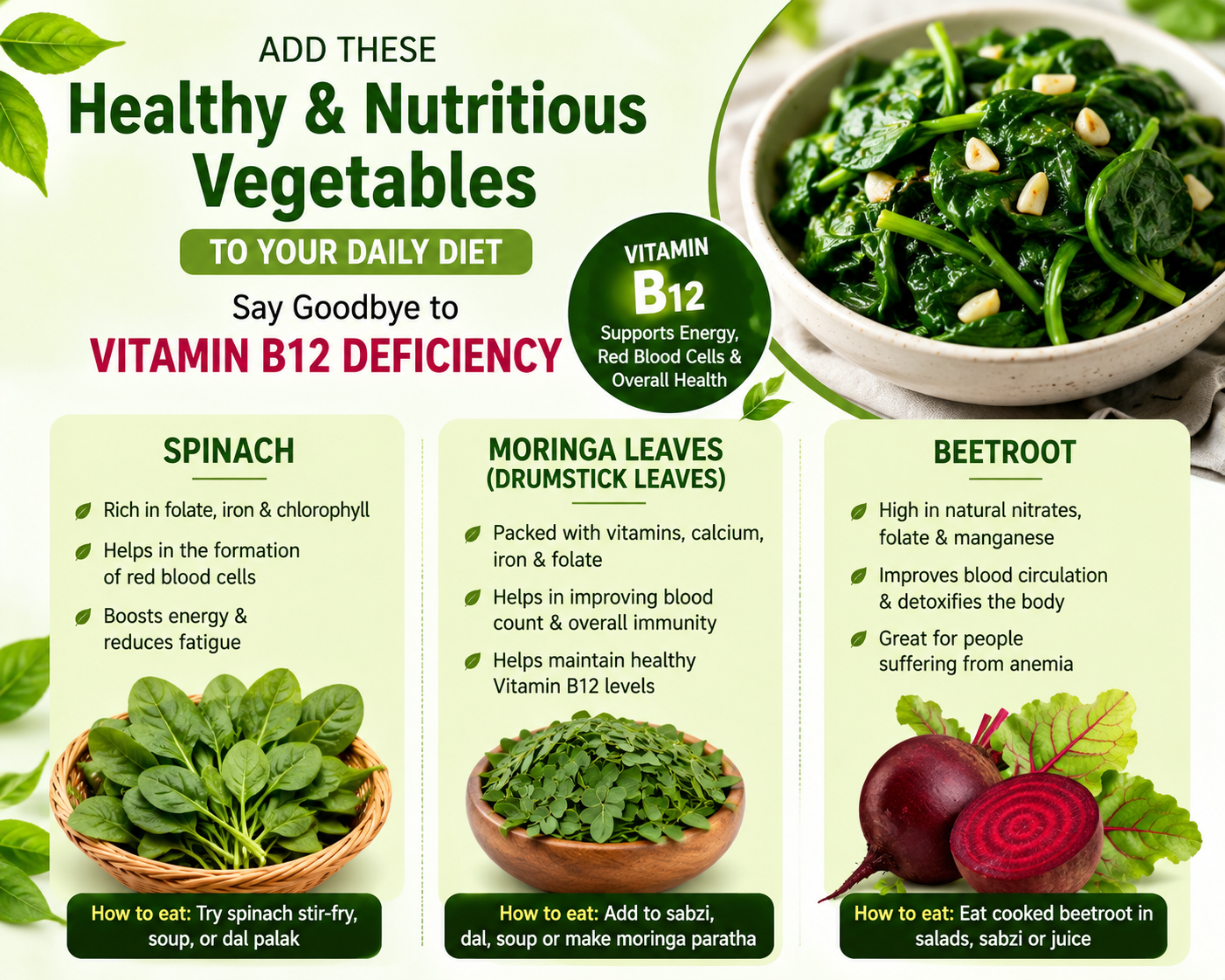
Spinach: Rich in Iron and Folate
Spinach is widely regarded as one of the healthiest leafy vegetables available throughout the year.
Although it does not contain vitamin B12, spinach is an excellent source of:
- Folate
- Iron
- Vitamin A
- Vitamin C
- Chlorophyll
These nutrients contribute to the production of healthy blood cells and help support energy levels. Spinach can be enjoyed in several ways, including:
- Stir-fried with vegetables
- Added to soups
- Mixed into lentil dishes (dal)
- Blended into smoothies
Including spinach regularly in a balanced diet may help improve overall nutritional intake.
Moringa Leaves: A Nutrient-Dense Superfood
Moringa, also known as drumstick leaves, is packed with vitamins and minerals.
These leaves provide:
- Calcium
- Iron
- Folate
- Vitamin A
- Vitamin C
Because of their rich nutritional profile, moringa leaves are often used in traditional diets to support general health. While they are not a source of vitamin B12, they may help improve iron intake and contribute to healthy red blood cell production.
Moringa leaves can be cooked into curries, soups, or mixed with lentils for a nutritious meal.
Beetroot: Supports Healthy Blood Circulation
Beetroot is another vegetable frequently recommended as part of a balanced diet.
It contains:
- Natural nitrates
- Folate
- Manganese
- Potassium
These nutrients may help support normal blood circulation and cardiovascular health. Beetroot is also commonly included in diets aimed at improving iron intake, although it does not provide vitamin B12.
For easier digestion, beetroot can be:
- Cooked and served as a side dish
- Added to salads
- Included in soups
- Roasted with other vegetables
Where Can You Get Vitamin B12?
Since vegetables generally do not provide meaningful amounts of vitamin B12, people who are vegetarian or vegan should pay special attention to their intake.
Good dietary sources include:
- Milk and dairy products
- Eggs
- Fish
- Chicken and meat
- Fortified breakfast cereals
- Fortified plant-based milk
- Vitamin B12 supplements (only under medical guidance)
Individuals following strict vegetarian or vegan diets may require fortified foods or supplements if recommended by a healthcare professional.
Tips to Maintain Healthy Vitamin B12 Levels
To reduce the risk of deficiency:
- Eat a balanced diet that includes reliable B12 sources.
- Include iron- and folate-rich vegetables alongside protein-rich foods.
- Get your vitamin B12 levels checked if you experience persistent fatigue or weakness.
- Avoid self-medicating with supplements without consulting a doctor.
Final Takeaway
Spinach, moringa leaves, and beetroot are nutritious vegetables that provide valuable vitamins, minerals, and antioxidants to support overall health and healthy blood formation. However, they should not be considered sources of vitamin B12. If you're concerned about vitamin B12 deficiency, ensure your diet includes reliable B12-rich foods or fortified products, and consult a healthcare professional if symptoms persist. A balanced diet combined with proper medical guidance remains the most effective way to maintain healthy vitamin B12 levels.