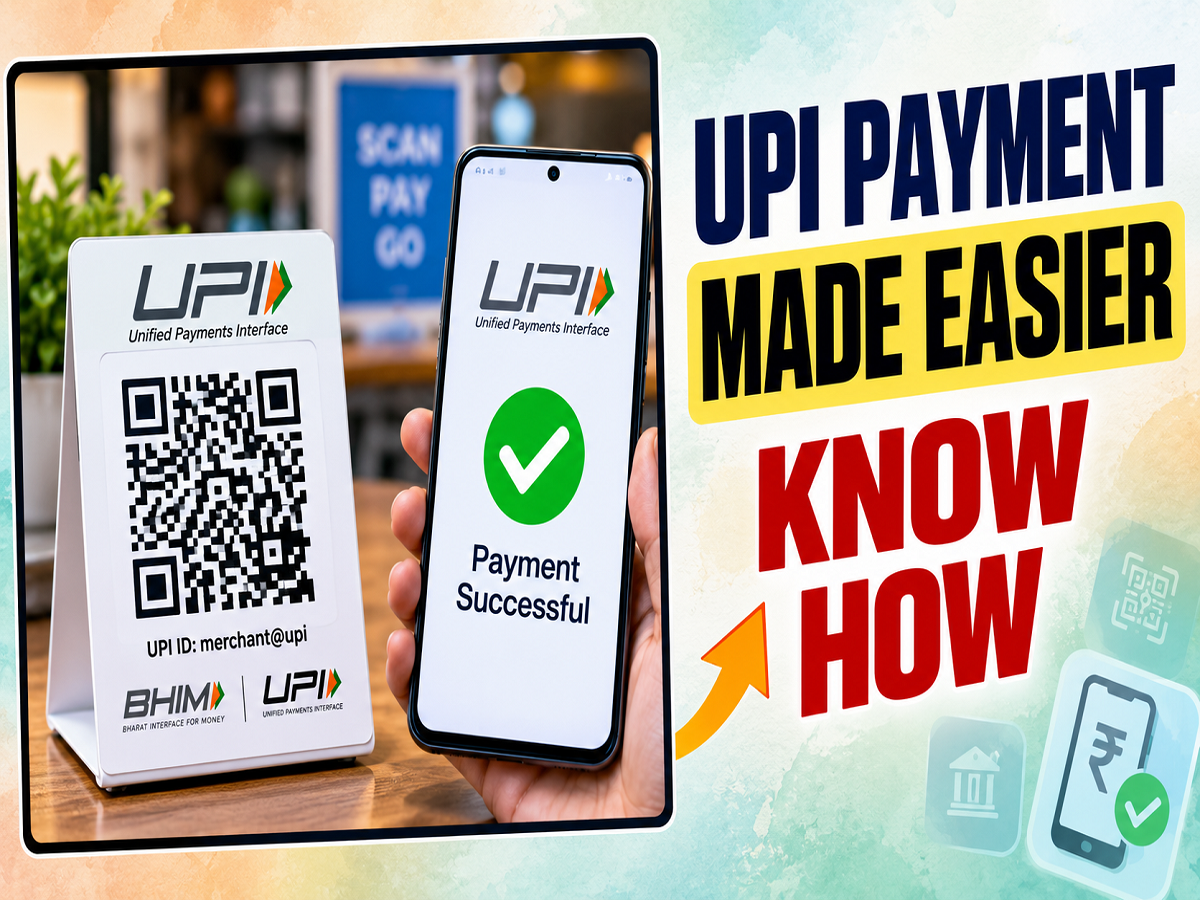
UPI payments are becoming even easier with the launch of a new Tap and Pay feature that can reduce the need to scan QR codes or manually open a UPI app for every transaction.
The Reserve Bank of India (RBI) and National Payments Corporation of India (NPCI) have launched UPI Tap & Pay along with another platform called MyUPI at the Global Fintech Fest 2026 in Mumbai. The new services are aimed at making India's UPI ecosystem more convenient and capable.
With UPI Tap and Pay, users can bring an eligible NFC-enabled smartphone close to a compatible merchant payment terminal or smart tag to initiate a transaction. The feature could be particularly useful in places where mobile internet connectivity is weak.
What Is UPI Tap and Pay?
Until now, a typical UPI payment at a shop involved opening a payment app, scanning the merchant's QR code, checking the payment details and authorising the transaction.
UPI Tap and Pay introduces a different experience.
According to the provided information, users can make supported payments without manually scanning a QR code or opening a UPI app in the usual way. Instead, an unlocked NFC-enabled smartphone can be brought close to a compatible Point-of-Sale machine or smart tag.
The experience is similar in concept to contactless card payments, where a compatible debit or credit card is tapped on a payment terminal.
How Does UPI Tap and Pay Work?
The technology relies on Near Field Communication (NFC).
NFC allows compatible devices to exchange information when they are brought very close together. Many smartphones already use NFC for contactless functions.
For UPI Tap and Pay, the customer needs a compatible NFC-enabled smartphone and the merchant needs a supported payment terminal or smart tag.
The user brings the unlocked smartphone close to the merchant device, after which the payment process can be initiated.
This removes the need to point the phone's camera at a QR code for every supported transaction.
Do You Need to Open Google Pay, PhonePe or Another UPI App?
One of the most interesting aspects of the new feature is that users may not need to manually open a UPI application in the conventional way before initiating a supported Tap and Pay transaction.
The source specifically describes the experience as eliminating the usual need to open apps such as Google Pay, PhonePe or Paytm for this payment flow.
However, users will still need a compatible and properly configured UPI setup on an eligible device.
The exact user experience can also depend on the implementation supported by the phone, payment service and merchant terminal.
Can UPI Tap and Pay Work Without Mobile Internet?
This is another major feature highlighted in the announcement.
According to the source, the merchant's payment terminal can use its own internet connection to complete the transaction. This could allow the customer-side experience to work even when mobile connectivity on the phone is weak or unavailable in supported circumstances.
This could be useful in places such as basements, metro stations, hilly areas or other locations where a customer's mobile network may be unreliable.
However, this should not be interpreted as meaning that the entire UPI payment ecosystem works without connectivity.
The merchant infrastructure still needs the necessary connectivity to process the transaction.
Up to ₹5,000 Payment Without UPI PIN
Small-value transactions could become even faster.
According to the provided information, eligible transactions of up to ₹5,000 can be completed without entering a UPI PIN under the supported Tap and Pay framework.
For payments above ₹5,000, a UPI PIN would be required.
This can reduce the number of steps required for routine purchases such as groceries, medicines, food or other small-value transactions.
Users should nevertheless carefully verify the payment amount and merchant details before approving any transaction.
What Do You Need to Use UPI Tap and Pay?
Not every smartphone or merchant terminal will necessarily support the feature immediately.
The customer's smartphone needs to have NFC capability, while the merchant must have compatible infrastructure such as an NFC-enabled POS terminal or supported smart tag.
Therefore, users should not assume that they can immediately tap their phone at every shop where a regular UPI QR code is displayed.
QR-based UPI payments will continue to remain useful, particularly at merchants that do not yet have compatible Tap and Pay infrastructure.
How Is It Different From QR Code Payments?
Traditional UPI merchant payments generally rely heavily on QR codes.
The customer opens the UPI app, scans the merchant QR, enters or verifies the amount and completes authentication.
Tap and Pay changes the first part of this process.
Instead of scanning a QR code, the user brings the phone close to a compatible merchant device.
For customers, this could make the checkout experience quicker. It may also reduce problems caused by damaged QR codes, poor camera focus or slow mobile connectivity in certain situations.
RBI and NPCI Also Launch MyUPI
UPI Tap and Pay was not the only new service introduced.
The announcement also included MyUPI, described in the source as an AI-powered customer support and control platform.
MyUPI is based on NPCI's small language model called FiMI and is intended to bring information about UPI transactions and AutoPay mandates across different banks and UPI applications into one place.
This could make it easier for users with multiple bank accounts or UPI applications to review their payment activity through a more consolidated interface.
MyUPI Gets a Safety Switch
Security is another important part of the new platform.
According to the provided information, MyUPI includes a feature called Safety Switch.
If a user suspects that an account has been compromised or that fraudulent activity is taking place, the Safety Switch is designed to provide a quick mechanism for blocking UPI debits from the account through the supported process.
Such controls could become useful when users need to respond quickly to suspected account compromise.
Will QR Codes Disappear?
Not anytime soon.
QR codes are inexpensive and widely deployed across India. Small merchants can accept UPI payments without requiring sophisticated card-terminal infrastructure.
Tap and Pay should therefore be seen as another payment option rather than an immediate replacement for QR codes.
At a small roadside shop, scanning a QR code may continue to be the easiest option. At a store equipped with a compatible NFC terminal, Tap and Pay could provide a faster alternative.
UPI Payments Are Moving Closer to Contactless Cards
The introduction of UPI Tap and Pay brings the UPI experience closer to the convenience associated with contactless debit and credit cards.
Instead of taking out a card, scanning a QR code or navigating through several screens, supported transactions can begin simply by bringing an NFC-enabled phone near the merchant terminal.
The feature has been launched alongside MyUPI as part of efforts to strengthen and expand the UPI ecosystem.
For consumers, the biggest advantages could be faster checkout, fewer steps and better usability in areas with weak mobile connectivity. But the experience will depend on device compatibility and merchant infrastructure, meaning conventional QR-based UPI payments will continue to remain important even as Tap and Pay adoption expands.