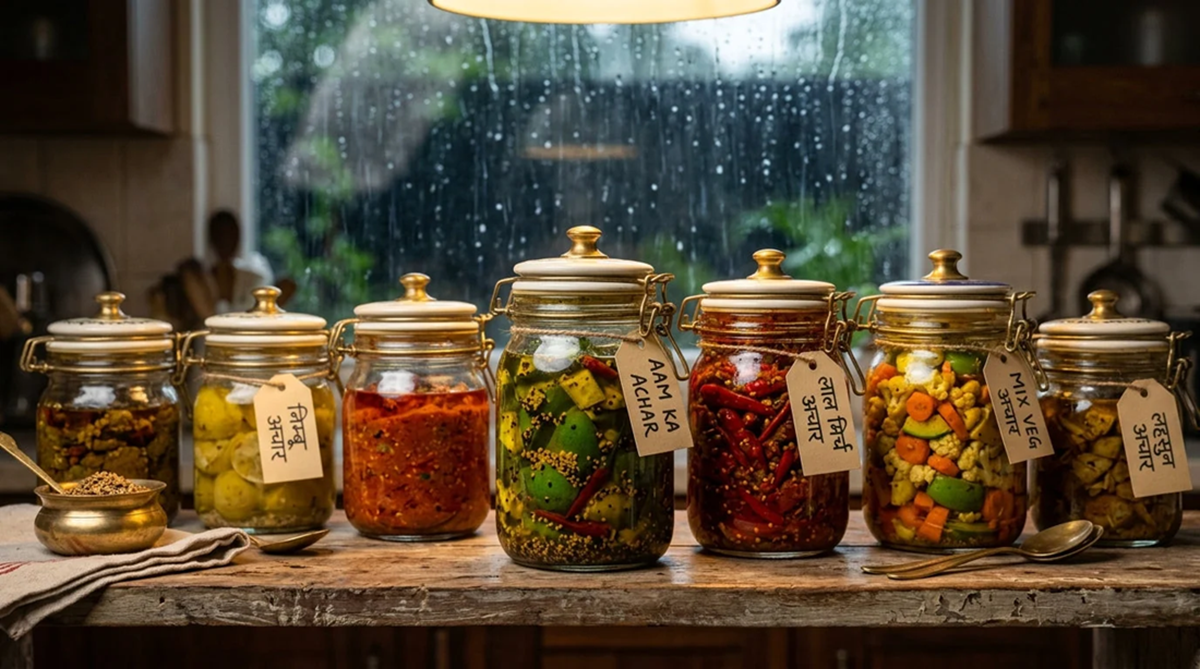
How to Prevent Mold in Pickles": The biggest reason for mold in pickles is moisture. During the rainy season, the humidity in the air increases, and every time the can is opened, moist air can enter.
How to prevent pickles from getting moldy during the rainy season
How to Prevent Fungus in Pickles: Pickles are an integral part of Indian cuisine, but maintaining them during the rainy season can be challenging. Sometimes, pickles stored for months suddenly develop a white or green mold. People often think that removing the top layer of mold can save the pickle. However, if the mold is clearly visible, simply removing the top layer and eating the rest isn't safe.
In fact, the biggest reason for mold in pickles is moisture. Humidity increases during the rainy season, and every time the container is opened, moist air can enter. Additionally, using a wet spoon, filling the container without thoroughly drying it, or a loose lid can also cause spoilage. Changes in temperature can also cause moisture to accumulate inside the container. If the pickle hasn't yet developed mold, but you suspect that increased humidity could cause it to spoil quickly, keeping a few simple precautions in mind can help preserve it.
It is most important to use a dry spoon
Always use a completely dry and clean spoon when serving pickles. Even a drop or two from a wet spoon can cause problems for the pickle. Bacteria and other microorganisms can enter with the water, increasing the risk of pickle spoilage. People often dip the spoon into the pickle immediately after washing it. Avoid this practice. Dry the spoon thoroughly first. This simple habit can help preserve pickles for a long time.
Let the pickle pieces remain immersed in the oil.
With traditional oil pickles, it's important to ensure that the pickle pieces don't protrude above the surface of the oil. If some pieces remain out of the oil for extended periods, they can be exposed to air and moisture, increasing the risk of mold.
Therefore, after removing the pickle, check the container to ensure that the remaining pieces are covered with oil. If oil is an important part of preservation in a traditional recipe and its level has decreased over time, consider adding the appropriate amount of oil as per the recipe. Different pickle recipes vary, so avoid arbitrary adjustments to the salt and oil quantities.
Store in an airtight glass jar
Clean and thoroughly dried glass jars are a good choice for storing pickles. Glass does not absorb moisture, and a suitable lid helps reduce exposure to outside air and moisture. Close the lid tightly after each use. Do not store pickles in an open container or container with a loose lid for extended periods. If the jar lid does not close properly, it is best to replace it.
Keep pickles in the right place.
Avoid storing pickle containers near a gas stove or in areas exposed to constant heat and temperature fluctuations. It's best to store them in a cool, dry place. Also, avoid placing them near a window, especially one exposed to moisture or direct sunlight. It's safer to store opened pickles, especially those with low salt content, in the refrigerator during the rainy season .
Change the container when the jar is almost empty.
As pickles gradually expire, a large jar becomes filled with empty space. This empty space holds air, which can be problematic in humid conditions. Therefore, if there is very little pickle left in a jar, it can be transferred to a clean and completely dry smaller, airtight jar. It is also important to clean the jar mouth of any oil, spices, or pickle juice. Cleaning the rim of the jar and closing the lid tightly after each use ensures cleanliness.
What to do if mold appears?
If you notice white or green mold, a cotton-like film, or a sticky feeling on the pickle's surface, don't try to taste it. Similarly, a foul odor, an unusually cloudy or milky appearance to the oil, and excessively soft and crumbly pickle pieces can also be signs of spoilage.