Business
National Highway New Rules 2026: Government Plans Ratings for Potholes, Toll Traffic and Road Safety
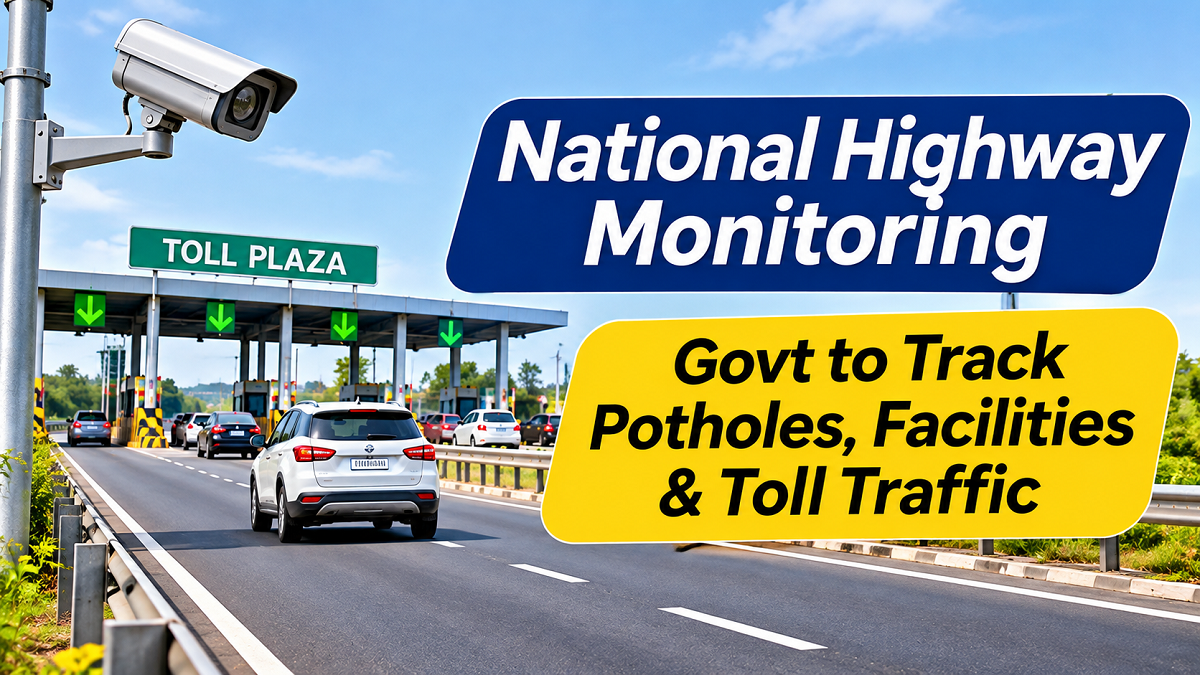
National Highway Monitoring 2026: Millions of people travel on India's national highways for work, business, tourism and daily transportation. However, damaged roads, potholes, long toll plaza queues and inadequate roadside facilities can make these journeys inconvenient and sometimes dangerous.
To address these concerns, the Central Government is planning a new monitoring and rating framework for national highways.
The proposed system would evaluate highway conditions, traffic management, toll plaza performance, cleanliness and essential facilities available to motorists.
Road safety and accident-related data are also expected to play an important role in the assessment.
The initiative aims to improve highway maintenance, identify poorly performing road sections and strengthen accountability among the agencies responsible for maintaining national highways.
Here is what the proposed monitoring system could mean for motorists.
1. National Highways May Receive Performance Ratings
The Ministry of Road Transport and Highways is working on a framework to assess national highways against specified performance standards.
Under the proposed arrangement, highways could receive ratings or grades based on their overall condition and service quality.
The assessment is expected to examine several important factors.
These include the quality of road surfaces, the presence of potholes, traffic movement, toll plaza congestion and the availability of basic passenger facilities.
The objective is to determine whether a particular highway meets the expected standards of maintenance, safety and convenience.
Poorly performing roads could be identified for corrective action.
However, the final grading methodology and implementation arrangements will depend on the framework adopted by the authorities.
2. Potholes and Damaged Roads Will Be Monitored
Potholes are among the most common complaints raised by highway users.
Damaged road surfaces can affect vehicle stability, increase travel time and contribute to accidents.
They can also lead to additional maintenance expenses for vehicle owners.
Under the proposed monitoring framework, road conditions would be an important assessment parameter.
Authorities could evaluate damaged stretches, uneven surfaces and other maintenance-related problems.
This information may help identify sections requiring urgent repairs.
Regular assessment could also make it easier to track whether maintenance work has been completed satisfactorily.
For motorists, better road maintenance could mean smoother journeys and fewer unexpected obstacles.
3. Toll Plaza Traffic and Waiting Time May Be Reviewed
Long queues at toll plazas remain a concern on several busy highways.
During weekends, holidays and peak travel periods, motorists may experience significant delays while crossing toll collection points.
The proposed highway rating system is expected to examine traffic management and toll plaza performance.
This could include assessing congestion, vehicle movement and delays.
Such monitoring may help authorities identify toll plazas where traffic management needs improvement.
Better lane management, efficient electronic toll collection and improved infrastructure could help reduce waiting times.
However, the effectiveness of these measures would depend on actual implementation and local traffic conditions.
4. Cleanliness and Roadside Facilities Will Also Matter
A highway journey involves more than simply driving on a well-maintained road.
Motorists and passengers also need access to basic facilities during long-distance travel.
The proposed monitoring system is expected to consider the availability and condition of essential roadside amenities.
These may include toilets, drinking water facilities, rest areas and other services provided along highway routes.
Cleanliness and regular maintenance would also form part of the broader assessment.
The aim is to encourage better facilities for families, commercial drivers and other road users.
Improved roadside services could make long-distance journeys more comfortable, particularly for elderly passengers and families travelling with children.
5. Road Accidents and Fatalities Could Affect Highway Ratings
Road safety is expected to be another major component of the proposed highway evaluation framework.
Authorities may examine accident-related data to identify sections where additional safety measures are needed.
The assessment could consider the total number of reported accidents, serious crashes and fatalities over a specified period.
This information may help identify accident-prone locations.
Once such stretches are identified, authorities could consider improvements such as better road markings, warning signs, lighting, barriers and junction design.
However, accident figures need to be interpreted carefully.
A highway carrying heavy traffic may record more accidents than a less frequently used road, even when other conditions are similar.
A meaningful safety assessment should therefore consider relevant traffic and road characteristics alongside accident statistics.
6. Why Is the Government Planning This Rating System?
The proposed framework is intended to make highway management more systematic and accountable.
At present, motorists often report problems such as damaged roads, poor facilities and traffic congestion.
A structured rating system could help authorities compare highway performance using defined criteria.
It could also support decisions about maintenance priorities.
For example, a road section with repeated pothole complaints and poor safety indicators may require greater attention than a section performing satisfactorily.
Similarly, toll plazas experiencing frequent congestion could be examined for operational improvements.
The larger objective is to ensure that highway infrastructure is maintained according to appropriate standards.
7. What Is Multi-Lane Free-Flow Tolling?
Alongside highway monitoring, the government is also working on Multi-Lane Free-Flow (MLFF) tolling technology.
MLFF is designed to allow vehicles to pass through designated tolling points without stopping at conventional toll barriers.
The system uses electronic identification and supporting technology to process toll transactions as vehicles move through the tolling area.
Depending on the implementation, it may involve technologies such as RFID-based identification and automatic number plate recognition.
The aim is to reduce congestion and make toll collection more efficient.
This could be particularly useful on highways where large numbers of vehicles pass through toll plazas every day.
8. How Could MLFF Tolling Benefit Drivers?
Conventional toll collection can cause vehicles to slow down or stop, particularly during busy periods.
When queues become long, drivers may spend additional time waiting and vehicles may consume unnecessary fuel.
Multi-Lane Free-Flow tolling seeks to reduce these interruptions.
If implemented effectively, it could help improve traffic movement and reduce waiting times.
It may also lower the need for repeated braking and acceleration around toll collection points.
However, MLFF should not be understood as a system that eliminates toll charges.
Motorists would still be required to pay applicable tolls through the authorised collection mechanism.
The technology changes how tolls are collected, not necessarily how much drivers must pay.
9. Will Every Highway Get a Rating Immediately?
The proposed monitoring and rating framework should not be confused with a fully implemented nationwide grading system.
The government would need to finalise assessment criteria, data collection procedures and operational responsibilities before the system could be applied consistently.
The timeline and scope of implementation will depend on official decisions.
Similarly, MLFF tolling is expected to be introduced through designated projects and implementation phases rather than appearing at every toll plaza simultaneously.
Motorists should therefore continue following existing toll payment and traffic rules unless an official notification announces changes for a particular route.
10. What Benefits Can Highway Users Expect?
If the proposed measures are implemented successfully, highway users could experience several improvements.
Better monitoring may lead to quicker identification of damaged roads and potholes.
Regular performance assessments could encourage improved maintenance and cleaner roadside facilities.
Traffic management reviews may help reduce congestion at busy toll plazas.
Safety assessments could also support improvements at accident-prone locations.
Most importantly, the proposed framework could create greater accountability by measuring highway performance against defined standards.
However, these benefits will depend on how effectively the monitoring system is implemented and how quickly identified problems are addressed.
What Should Motorists Do in the Meantime?
Until the proposed system is fully operational, motorists should continue reporting highway-related problems through authorised channels.
The National Highways Authority of India provides the 1033 highway helpline for assistance and reporting relevant highway issues.
Motorists can also use available official highway service platforms, including the Rajmargyatra application, where supported.
When reporting a pothole, damaged road or other safety concern, providing the highway number and accurate location can help the authorities identify the affected stretch.
Drivers should also follow speed limits, maintain safe distances and remain alert near road construction and toll plaza areas.
Final Words
The proposed National Highway Monitoring and Rating System could bring important changes to how India's highways are assessed and maintained.
By reviewing potholes, road conditions, toll plaza congestion, cleanliness, roadside amenities and accident data, authorities aim to identify infrastructure problems and improve highway services.
The government's work on Multi-Lane Free-Flow tolling could also help reduce delays at selected toll collection points.
For motorists, the biggest potential benefit is a safer, smoother and more convenient highway journey.
However, the final impact will depend on the official rating framework, implementation schedule and the action taken to address problems identified during inspections.