
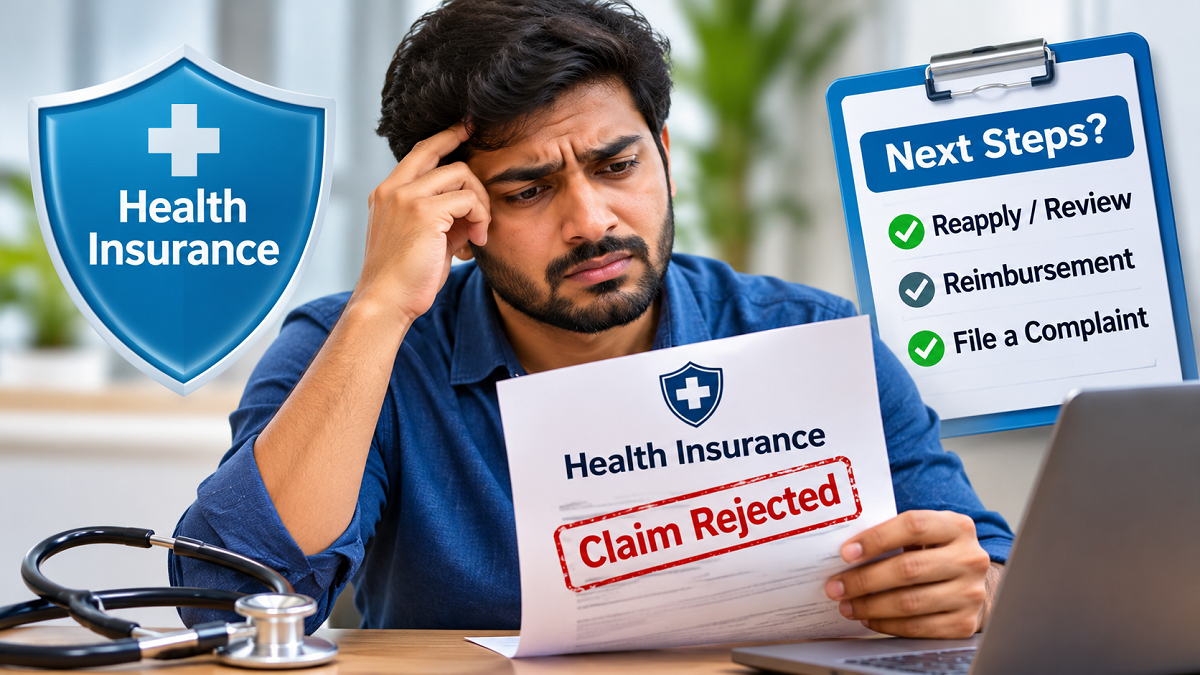
Health Insurance Claim Rejection 2026: Health insurance provides financial protection against unexpected medical expenses, but a rejected claim can create serious difficulties for patients and their families. The situation becomes particularly stressful when an insurance company refuses cashless treatment approval during hospitalisation, leaving the policyholder uncertain about how to manage medical bills.
However, rejection of a cashless authorisation request does not always mean that the medical expenses are permanently excluded from insurance coverage. Depending on the policy terms and the reason for rejection, policyholders may request reconsideration, submit additional documents or apply for reimbursement.
In India, health insurance customers also have access to formal grievance redressal mechanisms if they believe their claims have been unfairly denied.
Understanding the correct process can help policyholders protect their rights and avoid unnecessary financial losses.
Why Do Health Insurance Companies Reject Claims?
Insurance companies examine several factors before approving a health insurance claim.
These include the policy's coverage conditions, medical documentation, waiting periods, exclusions and the circumstances of hospitalisation.
A cashless authorisation request may be declined for reasons such as incomplete medical records, incorrect patient information or insufficient supporting documents.
In some cases, the insurer may determine that the treatment is not covered under the policy.
Other possible reasons include an expired policy, exhausted sum insured, applicable waiting periods or treatment-related exclusions.
Importantly, a cashless request can sometimes be rejected because the insurer requires additional information rather than because the treatment is permanently ineligible for coverage.
Policyholders should therefore obtain a clear explanation before deciding their next course of action.
1. Contact the Hospital Insurance Desk Immediately
The first step after a cashless claim rejection is to contact the hospital's insurance assistance desk.
Most network hospitals have dedicated personnel who coordinate with insurance companies or third-party administrators (TPAs).
Ask the hospital representative to explain why the authorisation request was declined.
Request a written explanation or a copy of the rejection communication.
Check whether the issue involves missing documents, incorrect policy details, a mismatch in patient information or insufficient medical justification.
If the problem is administrative, the hospital may be able to correct the information and submit a revised request.
For example, an incomplete diagnosis, missing investigation report or incorrect admission date may require clarification.
Prompt communication with the hospital can sometimes resolve avoidable documentation problems.
2. Request a Review From Your Insurance Company
If the hospital cannot resolve the issue, contact the insurance company directly.
Use the insurer's official customer support channel and provide the policy number, claim reference number and hospital details.
Explain why you believe the claim should be considered under the policy.
Ask the insurer to review its decision and identify any additional documents required.
Your treating doctor may be able to provide supporting medical records explaining why hospitalisation or a particular treatment was necessary.
Medical prescriptions, investigation results, treatment notes and hospital records can help establish the circumstances of the claim.
Keep copies of all emails, complaint acknowledgements and communications with the insurer.
These records may become important if the dispute needs to be escalated.
3. Consider Reimbursement if Cashless Treatment Is Denied
A rejected cashless authorisation does not necessarily prevent a policyholder from filing a reimbursement claim.
Under the reimbursement process, the patient pays eligible hospital expenses and subsequently submits a claim to the insurance company.
The insurer then examines the documents and decides whether the expenses are payable under the policy.
However, reimbursement is not guaranteed merely because the hospital bills have been paid.
Approval depends on policy coverage, exclusions, applicable limits, claim conditions and supporting evidence.
If cashless approval is unavailable, patients should discuss payment arrangements with the hospital while ensuring that medically necessary treatment is not unnecessarily delayed.
Policyholders should also check the claim notification and submission deadlines specified in their insurance documents.
4. Keep These Documents Ready for Reimbursement
Proper documentation is essential when submitting a reimbursement claim.
Depending on the insurer's requirements, the following records may be needed:
- Original hospital bills and payment receipts.
- Detailed hospital billing statements.
- Doctor's prescriptions and consultation records.
- Discharge summary.
- Diagnostic test reports.
- Pharmacy bills and supporting prescriptions.
- Completed insurance claim form.
- Policy details and identification documents.
- Relevant hospitalisation and treatment records.
Some insurers may request additional documents based on the treatment or claim circumstances.
Before submitting original records, retain scanned copies for future reference.
Always obtain an acknowledgement when submitting claim documents.
5. File a Formal Complaint With the Insurance Company
If the insurer continues to reject the claim and you believe the decision is incorrect, submit a formal complaint to its Grievance Redressal Officer (GRO).
The complaint should clearly describe the issue, including the claim amount, reason given for rejection and why you believe the decision should be reconsidered.
Attach relevant supporting documents and previous correspondence.
Ask for a written response explaining the insurer's final position.
Insurance companies are required to maintain grievance handling procedures, and policyholders should use these official channels before escalating the dispute.
6. Escalate the Complaint Through IRDAI
If the insurer does not resolve the complaint satisfactorily, policyholders can approach the Insurance Regulatory and Development Authority of India (IRDAI) through its grievance redressal system.
IRDAI provides a mechanism for registering and tracking complaints against insurance companies.
Consumers can use the official Bima Bharosa grievance portal to submit insurance-related grievances.
While the regulator's grievance system helps facilitate complaint handling, it should not be confused with a court or a forum that automatically awards claim payments.
Policyholders should retain their complaint reference numbers and supporting documents throughout the process.
7. Approach the Insurance Ombudsman
If the complaint remains unresolved, eligible policyholders may approach the Insurance Ombudsman.
The Insurance Ombudsman provides an alternative dispute resolution mechanism for certain insurance-related complaints.
It can consider eligible disputes involving claim rejection, delays and other matters covered by the applicable rules.
Generally, a complainant must first approach the insurer and either receive an unsatisfactory response or wait for the prescribed response period before approaching the Ombudsman.
Applicable eligibility conditions, monetary limits and filing deadlines should be checked before submitting a complaint.
Information about the process is available through the Council for Insurance Ombudsmen.
8. Consumer Commission May Also Be an Option
Policyholders may also consider approaching the appropriate Consumer Disputes Redressal Commission when they believe an insurer has engaged in an unfair practice or failed to provide a service required under the policy.
The appropriate forum depends on the applicable consumer protection rules and the circumstances of the dispute.
Consumers should carefully review the available remedies because pursuing the same dispute simultaneously before different adjudicatory forums may be restricted.
For complicated disputes or substantial claim amounts, professional legal advice may be helpful.
What Is the Difference Between Cashless and Reimbursement Claims?
| Cashless Claim | Reimbursement Claim |
|---|---|
| Insurer settles approved eligible expenses directly with the network hospital | Patient initially pays the hospital |
| Requires cashless authorisation | Requires submission of bills and supporting records |
| Reduces immediate out-of-pocket payment for approved expenses | May require significant upfront funds |
| Subject to policy terms and approval | Also subject to policy terms and approval |
Neither method guarantees that every medical expense will be covered.
Deductibles, co-payments, exclusions, sub-limits and non-payable items may still apply.
Important Precautions Before Buying Health Insurance
To reduce the risk of claim-related difficulties, customers should carefully examine policy documents before purchasing health insurance.
Pay attention to waiting periods, pre-existing disease conditions, room rent limits, co-payment requirements and specific exclusions.
It is also important to provide accurate medical information when applying for coverage.
Customers should verify the insurer's hospital network and understand the process for emergency hospitalisation.
Keeping policy details easily accessible can save valuable time during a medical emergency.
Final Takeaway
A rejected health insurance claim can create financial pressure, but policyholders have several options for seeking clarification and challenging a decision.
The most important steps are obtaining the rejection reason in writing, contacting the hospital and insurer, submitting complete medical documentation and considering reimbursement where appropriate.
If the dispute remains unresolved, formal grievance channels, the Insurance Ombudsman and consumer protection mechanisms may provide further remedies.
Disclaimer: This article is for general information only. Claim eligibility, grievance procedures and legal remedies depend on the applicable policy terms and current regulations.