Business
GOBARdhan Scheme Gets Cabinet Approval: ₹23,731 Crore Plan to Boost Biogas Production From 2026-27
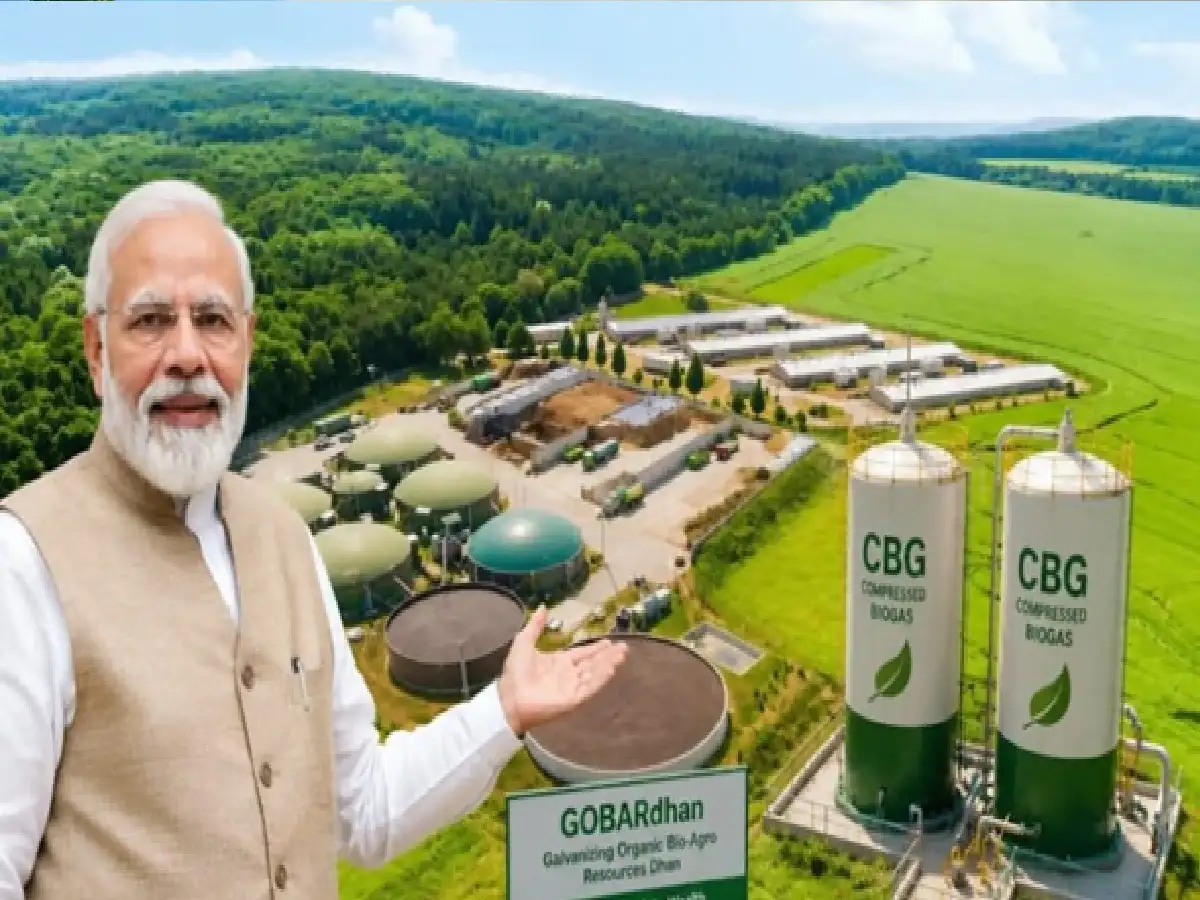
India is preparing for a major expansion of its compressed biogas sector as the central government moves ahead with a large-scale programme aimed at converting agricultural and organic waste into cleaner energy.
The Union Cabinet has approved the GOBARdhan initiative with a reported total outlay of around ₹23,731 crore. The programme is expected to run for a decade, from 2026-27 to 2035-36, and will focus on strengthening compressed biogas (CBG) production and related infrastructure across the country.
The initiative seeks to make better economic use of resources such as cattle dung, crop residue, sugarcane bagasse, municipal organic waste and other forms of biomass.
Instead of allowing these materials to remain underutilised or become a waste-management problem, the programme aims to convert them into useful resources, including cleaner fuel and organic fertiliser.
The government expects the initiative to contribute to India's clean-energy transition while also creating economic opportunities in rural areas.
Here's what you should know about the scheme, its implementation timeline and the government's broader infrastructure announcements.
When Will the GOBARdhan Scheme Be Implemented?
According to details announced following the Cabinet meeting, the programme is planned for implementation from financial year 2026-27 through 2035-36.
Union Information and Broadcasting Minister Ashwini Vaishnaw shared details about the government's decisions after the Cabinet meeting.
The long implementation period indicates that the government is looking beyond short-term incentives and plans to develop a broader ecosystem for compressed biogas.
The focus will be on establishing conditions that can support sustained investment, production, distribution and consumption of CBG over several years.
What Is the Main Objective of the Scheme?
The programme aims to establish compressed biogas as a more significant component of India's future energy mix.
Biogas can be produced from organic materials that would otherwise be treated as waste. Once processed and purified, it can be converted into compressed biogas that can be used as a cleaner fuel for eligible applications.
The scheme seeks to utilise several types of feedstock, including:
- Cattle dung
- Agricultural residue
- Sugarcane bagasse
- Municipal organic waste
- Other suitable biomass resources
This approach can potentially address two challenges simultaneously: managing organic waste more effectively and producing additional domestic energy resources.
How Could Farmers and Rural Areas Benefit?
The programme is not limited to energy production.
Agricultural waste and cattle dung have economic value when they can be supplied to a functioning biogas ecosystem. Expanding CBG plants could therefore create additional demand for biomass and organic feedstock.
This may create new income opportunities across the supply chain, including collection, transportation, processing and related services.
The production process can also generate organic fertiliser or similar useful by-products, supporting the concept of a circular economy in which waste is converted into economically valuable resources.
The scale of the actual benefits for individual farmers or households will depend on how projects are implemented locally and the commercial arrangements available in their areas.
What Support Could the CBG Sector Receive?
For a compressed biogas industry to expand nationally, constructing plants alone is not sufficient.
Projects need predictable demand, access to financing, infrastructure and viable pricing. The government has therefore indicated that the framework will address multiple components of the CBG ecosystem.
Measures highlighted in the announcement include demand assurance, stable and attractive pricing mechanisms, capital assistance, pipeline infrastructure, credit support and technological development.
Together, these measures are intended to improve the commercial viability of CBG projects and encourage greater investment in the sector.
Is This a Direct Cash Benefit Scheme for Individuals?
Despite the word "scheme," the programme should not be confused with a conventional household welfare scheme that provides a fixed amount of money directly to every eligible citizen.
The initiative is primarily aimed at developing the compressed biogas ecosystem and associated infrastructure.
Therefore, questions of "eligibility" are likely to depend on the particular component of the programme—for example, project developers, CBG producers or other participants seeking support under specific provisions.
Farmers and rural communities may benefit through biomass supply, employment and associated economic activity, but the Cabinet announcement should not be interpreted as automatically providing a direct cash payment to every cattle owner or farmer.
Detailed operational guidelines will determine the conditions for specific incentives and assistance.
Why Is Compressed Biogas Important for India?
India consumes substantial quantities of energy, including fuels used in transportation, industries and households. Expanding domestically produced alternative fuels can contribute to energy diversification.
CBG also provides an opportunity to use waste that might otherwise create environmental problems.
Agricultural residue, animal waste and municipal organic waste can become feedstock instead of simply being discarded.
If implemented effectively, the programme could support waste management, cleaner energy production, rural economic activity and the development of domestic energy resources.
Cabinet Also Clears Guwahati-Tezpur Highway Corridor
Alongside the biogas initiative, the Union Cabinet also approved a major highway development project in Assam.
The government has cleared the development of the 135.871-km Guwahati-Tezpur corridor on National Highway-15 at an estimated cost of ₹8,970.20 crore.
The four-lane highway project is planned under the Build-Operate-Transfer (BOT) Toll model.
The corridor is expected to improve road connectivity and ease congestion on important routes serving Assam and neighbouring regions.
Emergency Landing Facility Planned Near Tezpur
An interesting component of the highway project is a proposed 4.9-km Emergency Landing Facility (ELF) on the Tezpur bypass.
According to the announcement, the facility has been planned in coordination with the Indian Air Force.
Emergency landing facilities on highways can provide strategically useful alternative surfaces for aircraft under specific circumstances.
Five Major Bypasses to Reduce Congestion
The highway project also includes bypasses intended to divert through-traffic away from densely populated locations.
Five major bypasses are planned around areas including Baihata Chariali, Sipajhar, Kharupetia, Dhekiajuli and Tezpur.
The wider project is also expected to include substantial bridge, flyover and underpass infrastructure.
According to the announced details, construction will include 15 major bridges, 30 minor bridges and 19 flyovers.
An elephant underpass is planned on the Tezpur bypass, along with 46 additional underpasses.
Travel Time Could Be Significantly Reduced
The government expects the upgraded corridor to considerably improve travel efficiency.
According to official projections cited in the announcement, average travel speeds could potentially increase significantly, while journey times on the corridor could be reduced by around half.
Better road design is also expected to improve safety and reduce vehicle operating costs.
The corridor could provide stronger connectivity between major economic, social and logistics centres in Assam and Arunachal Pradesh.
Clean Energy and Connectivity Get a Major Push
The latest Cabinet decisions combine two different but strategically important infrastructure priorities: cleaner domestic energy and improved transportation.
The ₹23,731-crore GOBARdhan programme is designed to support the expansion of compressed biogas between 2026-27 and 2035-36 by creating a stronger ecosystem around biomass, financing, infrastructure, technology and demand.
At the same time, the ₹8,970.20-crore Guwahati-Tezpur highway project is expected to strengthen connectivity in the Northeast while reducing congestion and travel time.
More detailed guidelines will be important for businesses, farmers and other stakeholders seeking to understand exactly how they can participate in or benefit from the biogas programme once its individual components are rolled out.