
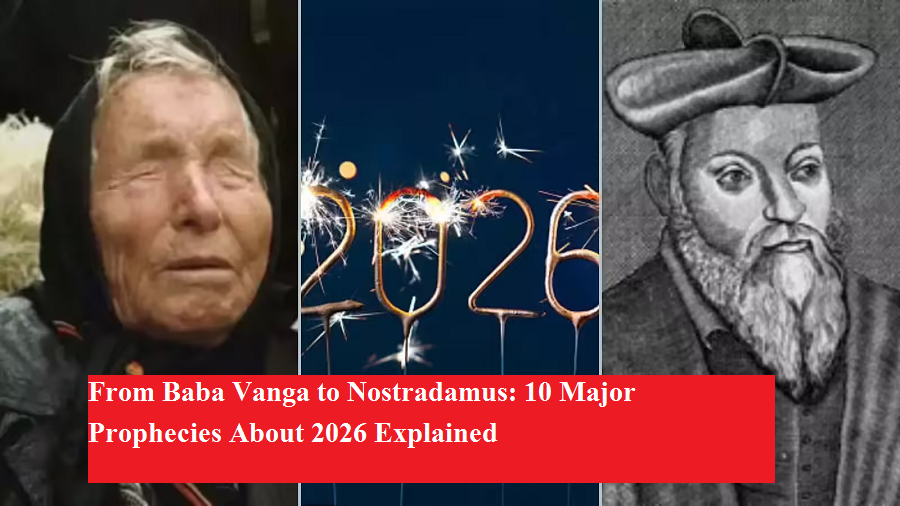
As the world steps into 2026, excitement for new beginnings is mixed with a familiar sense of curiosity about the future. Alongside celebrations, predictions attributed to legendary prophets such as Baba Vanga, Nostradamus, and modern-day seers have once again gone viral. These forecasts touch on everything from global wars and natural disasters to political shake-ups and even alien encounters.
While none of these prophecies are scientifically verified, they continue to spark debate, fear, and fascination worldwide.
1. World War III: A Global Conflict Warning
One of the most discussed predictions linked to Baba Vanga suggests the outbreak of a large-scale global war. According to interpretations, the conflict could begin in the Eastern region and gradually draw in major world powers, including the United States, Russia, and China. Supporters believe the warning points toward escalating geopolitical tensions turning into a full-scale confrontation.
2. Contact With Extraterrestrial Life
Another sensational claim attributed to Baba Vanga hints at human contact with extraterrestrial beings. Some interpretations connect this to a mysterious interstellar object, referred to by believers as 3I/ATLAS, which is expected to pass near Earth. Though astronomers dismiss such claims, the theory has fueled intense online speculation.
3. Rise in Extreme Natural Disasters
Predictions for 2026 heavily focus on environmental catastrophes. Baba Vanga is believed to have warned about devastating earthquakes, tsunamis, floods, and volcanic eruptions, potentially affecting 8–10 percent of Earth’s landmass. Given the rise in climate-related disasters, these claims have gained renewed attention.
4. Nostradamus’ Seven-Month War
Interpretations of Nostradamus’ cryptic quatrains suggest the possibility of a prolonged, violent conflict lasting seven months. Some analysts describe it as a period marked by unprecedented brutality, famine, and widespread instability.
5. A Powerful Leader Struck Suddenly
Another Nostradamus verse mentions a “great man struck by thunder”, which modern interpreters link to a sudden downfall or shocking incident involving a prominent global leader. The imagery remains symbolic, leaving room for multiple interpretations.
6. The ‘Swarm of Bees’ Mystery
One of the most unusual predictions speaks of a “great swarm of bees.” Contemporary readers believe this could symbolize a new epidemic, mass outbreak, or uncontrollable global crisis, rather than a literal event.
7. Violence Reaching Neutral Nations
Nostradamus also refers to “blood flooding Switzerland,” a nation historically associated with neutrality. Many interpret this as a warning that global conflict or unrest could spread even to peaceful regions.
8. NATO–Russia Clash in the Arctic
Modern clairvoyant Athos Salomé, often called the “Living Nostradamus,” predicts a direct military confrontation between NATO and Russia in the Arctic region. According to his vision, melting ice and newly accessible trade routes could become flashpoints for conflict.
9. Major Shift in Global Economic Power
Salomé also forecasts dramatic changes in the global economy. He suggests Saudi Arabia could emerge as a key leader in an expanded BRICS alliance, potentially reducing reliance on the US dollar and reshaping international financial systems.
10. Political Upheaval in Russia
Another widely discussed Baba Vanga prediction points to the fall of Russian President Vladimir Putin, followed by the emergence of a new, powerful leader who could redefine global political dynamics.
What Experts Say About These Prophecies
Despite their popularity, experts stress that none of these predictions are backed by verified evidence. For a prophecy to be considered credible, it must be:
- Clearly documented before the event
- Supported by reliable historical records
- Verified by independent sources
None of the 2026 predictions meet these criteria.
Why These Prophecies Still Fascinate People
Even without proof, interest in such forecasts continues to grow. Psychologists suggest this fascination reflects human curiosity about uncertainty, especially during times of global tension and rapid change.
As 2026 unfolds, these prophecies remain speculative—but they continue to capture imagination, spark debate, and remind us of humanity’s timeless desire to glimpse the future.