
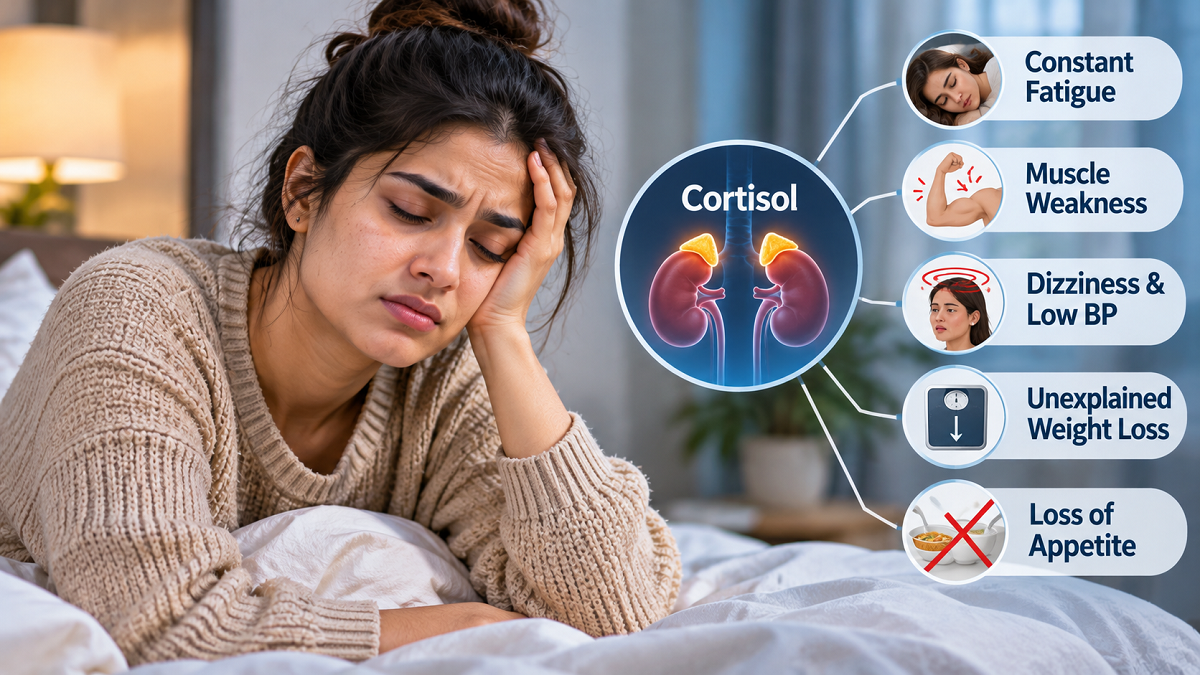
Low Cortisol Symptoms and Health Tips: Do you wake up feeling exhausted even after getting a full night's sleep? Are you experiencing unexplained weight loss, frequent dizziness or persistent muscle weakness? While these symptoms can result from several health conditions, they may sometimes indicate a hormonal disorder known as adrenal insufficiency, in which the body does not produce enough cortisol.
Cortisol is an essential hormone that helps regulate blood pressure, blood sugar, metabolism and the body's response to physical stress. When cortisol production becomes abnormally low, normal bodily functions can be affected.
However, fatigue and weakness alone do not establish a cortisol deficiency. Poor sleep quality, anaemia, thyroid disorders, nutritional deficiencies and other medical conditions can produce similar symptoms. Understanding the possible warning signs can help individuals recognise when a medical evaluation may be necessary.
What Is Cortisol and Why Does Your Body Need It?
Cortisol is a steroid hormone produced by the adrenal glands, two small glands located above the kidneys.
Although it is widely described as the stress hormone, cortisol performs several essential functions beyond helping the body respond to stressful situations.
It supports glucose regulation, influences metabolism, helps maintain blood pressure and contributes to the regulation of inflammation and immune responses.
Cortisol production also follows a natural daily rhythm. Levels generally rise during the early morning hours and gradually decline throughout the day, reaching lower levels at night.
This pattern helps the body respond to changing physical demands.
When the adrenal glands cannot produce sufficient cortisol, a condition called adrenal insufficiency may develop.
Five Possible Symptoms of Low Cortisol Levels
The signs of adrenal insufficiency often develop gradually and may initially resemble common problems such as tiredness or general weakness.
1. Persistent Fatigue Despite Adequate Sleep
Feeling unusually tired throughout the day is one possible symptom of insufficient cortisol production.
Some individuals experience exhaustion even after sleeping for seven to nine hours.
The tiredness may interfere with work, household responsibilities or normal physical activities.
However, persistent fatigue is not specific to adrenal insufficiency. Sleep apnoea, depression, anaemia, thyroid disorders and other conditions can cause similar symptoms.
A healthcare professional may recommend appropriate tests if fatigue continues without an obvious explanation.
2. Unusual Muscle Weakness and Reduced Stamina
People with adrenal insufficiency may notice that everyday physical activities become increasingly difficult.
Climbing stairs, walking long distances or standing for extended periods may require more effort than usual.
Muscle weakness can develop alongside fatigue and may affect overall physical stamina.
Nevertheless, weakness can also result from nutritional deficiencies, neurological conditions, medication effects or other illnesses.
Persistent or worsening muscle weakness should be medically assessed rather than automatically attributed to low cortisol.
3. Low Blood Pressure and Frequent Dizziness
Cortisol plays an important role in maintaining normal blood pressure.
When cortisol production is inadequate, some individuals may develop low blood pressure, which can cause dizziness or lightheadedness.
These symptoms may become particularly noticeable when standing up quickly after sitting or lying down.
In primary adrenal insufficiency, also known as Addison's disease, the adrenal glands may produce insufficient aldosterone as well.
Aldosterone helps regulate sodium, potassium and fluid balance in the body. Reduced aldosterone production can contribute to dehydration, low blood pressure and electrolyte disturbances.
Repeated dizziness, fainting or unusually low blood pressure requires medical attention.
4. Unexpected Weight Loss Without Dieting
Losing weight without intentionally changing eating habits or increasing physical activity can sometimes indicate an underlying health problem.
Adrenal insufficiency may cause unintended weight loss, often accompanied by digestive symptoms.
Some affected individuals experience nausea, abdominal discomfort, vomiting or reduced appetite.
However, unexplained weight loss can also occur with diabetes, thyroid disease, gastrointestinal disorders, infections and other medical conditions.
Anyone experiencing persistent or significant unintended weight loss should consult a healthcare professional for evaluation.
5. Loss of Appetite and Digestive Discomfort
Changes in appetite are another possible feature of adrenal insufficiency.
Individuals may notice that they feel less interested in food or become full after eating smaller amounts than usual.
Some people also experience recurring nausea, abdominal pain or digestive discomfort.
When reduced appetite continues over time, it may contribute to nutritional problems and further weight loss.
A combination of appetite changes, persistent fatigue and unexplained weight reduction deserves medical assessment.
What Causes Cortisol Deficiency?
Low cortisol levels can develop for several reasons.
Primary adrenal insufficiency: This occurs when the adrenal glands themselves are damaged or unable to produce adequate hormones. Autoimmune disease is a common cause in many populations.
Secondary adrenal insufficiency: This develops when the pituitary gland does not produce enough adrenocorticotropic hormone (ACTH), which normally stimulates cortisol production.
Steroid medication withdrawal: Suddenly stopping certain corticosteroid medicines after prolonged use can suppress the body's normal cortisol production and lead to adrenal insufficiency.
People taking prescribed steroid medication should never stop treatment abruptly without medical guidance.
How Do Doctors Diagnose Low Cortisol?
A healthcare professional may evaluate symptoms, medical history, medication use and physical findings before recommending laboratory investigations.
Testing may include a morning blood cortisol measurement, ACTH testing and an ACTH stimulation test.
Blood electrolyte levels and other investigations may also be needed.
Because cortisol levels naturally fluctuate throughout the day, a single measurement does not always provide a definitive diagnosis.
Doctors interpret test results alongside symptoms and other clinical findings.
When Should You Seek Medical Help?
Persistent fatigue, unexplained weight loss, repeated dizziness or ongoing muscle weakness should not be ignored.
A medical assessment can help identify whether the symptoms are associated with adrenal insufficiency or another condition.
In severe cases, adrenal insufficiency can lead to an adrenal crisis, a potentially life-threatening emergency.
Warning signs may include severe weakness, repeated vomiting, intense abdominal pain, confusion, fainting or dangerously low blood pressure.
Seek emergency medical care immediately if these symptoms occur, particularly in someone with known or suspected adrenal insufficiency.
Can Lifestyle Changes Improve Low Cortisol?
Maintaining a balanced diet, getting adequate sleep, managing stress and staying physically active can support general health.
However, these measures cannot replace medical treatment for confirmed adrenal insufficiency.
Patients diagnosed with cortisol deficiency may require prescribed hormone replacement medication, such as hydrocortisone, under medical supervision.
Treatment depends on the underlying cause and individual medical requirements.
Final Takeaway
Waking up exhausted, experiencing persistent weakness or losing weight unexpectedly may seem like ordinary health complaints, but these symptoms sometimes indicate an underlying medical condition.
Low cortisol production is one possible explanation, although many more common conditions can produce similar warning signs.
Early medical evaluation, appropriate testing and timely treatment are important when symptoms persist or worsen.
Medical Disclaimer: This article is intended for general health awareness and should not be used for self-diagnosis. Consult a qualified healthcare professional for personalised medical advice.